Micron Is No Longer What It Was So I Keep Loading Up
The memory cycle that crushed Micron shareholders for three decades may have just broken permanently, and the market still seems to be pricing the stock like nothing changed.

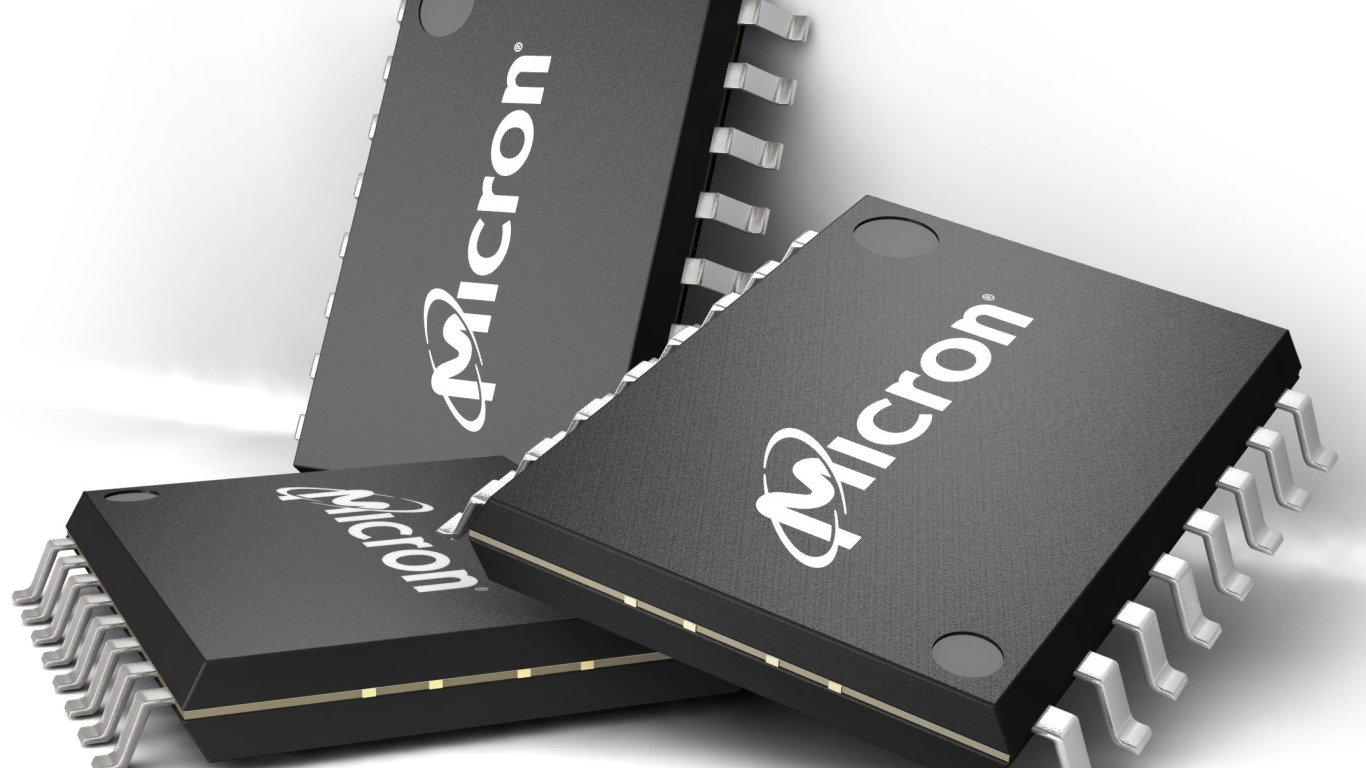
I keep buying Micron Technology (NASDAQ:MU | MU Price Prediction) because the company I own today has structurally changed from the cyclical the market has priced for the last thirty years, and I do not think the market has fully caught up yet. Every time I look at my brokerage, my finger drifts back to the buy button on this one name. Here is why.
Why the Memory Cycle Argument Stopped Working
The old bear case on Micron was simple: high prices invite oversupply, oversupply invites a crash, rinse and repeat. Micron has broken that cycle through Strategic Customer Agreements. On the June call, CEO Sanjay Mehrotra said the company has signed 16 Strategic Customer Agreements, typically running five years from calendar 2026 through the end of calendar 2030, structured as take-or-pay agreements with floor prices that management says preserve a gross margin well above its peak quarterly margins in any past cycle. Fourteen of those agreements carry cumulative revenue at minimum contract prices of approximately $100 billion, and Micron expects $22 billion of cash deposits and related financial commitments, roughly $10 billion of which is expected in fiscal Q4 alone. That is contracted demand backed by binding commitments.
Receipts Behind My Conviction
Start with the June quarter. Revenue landed at $41.456 billion, up 345.72% year over year, with non-GAAP EPS of $25.11 against a $20.2843 consensus, the seventh consecutive beat. GAAP gross margin expanded to 84.6% from 37.7% a year earlier. Free cash flow hit $18.304 billion in a single quarter. Management then guided fiscal Q4 revenue to $50.0 billion and EPS to $31.00.
Second, the balance sheet finally matches the story. Micron closed the quarter with $30.2 billion of cash investments against $5.7 billion of debt, or $24.4 billion of net cash. Third, valuation. At $958.73, shares trade at a forward multiple of 6x against an analyst target of $1,513.41, with 9 Strong Buy and 31 Buy ratings, and zero sells. The board also raised the payout to $0.15 per share quarterly.
Why Not the Obvious Storage Peers
The names a friend would reach for first are Western Digital (NASDAQ:WDC) and Sandisk (NASDAQ:SNDK). I own neither because neither ships HBM. Micron already booked over $1 billion in HBM4 revenue with the 12-high ramp tracking twice as fast as HBM3E 12 high. That is the product driving an 84.9% non-GAAP gross margin. Storage-only peers do not participate in that mix and do not carry the same margin architecture. Micron is also the only U.S.-based memory manufacturer, which matters for the SCA structure.
Risk I Own With Open Eyes
My real concern is customer concentration in HBM4 alongside a capex cycle running at approximately $27 billion for fiscal 2026. If AI capex disappoints, Micron is spending into a wall. What keeps me buying anyway is that management said industry demand is expected to exceed supply beyond calendar 2027, and the SCA floor prices convert some of that capex bet into contracted revenue rather than speculative capacity.
What Keeps My Finger on the Buy Button
The stock is up 706.89% over the past year, and I am still adding. Contracted demand through 2030, a fortress balance sheet, HBM leadership, and a forward multiple in the single digits is the setup I want to own for the next decade. The whole thesis rests on the AI data-center buildout continuing to pull memory, cooling, power, and networking suppliers along with it (we profiled seven of those non-chipmaker beneficiaries in a free report you can grab here).
Contact [email protected] for any questions or corrections.
Alex Sirois is a financial writer with experience spanning both retail and institutional investing. He has written for InvestorPlace and held roles at BNY Mellon and Bernstein, giving him a perspective that bridges Main Street portfolios and Wall Street analysis.
Alex holds an MBA from George Washington University and has built his career across multiple industries, including e-commerce, education, and translation — a breadth of experience that informs how he breaks down complex financial topics for everyday investors. His writing is conversational, actionable, and grounded in long-term, buy-and-hold investing principles.
At 247 Wall St., Alex focuses on delivering analysis that is both accessible and useful, with a clear emphasis on helping readers make more informed decisions with their money.