Kroger Is Buying Another Grocery Chain While Still in Court Over the Last One
Kroger just announced a $1.65 billion grocery acquisition while still fighting its last merger partner in court over the exact same regulatory strategy it plans to use again. The word at the center of both stories is the same, and…

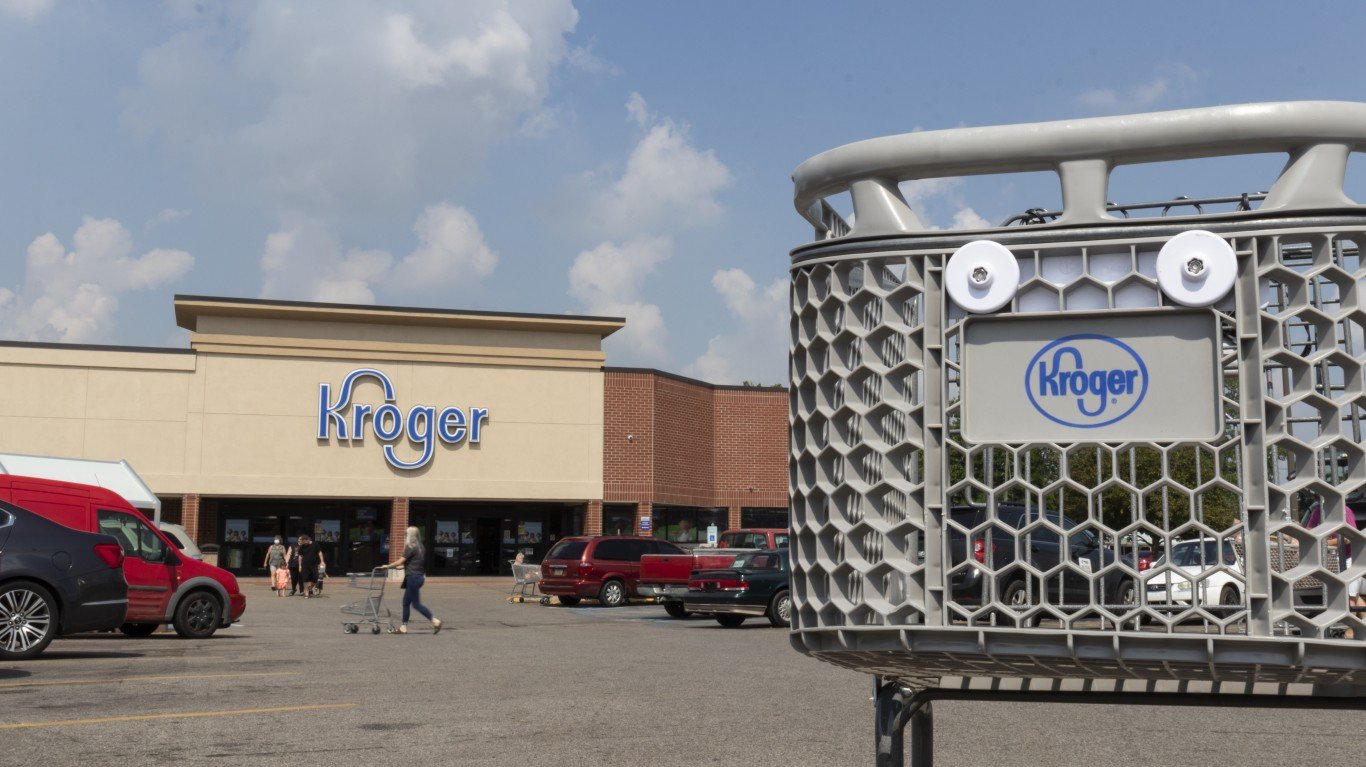
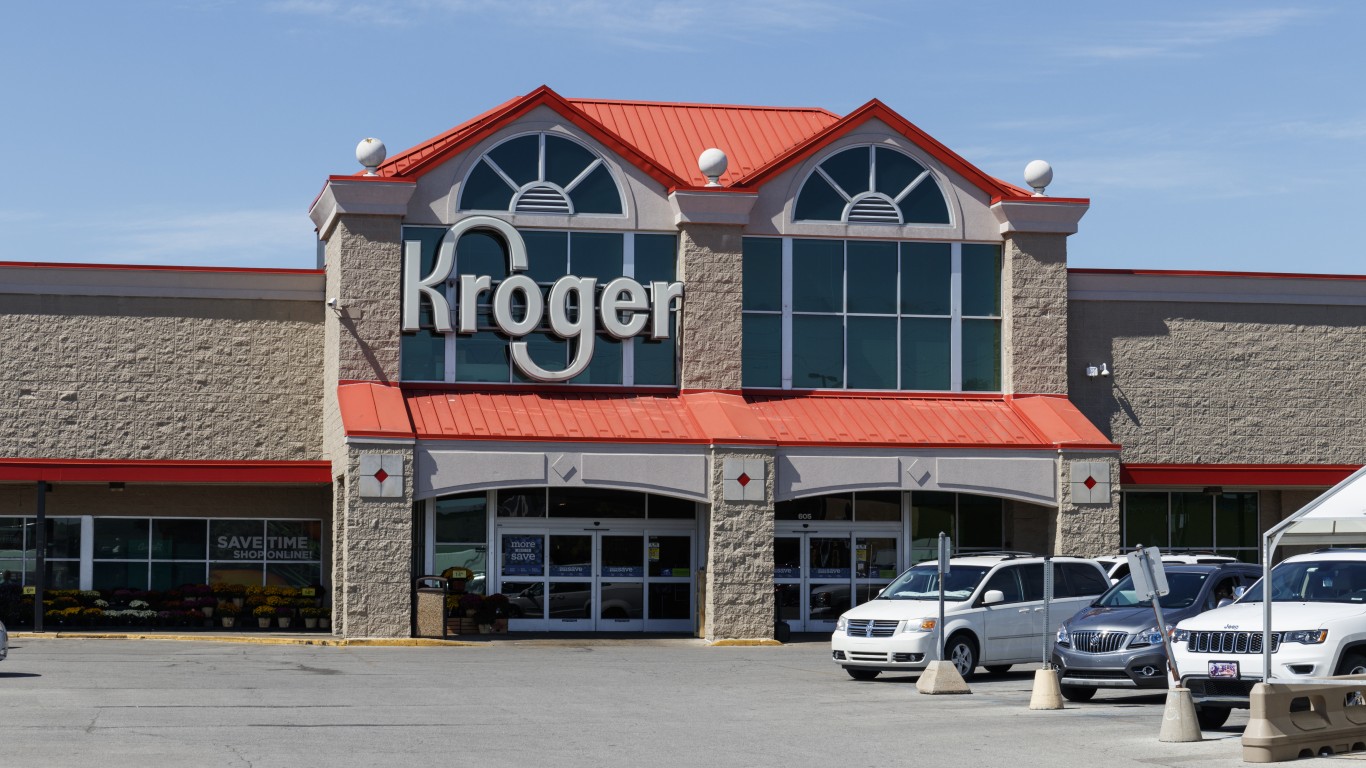
Although Wall Street generally rewards grocery consolidation as a defensive play in a low-margin industry, Kroger (NYSE:KR | KR Price Prediction) is asking regulators to bless a fresh round of store divestitures while still defending itself in Delaware Chancery Court over the divestiture package from its last attempted mega-deal. Kroger announced on Wednesday, July 1, 2026, that it would acquire family-owned Giant Eagle for $1.65 billion, consisting of $1.25 billion in cash consideration and the assumption of approximately $400 million in outstanding liabilities. The board unanimously approved the transaction, and the company said the deal is pending regulatory clearance with an expected close in 2027.
Yet the memory here is long, and the receipts are still landing in the financials. Albertsons (NYSE:ACI) and Kroger remain locked in dueling suits over the collapsed $24.6 billion combination that would have been the largest grocery merger ever. What’s particularly notable is that the sticking point in that litigation, which divestitures were adequate to satisfy antitrust regulators, is the same mechanic Kroger is again promising to use to get the Giant Eagle deal cleared. Kroger’s own announcement said it and Giant Eagle “expect to make limited Giant Eagle store divestitures” in connection with obtaining regulatory clearance.
Walking the Timeline From $24.6 Billion to a Courtroom
The old deal was announced in 2022, blocked by federal and state courts, and terminated in December 2024, at which point Albertsons sued Kroger and Kroger countersued. Albertsons is seeking the $600 million merger termination fee, plus damages, and alleges Kroger did not take adequate steps to address antitrust concerns. The proposed remedy at the center of the case was Kroger’s plan to divest hundreds of stores to C&S Wholesale Grocers. Albertsons contends many of those stores were poor performers and provided an unappealing solution for state and federal antitrust investigators. Kroger has said it was acting on the advice of its legal advisors, and its countersuit alleges Albertsons worked covertly with C&S to pressure Kroger to divest more stores.
The discovery fight has produced two 2026 rulings worth noting. On June 26, 2026, Delaware Chancery Court Vice Chancellor Lori Will rejected Albertsons’ effort to compel Kroger to produce all communications with its outside law firms, Arnold & Porter Kaye Scholer and Weil, Gotshal & Manges, ruling that Kroger’s obligation was limited to documents reflecting actual legal advice and “does not extend to every uncommunicated musing of a law firm associate or a partner’s internal reaction to a meeting.” The court had earlier rejected Albertsons’ bid to compel disclosure around the departure of Rodney McMullen, Kroger’s former board chair and CEO, whom Albertsons had argued may have been distracted by unrelated personal conduct.
Merger Costs That Refuse to Roll Off
The financial fingerprints of the terminated deal are still fresh. Kroger booked $684 million in merger-related costs in fiscal 2024, including $186 million in a single quarter, and $143 million pre-tax in another quarter. The most recent quarterly release, filed with the SEC on June 18, 2026, again listed “Merger-related litigation costs from terminated Albertsons transaction” as an explicit risk factor. Albertsons has repeatedly flagged the potential inability to collect the $600 million termination fee in its own filings. Kroger separately settled its lawsuit with C&S Wholesale Grocers on August 11, 2025.
What the Grocer Is Doing Now
Kroger’s Q1 fiscal 2027 report delivered adjusted EPS of $1.58 versus $1.59 consensus on revenue of $46.12 billion, up 2.2% year over year. New CEO Greg Foran, who succeeded interim chief Ron Sargent, told analysts on the call that “Our ambition is clear: to be America’s best grocer.” CFO David Kennerly framed the balance sheet in acquisition-ready terms: “At the end of the first quarter, Kroger’s net total debt to adjusted EBITDA was 1.75 compared to our net total debt to adjusted EBITDA target ratio range of 2.3 to 2.5.” He added that the flexibility “gives us optionality to invest in high return opportunities while maintaining our commitment to investment grade credit.”
On the target: Giant Eagle is a Cranberry Township, Pennsylvania-based food and pharmacy retailer founded in 1931, with approximately $9 billion in annual sales, 197 supermarkets and 11 standalone pharmacies across the Ohio Valley and mid-Atlantic. Foran called it “a well-run, high-quality regional grocer with a strong reputation for fresh products, pharmacy, private label and customer loyalty.” Giant Eagle sold its GetGo convenience network to Alimentation Couche-Tard for about $1.57 billion in June 2025, sharpening its supermarket footprint before the sale.
What Investors Should Keep an Eye On
Kroger closed the September 2, 2026, session at $58.22, down 15.2% over the trailing year, while Albertsons finished at $12.48, off 35.2% over the same span. Albertsons’ Q1 fiscal 2027 EPS of $0.42 missed a $0.54 consensus by 21.99%, and management slashed full-year adjusted EPS guidance to $1.75 to $1.85 from $2.22 to $2.32.
Kroger’s next earnings report is scheduled for September 11, 2026, before the open, and it should offer a fresh look at how much of the Albertsons litigation is still bleeding into the P&L while the Giant Eagle divestiture package takes shape. The pattern to watch is straightforward: the same word, divestitures, is doing double duty as Kroger’s regulatory pitch and as the core allegation against it in Delaware. Long term, the largest traditional supermarket operator on Wall Street tends to compound through consolidation. Short term, the receipts from the last attempt are still on the desk.


Contact [email protected] for any questions or corrections.
Trey has been an editor and author at 24/7 Wall St. for more than a decade, where he has published thousands of articles analyzing corporate earnings, dividend stocks, short interest, insider buying, private equity, and market trends. His comprehensive coverage spans the full spectrum of financial markets, from blue-chip stalwarts to emerging growth companies.
Beyond 24/7 Wall St., Trey has created and edited financial content for Benzinga and AOL's BloggingStocks, contributing additional hundreds of articles to the investment community.
Trey's editorial expertise extends across multiple publishing environments. He served as production editor at Dearborn Financial Publishing and development editor at Kaplan, where he helped shape financial education materials. Earlier in his career, he worked as a writer-producer at SVE. His freelance editing portfolio includes work for prestigious clients such as Sage Publications, Rand McNally, the Institute for Supply Management, the American Library Association, Eggplant Literary Productions, and Spiegel.
Outside of financial journalism, Trey writes fiction and has been an active member of the writing community for years, moderating workshop sessions at regional conventions.