Cramer Says Nvidia Spent $13 Billion to Make Sure You Never Buy a Rival’s Chip
Jim Cramer called it both offensive and defensive, but the two halves of the Hugging Face deal are not equally interesting, and the one that actually moves the stock is the one Jensen Huang left out of his press tour…

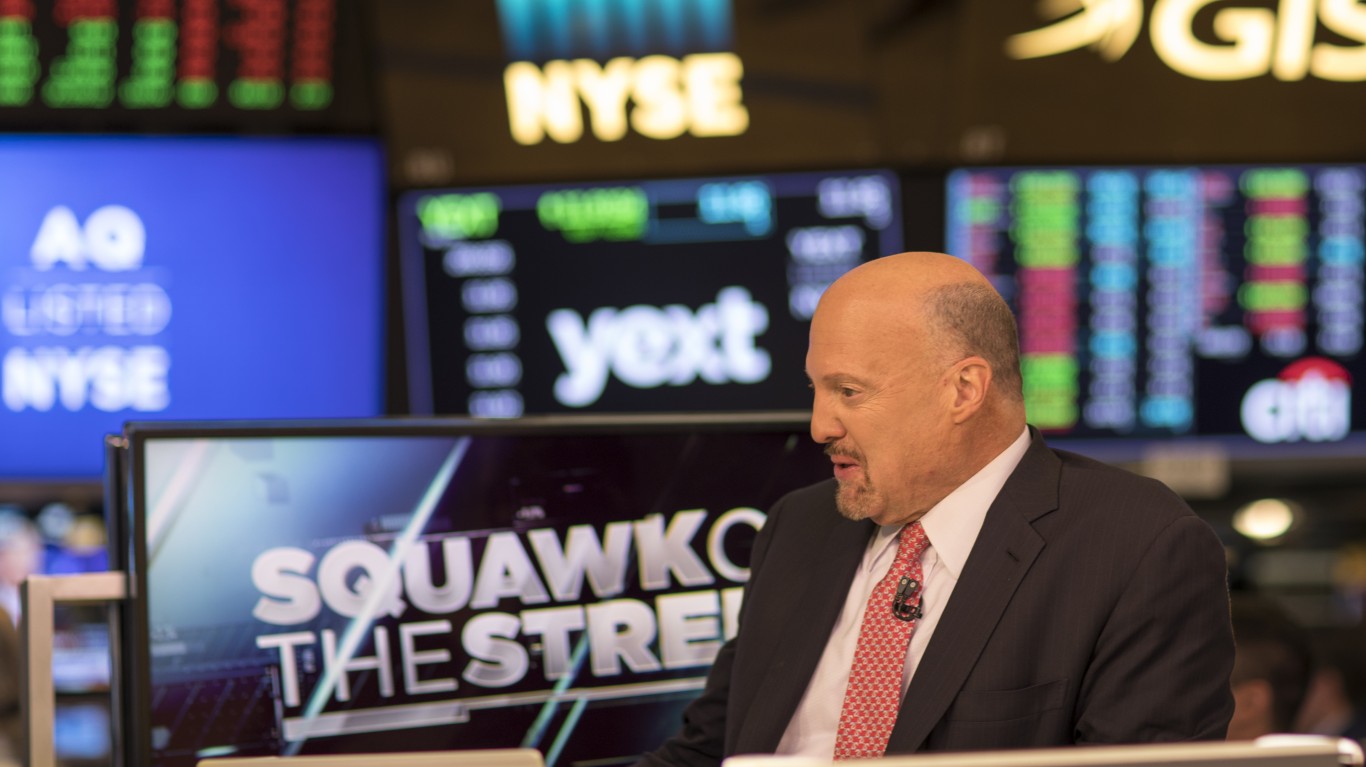
NVIDIA (NASDAQ:NVDA | NVDA Price Prediction) acquired Hugging Face to control where open-source AI models get built and shared. Models developed on that platform will be tuned to run best on NVIDIA silicon, and that is the entire strategic argument. Jim Cramer walked through the logic with David Faber on CNBC on September 3, 2026, calling the deal both offensive and defensive. He is right, although the two halves are not equally interesting.
Shares finished the session at $228.45, up 1.8% on the day, extending a 22.64% year-to-date advance. The market treated a $13 billion outlay as insurance on the moat rather than an act of desperation.
What NVIDIA Actually Bought
Hugging Face is a repository and community for open-source machine learning. Developers publish model weights, datasets, and evaluation scripts there, and other developers pull them down to fine-tune or deploy. It is where Llama variants, Mistral checkpoints, and thousands of smaller open models get discovered and distributed.
Owning a distribution hub is strategically different from owning another fab or a software license. A fab produces a scarce good. A license collects rent. A hub shapes which technical choices become defaults. If reference implementations, tutorials, and one-click deployment templates all assume CUDA and NVLink, the open ecosystem takes shape to fit NVIDIA hardware.
Jensen Huang framed the purchase in terms of open access. He told CNBC that “Our fundamental goal is just to make sure that AI advances as quickly as possible. And it’s really, really important right now as the open models are really accelerating that we make sure that we provide Hugging Face the platform to continue to scale and for the resource for them to scale and extend the open model ecosystem and community.”
That framing is technically accurate and commercially incomplete. A company positioning itself as an enabler of open models still benefits most when those models are optimized for its own silicon. Both statements can hold at the same time. The second one is what drives the share price.
Cramer’s Asymmetry Point
The sharpest observation in the segment was about how the market prices this deal versus how it would price the identical deal from a rival. Jim Cramer said, “If AMD were announced, they were buying Hugging Face, if Broadcom announced they were buying Hugging Face, we would send NVIDIA down. So you got to think of it like that. It’s a little asymmetrical.”
He is describing a premium the market has extended to NVIDIA because every prior strategic move has compounded. Q2 FY2027 revenue of $96.22 billion, up 105.8% year over year, and Data Center revenue of $89.02 billion, up 117%, are the reason the benefit of the doubt still runs one way.
Whether that premium is earned or habitual is the real question. My view: it is earned for now, because the company keeps producing the evidence. The habit only breaks when leading open models on Hugging Face start shipping optimized for a competitor first.

Defensive Half and the Buyback
Custom silicon is the genuine threat. When a hyperscaler designs its own inference chip, it is trying to strip NVIDIA’s margin off a large, predictable workload. Amazon’s Trainium is already disclosed as a multibillion-dollar business, and Google TPU has been in production for years.
Owning Hugging Face is a defense against that. If the developers who tune open models continue to prioritize CUDA, the custom chips underperform on the workloads people actually deploy. Advanced Micro Devices (NASDAQ:AMD) is the most obvious loser if that dynamic holds. That is a subtle form of lock-in, and it requires no supply contract.
Jim Cramer also referenced the $1 trillion buyback while praising Huang’s execution. With $99 billion remaining under repurchase authorization at the end of Q2 FY27, capital return has runway most software companies would envy.
Meanwhile, CNBC noted that Broadcom (NASDAQ:AVGO) issued soft fourth-quarter guidance alongside strong AI chip demand. That is a reminder that custom-silicon revenue is lumpy even in a booming end market. NVIDIA’s platform revenue stays steady across quarters.

Verdict and the Falsifiable Test
The price is defensible. NVIDIA earned $59.69 billion in net income last quarter alone, so this is a rounding error in cash and a meaningful move in strategy. Analysts have an average target of $325.99, well above where the stock trades, and forward estimates continue to drift higher, with the FY2028 EPS consensus at $13.13. See the deal terms in NVIDIA’s most recent 8-K filing for the operational context.

The test is specific and falsifiable. If the next wave of leading open models on Hugging Face ships optimized for AMD MI or a custom hyperscaler chip first, with CUDA support arriving weeks later, this deal will have failed at its core purpose. That is the concrete thing to watch.
Until that happens, the offensive-and-defensive read holds. NVIDIA bought the distribution layer for open-source AI, and the shareholder value sits in the competitor announcements that never occur because of it. Finding the next company with that kind of compounding advantage is its own exercise, and we studied what those winners looked like early in a free playbook here.
Contact [email protected] for any questions or corrections.
Omor Ibne Ehsan is a writer at 24/7 Wall St. He is a self-taught investor with a focus on growth, cyclical, and dividend equities that have strong fundamentals, value, and long-term potential. He also has an interest in high-risk, high-reward investments such as penny stocks.