Traders Just Put $900 Million of Call Premium Behind Tesla Before the Cyber Cab Reveal
Nine hundred million dollars in call premium flooded into Tesla before the Cybercab reveal, and options desks called the flow notably bullish. What traders rarely tell you is why that kind of positioning usually misleads the people following it most…

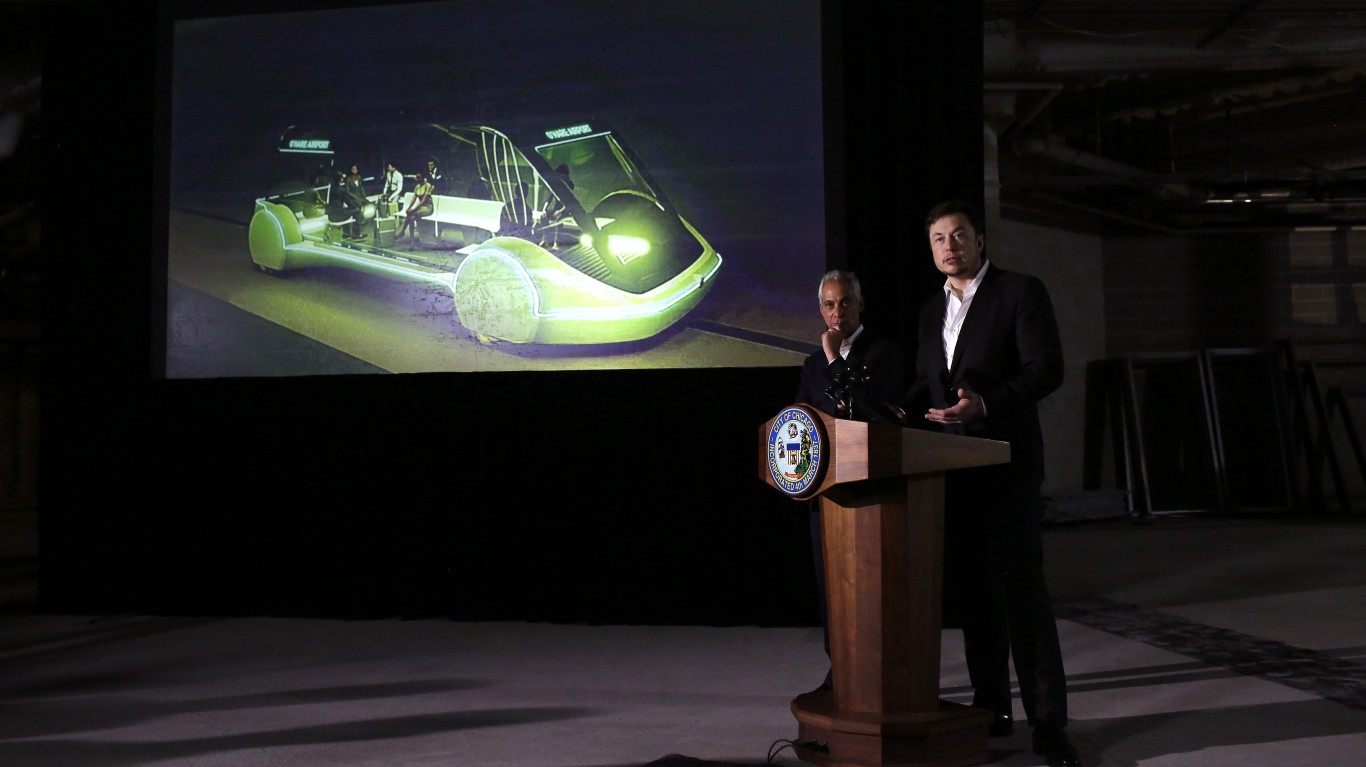
Options desks lit up around Tesla (NASDAQ:TSLA | TSLA Price Prediction) ahead of its Cybercab reveal, and CNBC’s Oliver Renick reported that Tesla and SpaceX ranked number one and number four by options volume with notably bullish flows. The headline making the rounds was that roughly $900 million in call premium had piled into the name before the event.
That crowd is telling you something about expectations. It is telling you very little that is reliable about outcomes, and most readers who follow this kind of positioning into a binary catalyst lose money because they conflate the two.
A call is a paid bet on upside. Premium is the price of that bet. When traders pay a heavy premium for short-dated calls with a known expiration date, they are expressing a view that the stock might move sharply higher soon. They are also, at the same moment, paying more for the privilege because implied volatility rises when uncertainty is high.
Tesla closed at $376.37, up 5.42% on the session, and has run 14.97% higher over the past month even as it sits down 16.31% year to date.

What the Flow Actually Looked Like
On the midday CNBC tape, Renick said, “Both Tesla and SpaceX [are] number one and number four by options volume today. And the flows are notably bullish.”
Tesla’s full-chain put-call ratio was 0.61, indicating that far more call contracts changed hands than put contracts. The Sept 4 expiry alone traded 376,610 calls against 226,485 puts.
Contract counts are the crude number. Premium is the more reliable one, because a single large in-the-money order can carry more weight than thousands of cheap out-of-the-money lottery tickets.
When premium clusters in calls before a catalyst, it means real money accepted a real cost to own upside exposure. That is a stronger read than raw volume.
Concentration matters too. TSLA carries 453,726 calls of open interest at the Sept 18 expiry and 647,093 calls at Jan 15, 2027, so the pre-event buying is layered onto an already call-heavy structure.
Put Selling on SpaceX Told You More
The more revealing trade in Renick’s segment was on SpaceX, where CNBC flagged a large block of in-the-money puts sold with a January 2028 expiration.
Selling a put is a commitment. The seller collects premium up front and agrees to buy the underlying at the strike if the stock trades there by expiration.
Doing that on a multi-year, in-the-money strike is a different statement than buying a two-day call. That trader is expressing a willingness to own the asset.
That kind of durable conviction is rare in event windows. It usually shows up from parties who would be content to be assigned shares.
SpaceX is context here. The point transfers to Tesla: sold puts on long-dated paper are usually a more useful read than bought calls on weekly paper.
Why Heavy Call Buying Is Weaker Evidence Than It Looks
Dealer hedging distorts flow. When market makers sell calls to a customer, they often buy stock to offset the delta, which lifts the underlying and makes the activity look self-reinforcing.
Funds also buy calls as protection on short positions. That flow reads bullish in a scanner but represents defense.
A meaningful share of retail call buying is a lottery ticket. The mechanism is simple: implied volatility gets bid up before the catalyst and compressed after it, and if the stock does not move far enough to overcome that reset, the calls decay.
Tesla trades at a P/E of about 392x, against consensus FY26 EPS of $1.7727, with 18 downward revisions in the past 30 days versus 7 upward. Paying a rich option premium into that fundamental setup requires the stock to travel a long way, quickly.
The last quarter showed the tension plainly: Q2 2026 revenue of $28.24 billion beat estimates while EPS of $0.33 missed the $0.5367 consensus, as disclosed in Tesla’s Q2 8-K exhibit.

What a Shareholder Should Take From This
Options positioning is a sentiment reading with a short shelf life. For a trader with a two-day horizon, it is the whole game. For a holder with a two-year horizon, it is noise.
Tesla is a long-duration bet on autonomy and robotics. On the Q2 call, Elon Musk said Robotaxi miles were compounding “more than 10% a week in terms of miles driven”, and CFO Vaibhav Taneja said FSD attach reached nearly 1.5 million paid customers globally.
Those numbers matter more to a shareholder than whether one week of call premium priced the near term correctly. The Cybercab began pilot production at Gigafactory Texas, and that ramp will decide the thesis over any single expiry.
The desk also flagged that Tesla was still below its 200-day moving average. That line simply smooths the last ten months of price to show whether the recent trend sits above or below the medium-term trend. It is a coordinate for framing the recent trend.
Analyst targets average $390.09 against 22 buys, 19 holds, and 5 sells, so the sell side sees limited near-term upside even as call buyers reach for a bigger number. A patient owner should treat the pre-event flow as weather and keep watching the fleet.


Contact [email protected] for any questions or corrections.
Omor Ibne Ehsan is a writer at 24/7 Wall St. He is a self-taught investor with a focus on growth, cyclical, and dividend equities that have strong fundamentals, value, and long-term potential. He also has an interest in high-risk, high-reward investments such as penny stocks.