China Is Still Chasing Nvidia’s 3-Year-Old Chip — While Nvidia Has Moved Generations Ahead
Huawei's best AI chip cannot keep pace with Nvidia hardware that is already three generations old, and the gap is widening faster than most investors realize.

For retirement investors seeking the cleanest way to own the AI infrastructure buildout, NVIDIA (NASDAQ:NVDA | NVDA Price Prediction) at $230.36 warrants a hard look, because the company is selling a product no rival can match at a price the market has not caught up to. China’s best domestic AI chip, Huawei’s Ascend 910C, tops out at roughly 780 teraflops (TFLOPS) of FP16 performance, less than half of the ~1,700 TFLOPS delivered by NVIDIA’s H200, a chip unveiled nearly three years ago. While competitors chase that old benchmark, NVIDIA has moved through Blackwell, Blackwell Ultra, and into full production on Vera Rubin, whose single GPU delivers 4,000 TFLOPS of FP16 compute. That is the definition of a widening moat.

Growth That Justifies the Multiple
Q2 FY27 revenue reached $96.22 billion, up 105.85% year over year, with Data Center revenue of $89.02 billion (+117%). Management guided Q3 to $108.0 billion ±2% at a ~74% gross margin. At a trailing P/E of 46, NVDA trades cheaper than either of its listed rivals despite generating a 55.60% net margin and 101.5% return on equity. That is a rare combination at this scale, and the same data-center buildout driving these numbers is powered by a broader supplier ecosystem (we profiled seven of those non-chipmaker AI infrastructure names in a free report here: 7 Stocks Powering the AI Boom).
Head to Head: NVIDIA Outclasses AMD and Intel
Advanced Micro Devices (NASDAQ:AMD) is the closest US-listed AI accelerator peer, and the head-to-head favors NVIDIA on every meaningful line. AMD trades at a P/E of 180, roughly four times NVDA’s multiple, with a Q2 2026 non-GAAP gross margin of 56% versus NVIDIA’s 75%, and Data Center revenue of only $6.72 billion. NVIDIA’s Data Center segment alone is more than thirteen times larger. Intel (NASDAQ:INTC) sits well behind: it posted a Q2 FY26 GAAP net loss of -$11.033 billion and carries a negative earnings yield. Intel’s own DGX Rubin servers use NVIDIA silicon at the center of the rack.
Capital Returns Sweeten the Case
NVIDIA returned approximately $26 billion to shareholders in Q2 alone and still has ~$99.0 billion left on its buyback authorization. Free cash flow hit $21.34 billion for the quarter, up 58.43%. The dividend is small at $0.25 per share, but per-share compounding through buybacks is doing the real work for long-duration holders.

China Risk, Dismissed
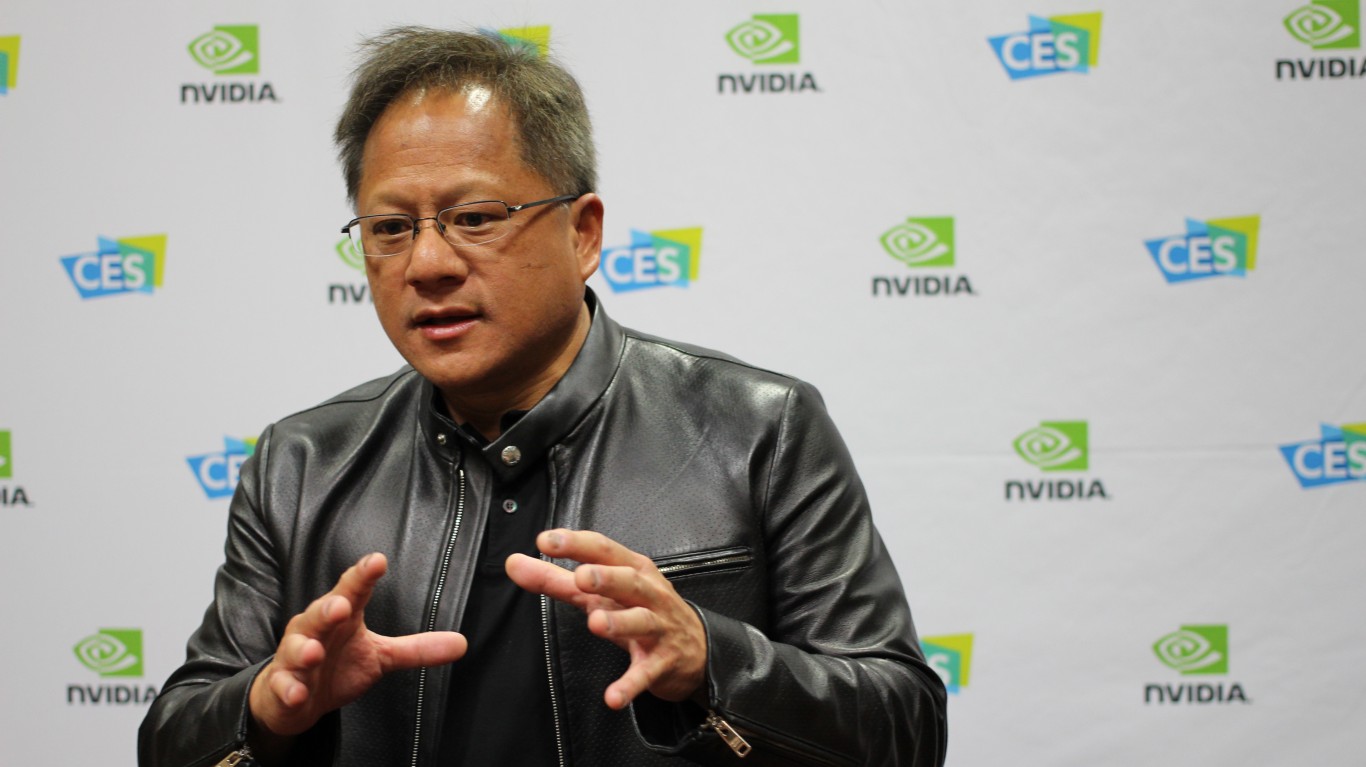
The obvious pushback is China export controls. That worry is already priced out. Hopper shipments to China were less than 1% of total Data Center revenue in Q2, and the $108 billion Q3 guide explicitly assumes zero Data Center compute revenue from China. NVIDIA is printing record numbers without the market Washington fenced off. As Jensen Huang put it on the last call, “AI has reached its inflection point. It’s doing useful work. Its tokens are productive and profitable. Now, compute is revenue.”

For long-duration holders, Vera Rubin’s compounding is the story to watch from here.
Contact [email protected] for any questions or corrections.
After two decades of patrolling the dark corners of suburbia as a police officer, Rich Duprey hung up his badge and gun to begin writing full time about stocks and investing. For the past 20 years, he’s been cruising the markets looking for companies to lock up as long-term holdings in a portfolio while writing extensively on the broad sectors of consumer goods, technology, and industrials. Because his experience isn’t from the typical financial analyst track, Rich is able to break down complex topics into understandable and useful action points for the average investor. His writings have appeared on The Motley Fool, InvestorPlace, Yahoo! Finance, Money Morning, and, of course, 24/7 Wall St. He has been featured in both U.S. and international publications, including MarketWatch, Financial Times, Forbes, Fast Company, and USA Today.