3 Monthly Dividend ETFs to Buy Hand Over Fist Before September’s Fed Meeting
With the Fed's September meeting putting rate hike odds above 50% and a politically trapped Fed Chair caught between presidential pressure and runaway inflation, three monthly dividend ETFs stand to benefit no matter which way the decision breaks.


September’s Fed meeting is scheduled for September 15-16, and the market sees a 55% to 60% chance of a 25-basis-point rate hike. Considering monthly dividend ETFs like the Pacer American Energy Infrastructure ETF (NYSEARCA:USAI), the iShares Core High Dividend ETF (NYSEARCA:HDV), and the State Street SPDR Dow Jones Indust Avg ETF Trust (NYSEARCA:DIA) is a good idea ahead of this meeting.
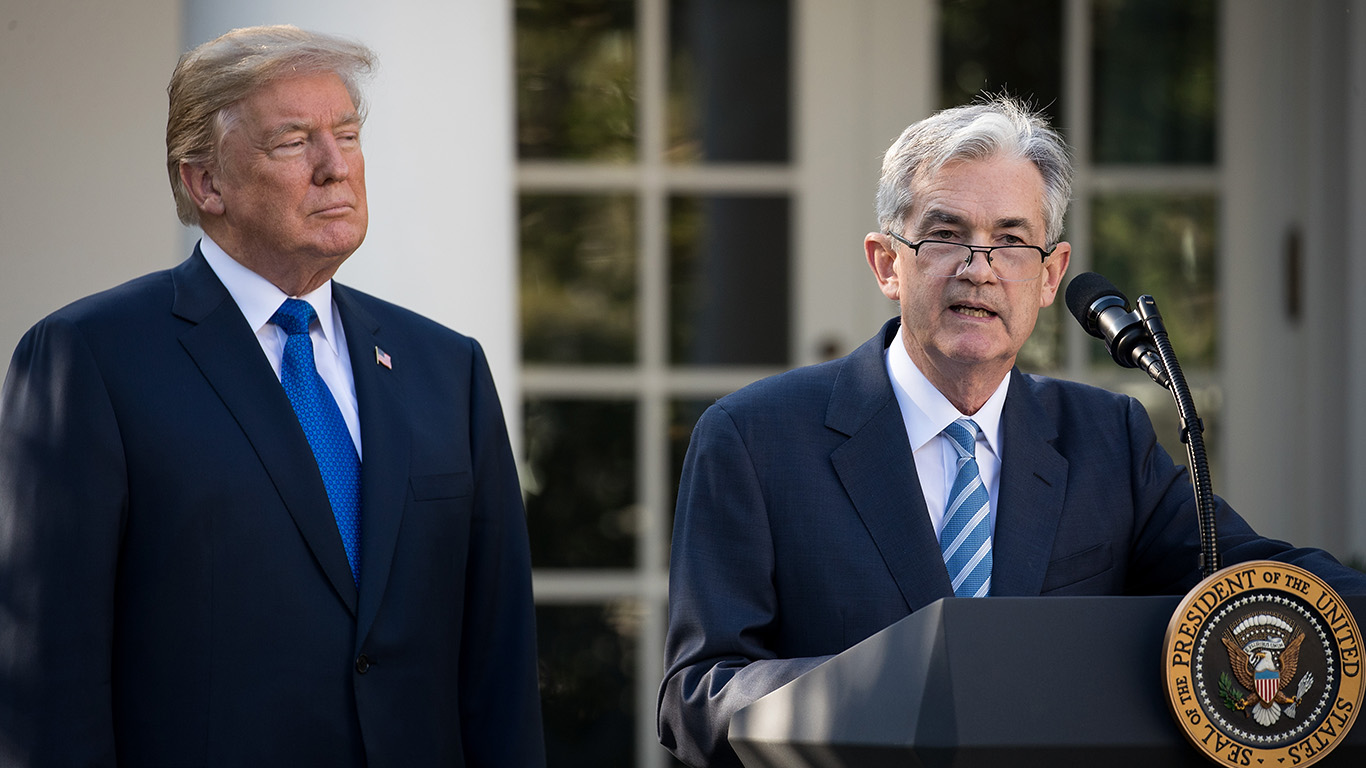
Things could get very interesting, as Fed Chair Kevin Warsh was initially nominated as dovish, only to be caught between a rock and a hard place. Treasury yields are rising fast, government spending is out of control, inflation is still above the target range, and a war is pushing oil near $100.
All of these things point to an interest rate hike. However, the “Trump factor” is largely why the stock market remains uncertain about whether there will be an interest rate hike. If a hike does happen, Warsh will be under fire from the president. If it does not, the economy will be under fire from inflation.
Here’s how these three monthly dividend ETFs can benefit from the uncertainty.
Pacer American Energy Infrastructure ETF (USAI)
The next decade could be all about energy independence after the Strait of Hormuz exposed a key vulnerability. Investments in energy infrastructure were already ramping up, and they’ll keep rising with or without an interest rate hike.
A rate hike won’t mechanically help this ETF, but the economic conditions that are prompting this particular hike should improve earnings power and scarcity value of this ETF’s midstream assets. Energy inflation is an issue that is seeping into midstream pipelines, even though they aren’t as sensitive to energy prices.
These pipelines operate on volume-based fees. The export boom to Europe that started in 2022, followed by Red Sea disruptions, the Iran war, and the Strategic Petroleum Reserve being drained, partially replenished, and then drained again, are all contributing to energy infrastructure companies making more money.
USAI distributes dividends monthly and has a 4.02% dividend yield. The expense ratio is on the higher side at 0.75%, or $75 per $10,000, but it’s not that bad when you consider the 26% year-to-date gain.
iShares Core High Dividend ETF (HDV)
HDV recently transitioned from quarterly to monthly dividend payouts starting in July 2026. This makes it one of the strongest monthly dividend ETF picks, up there with the SCHD (NYSEARCA:SCHD).
It is now an ETF with a 3.35% dividend yield, a 5-year average dividend growth rate of 7.3%, plus a year-to-date return that exceeds 20%. It’s hard to say no to, especially since its tech holdings make up just 0.86% of its portfolio.
HDV’s holdings are mostly healthcare at 25%, followed by consumer defensive at 23% and energy at 21%. Thus, buying this ETF gives you some much-needed diversification, as most growth ETFs and even the benchmark now include an unhealthy amount of tech exposure. HDV should fare a lot better during a rate hike due to its holdings.
The icing on the cake is that its expense ratio is just 0.08%, or $8 per $10,000. Since it went monthly so recently, very few monthly dividend ETF investors are aware of this hidden gem.
State Street SPDR Dow Jones Indust Avg ETF Trust (DIA)
DIA might be one of the least vulnerable ETFs in a rate-hike scenario, even though 27.4% of its holdings are in the financials industry. Most of the stocks in that category actually benefit from rate hikes. Goldman Sachs (NYSE:GS | GS Price Prediction) makes up 11.45% of its holdings, and it benefits from higher interest rates as it boosts revenues in Goldman’s massive Fixed Income, Currency, and Commodities (FICC) trading division.
Many of its other holdings, such as Visa (NYSE:V), also benefit from higher interest rates.
Tech stocks do make up about 18.4% of this ETF, but I wouldn’t count that as too much of a negative factor. Interest rate hikes don’t have to line up with a tech slowdown, since this is a hike into strength. Cyclicals historically tolerate tightening into a strong economy far better than tightening into deceleration
DIA is up almost 16% over the past year. Its yield remains small at 1.38%. DIA pays monthly and has a 0.16% expense ratio.
Contact [email protected] for any questions or corrections.
Omor Ibne Ehsan is a writer at 24/7 Wall St. He is a self-taught investor with a focus on growth, cyclical, and dividend equities that have strong fundamentals, value, and long-term potential. He also has an interest in high-risk, high-reward investments such as penny stocks.