Jim Cramer Dismisses Fintech Wave, Backs Morgan Stanley as Quiet Execution Winner
Jim Cramer watched a parade of fintech and blockchain listings ring the opening bell and walked away unimpressed, pivoting instead to a quiet incumbent that just crossed a milestone most new listings can only dream about.

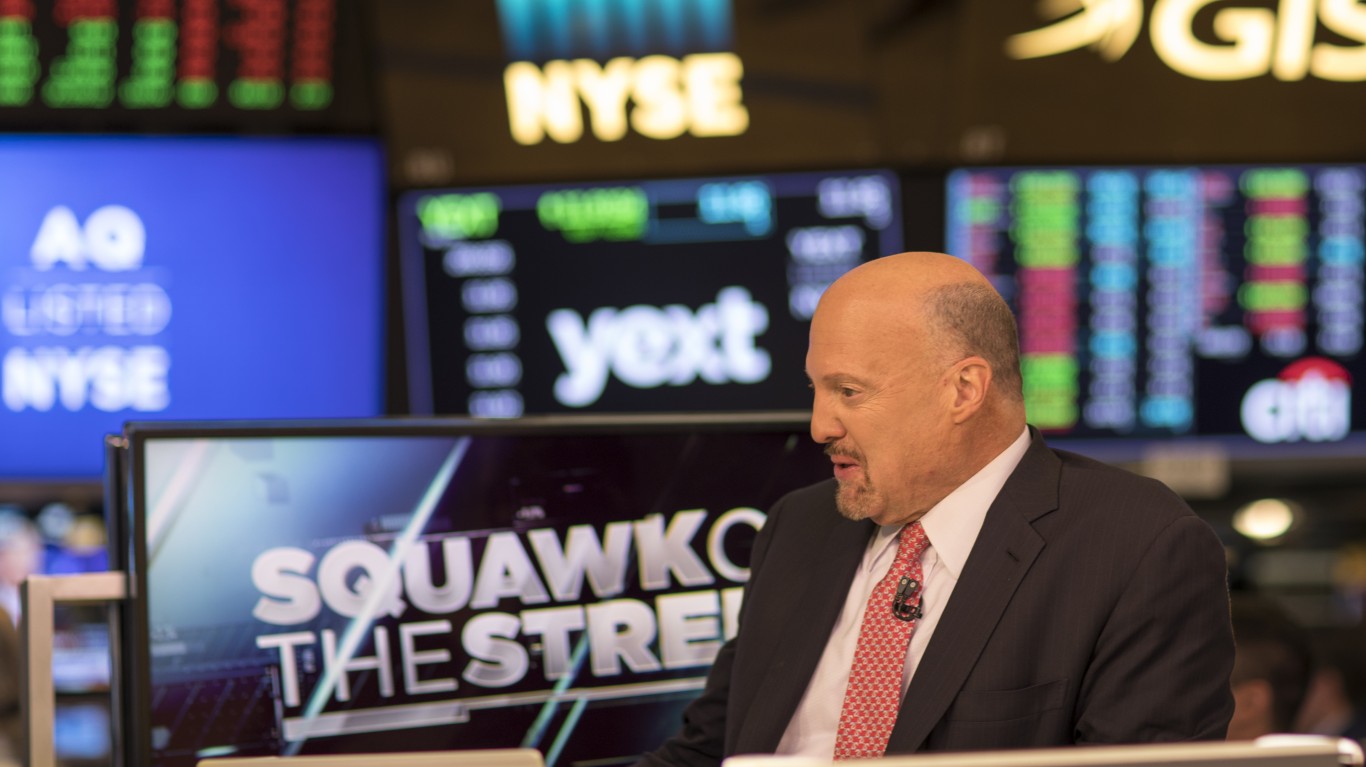
Jim Cramer opened his September 8, 2026 CNBC segment watching a parade of newly listed fintech and blockchain names ring the opening bell, and he was not moved. He said the pitches were interchangeable, then redirected to a name that has been executing without needing the microphone: Morgan Stanley (NYSE:MS | MS Price Prediction).
The pointed line from the segment was “Robinhood is good, but Morgan Stanley’s done a great job”, with Cramer crediting chief executive Ted Pick for a temperament that avoids self-promotion. He went further, floating Morgan Stanley as a potential lead underwriter on an eventual Anthropic offering, a characterization worth treating as his own coloring rather than any confirmed transaction.
The comparison sets up a fair question for a serious investor. Robinhood Markets (NASDAQ:HOOD) has built genuine breadth beyond a trading app, yet Morgan Stanley just crossed the $10 trillion client-asset milestone with a wealth machine that keeps compounding. Both stories are real. Only one of them is priced like a boring incumbent, and that is the interesting part.
Sameness Problem With Fintech Listings
Cramer’s read on the wave of listings was blunt. “I have to admit, a lot of them sound the same,” he said, describing a cohort where blockchain and fintech pitches blur together and the survivors are hard to identify in advance.
The segment mentioned an AI robotics developer called Extend and a fintech named Times Square Technology Solutions marking its one year listing anniversary, per CNBC. Neither should be treated as investable on the strength of a bell ceremony.
What usually happens to this kind of cohort is well documented. A handful build durable customer economics, most compress to nothing, and the initial narrative gets replaced by the boring question of unit profitability.
Moreover, that is the backdrop for Cramer’s redirect. He is arguing that when the field is crowded with lookalikes, the incumbent that already owns the client relationship gets stronger.
Case for Morgan Stanley Runs on Execution

Morgan Stanley’s Q2 2026 results are the argument. Revenue hit $21.35 billion, and EPS came in at $3.46 against a $2.89 consensus, the fifth straight EPS beat.
Wealth Management added a record $148 billion in net new assets, and ROTCE expanded to 26.6% from 18.2% a year earlier. Ted Pick, on the call, credited “Active markets and consistent execution across all three regions” and highlighted the $10 trillion client-assets milestone, detailed in the firm’s Q2 2026 8-K.
Capital return backs up the operating story. The board reauthorized a $20 billion buyback and raised the dividend to $1.15, giving Pick room to compound book value while investing.
In addition, Cramer’s point on temperament is worth taking seriously. “Ted Pick doesn’t think he’s great. He thinks he’s got to get better and stronger and faster,” he said, and that mindset shows up in a 65% year-to-date efficiency ratio.
Robinhood’s Real Position Deserves Credit

Dismissing Robinhood would be lazy. Q2 revenue reached $1.31 billion, up 32%, with EPS of $0.62 beating a $0.4314 estimate.
Platform assets reached $369 billion, and Gold subscribers hit a record 4.8 million. Trump Accounts drew 7 million sign-ups and about $1.5 billion in deposits since the July 4th launch.
Vlad Tenev said on the call that “Customers are continuing to trust us with more and more of their assets”, and the 13 business lines at $100 million-plus annualized revenue support that claim.
The caveats are the same ones a Morgan Stanley skeptic would raise in reverse. Crypto revenue fell 38% year over year, regulation around prediction markets and stock tokens remains unsettled, and the stock carries a 2.34 beta.
Sector Leadership and Single-Name Selection
A co-host on the same CNBC segment noted that financials had been one of the best-performing sectors over three months, possibly second only to health care. Sector tailwinds lift a lot of boats, but they do not close the gap in operating quality.
MS is up 48.6% over the last year and 23.79% year to date, while HOOD is roughly flat over the last year at 0.05% despite a strong recent month.
The valuation gap tells you why Cramer is comfortable picking the incumbent. Morgan Stanley trades near a 17x implied forward multiple against an implied 52x for Robinhood.
You are paying up for Robinhood’s optionality and paying down for Morgan Stanley’s compounding. Both can work, though Morgan Stanley is priced for disappointment while Robinhood is priced for continued success.
Is MS Stock a Buy?
Morgan Stanley rates a Buy here. The wealth franchise, capital position, and Institutional Securities momentum justify Cramer’s framing, and the stock still screens reasonably against peers at a mid-teens multiple.
Robinhood rates a Hold. The product velocity is real, and the ecosystem thesis is intact, though the multiple already reflects a lot of that success, and the crypto and regulatory exposure argues for patience rather than chasing.
Contact [email protected] for any questions or corrections.
Omor Ibne Ehsan is a writer at 24/7 Wall St. He is a self-taught investor with a focus on growth, cyclical, and dividend equities that have strong fundamentals, value, and long-term potential. He also has an interest in high-risk, high-reward investments such as penny stocks.