Intel Climbs 3% on Chip Price Hike Report a Day After Piper Sandler Went Neutral; AMD Rises 2%, Taiwan Semiconductor Drifts
A report of Intel raising chip prices sent shares surging 3% and erased the prior session's Piper Sandler-driven selloff, but the real question is whether the company has genuine pricing power or is simply charging scarcity rent that evaporates the…

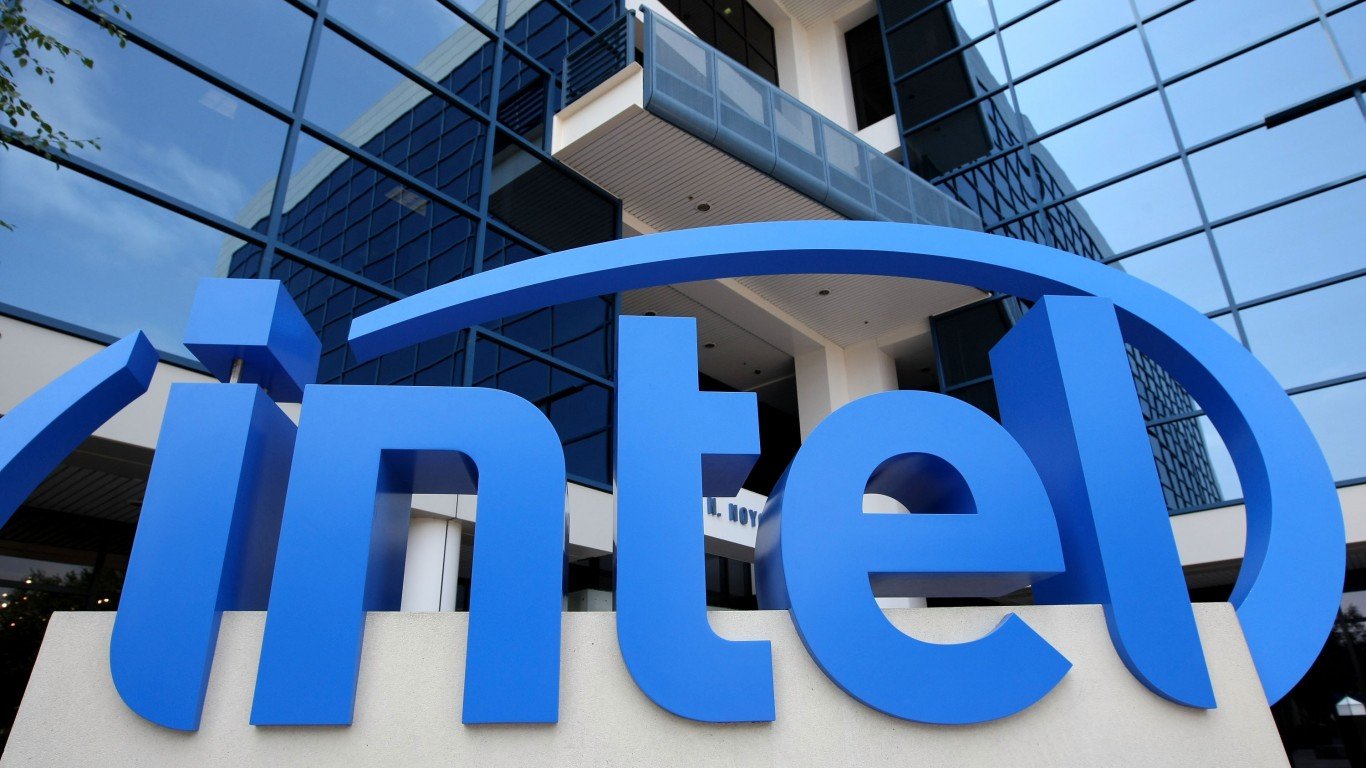
Intel (NASDAQ:INTC | INTC Price Prediction) shares are climbing in early Friday trading after a report that the chipmaker is preparing to raise prices on selected personal computer processors. Shares are up 3% to $103.31, recovering the prior session’s decline in a single move. The bounce pushes Intel stock further into rare territory, with shares now up 183% year to date and generally outpacing other large-cap chip names on a percentage basis.

Semiconductor peers are moving higher today, with gains that trail Intel’s. Advanced Micro Devices (NASDAQ:AMD) stock is up 2% to $512.63, and Taiwan Semiconductor Manufacturing (NYSE:TSM) stock is up 0.36% to $429.56. That leaves AMD moving higher and Taiwan Semiconductor sitting tight, with Intel clearly leading both on a company-specific catalyst rather than a sector-wide surge.
The iShares Semiconductor ETF (NASDAQ:SOXX) is up 1%, running roughly in line with the broader tech tape as Intel leads the group. The Invesco QQQ Trust (NASDAQ:QQQ) is up 0.94%, but Intel is doing better than both of these ETFs, which points to a stock-specific story rather than a massive rotation into chips.
Chip Price Hike Report Fuels the Bid
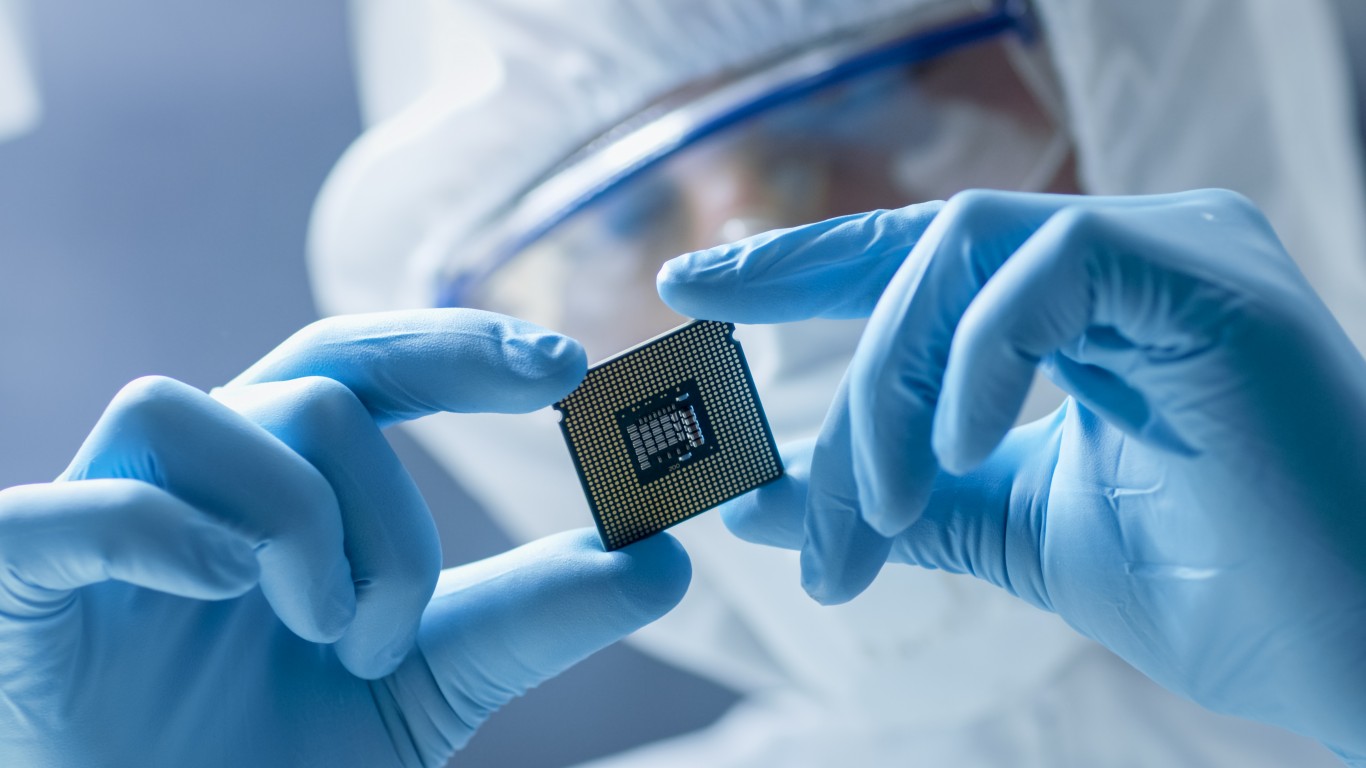
Reports this week said Intel could raise prices on selected personal computer processors by 10%. That figure comes from a report, not a company announcement, and it speaks to the margin question that has hung over the stock through its 2026 rally. Higher ASPs on client silicon would flow directly into the gross-margin recovery Intel has been building toward.
On Intel’s second-quarter 2026 call, chief financial officer David Zinsner said the client business benefited from Intel’s own like-for-like price changes, made where the company had seen cost inflation and needed to pass it on to the end customer. That framing turns today’s report from a rumor into a continuation of a pattern Intel has already been executing on. Intel CEO Lip-Bu Tan has publicly tied the current cycle to AI-driven demand for compute across CPUs and foundry customers (we profiled seven companies supplying that data-center buildout, from power to cooling, in a free report you can grab here).
Pricing Power or Scarcity Rent
Pricing power and scarcity rent can produce the same headline number but very different follow-throughs. Raising prices while wafers, substrates and memory remain tight can persist only as long as those constraints hold, whereas raising prices because customers have no better option is a more durable margin story for Intel. The distinction is the one that will decide how much today’s report is worth to the shares.
Intel’s client franchise still faces a well-funded AMD, and Taiwan Semiconductor remains the shared foundry lifeline for much of the industry’s leading-edge silicon. AMD has been taking x86 server share and pushing Instinct accelerators into hyperscaler footprints, so any Intel ASP move needs to be read alongside what its main peer is doing on price and volume. Taiwan Semiconductor’s advanced-node capacity is the practical constraint that lets any of these companies raise prices at all.
Piper Sandler began coverage of Intel with a Neutral rating and a $110 price target in the prior session, and Intel stock fell on the call. The firm said Intel’s recent share-price advance leaves less room for further gains in the near term, cited execution risk, and pointed to data center competition, while also noting progress in Intel’s manufacturing roadmap and rising customer interest in its foundry operations. Intel stock currently trades below the target Piper Sandler set, so today’s rebound hasn’t settled the argument the initiation made.

What to Watch
Whether Intel holds its early gains into the close will hint at how much conviction sits behind the price-hike story. A steady bid in AMD and Taiwan Semiconductor through the afternoon would suggest the market is willing to reward pricing news across the group, and a fade in the peers would put the burden of proof back on Intel alone.
Investors can watch for signs that Intel stock keeps its premium to the semiconductor complex, so it makes sense to monitor the iShares Semiconductor ETF and the Invesco QQQ Trust today. Fresh exposure to Intel here should stay small in your allocation, since the stock still trades below the Piper Sandler target and the initiation’s cautions on execution and data center competition remain on the table.
Contact [email protected] for any questions or corrections.
David Moadel is financial writer specializing in stocks, ETFs, options, precious metals, and Bitcoin. David has written well over 1,000 articles for leading online publications, helping investors understand markets, income strategies, and risk.His work has appeared in The Motley Fool, InvestorPlace, U.S. News & World Report, TipRanks, ValueWalk, Benzinga, Market Realist, TalkMarkets, Finmasters, 24/7 Wall St., and others.With a master’s degree in education, David has taught at the elementary, high school, and college levels. That teaching background shapes his writing style: clear, educational, and practical. David has also built a loyal social-media audience by providing trustworthy financial content on YouTube, X/Twitter, and StockTwits.