Pfizer’s 6% Yield Masks a Fragile Dividend Story
Pfizer's payout looks like a safe harbor in a rough market, but the patent clock is ticking and the balance sheet leaves almost no room for error. Here is what actually has to hold true for that dividend to survive…

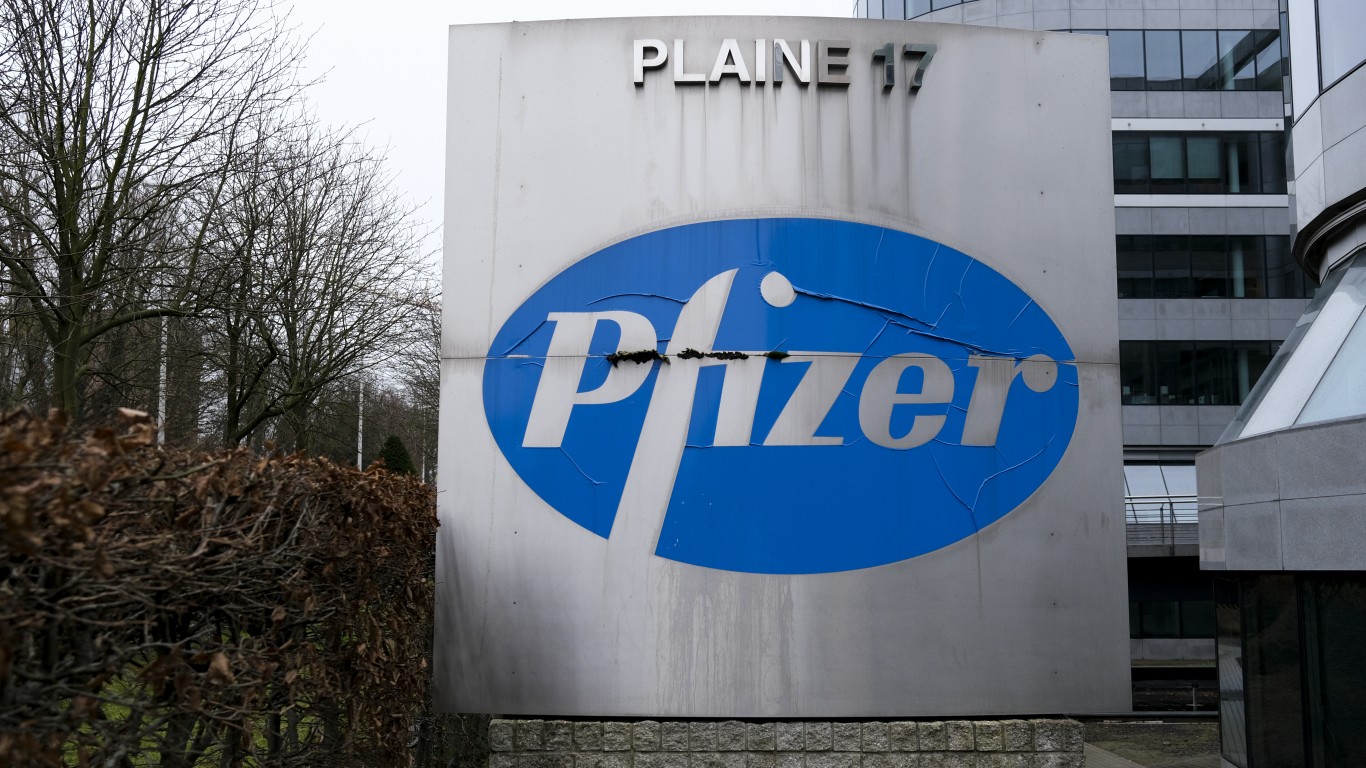
The single reason most retail and income investors own Pfizer (NYSE:PFE | PFE Price Prediction) is the payout. At a dividend yield of 6.19% against a share price of $27.69, the stock trades like an income instrument with a drug company attached. Durability of the payout is the only question worth asking.

Coverage Against Cash, Not Earnings
Pfizer paid $9.77 billion in common dividends against operating cash flow of $11.7 billion and capex of $2.63 billion in its latest full fiscal year. Free cash flow covers the payout, though the cushion is thin. Chairman and CEO Albert Bourla stated bluntly on the latest earnings call: “We feel extremely confident that we will, even the most stretched scenarios that we are running, we will be able to maintain our dividend.” Interim CFO Cecile Guégan reiterated the priority to “maintain, and over the long term, grow the dividend.” Buybacks have been shelved, with no share repurchases completed and none anticipated, a tell that cash is being ring-fenced for the payout.
Patent Cliff Is the Real Threat
Pharmaceutical revenue runs on a clock. Exclusivity expires on a known schedule, and generic competition takes the revenue quickly once it does. Pfizer has already absorbed the collapse of Comirnaty and Paxlovid, down 59% and 63% respectively in the latest quarter, and management now guides to roughly $1.5 billion of generic and biosimilar erosion. The Vyndamax patent settlement extends effective U.S. exclusivity to June 2031, stabilizing a critical revenue line, but Eliquis and other franchises still face loss-of-exclusivity pressure.
Have the Replacements Actually Delivered?
Launched and acquired products produced $3.2 billion in quarterly revenue with 18% operational growth. Padcev grew more than 20%, Nurtec continues to lead the oral CGRP class, and the Metsera obesity platform targets a first approval by 2028. Real revenue is arriving, just not yet at the scale needed to fully replace COVID economics.

Balance Sheet Competes With the Payout
Long-term debt sits at $60.5 billion against cash and equivalents of just $976 million. Leverage ended the latest quarter at 2.7 times, with net debt to EBITDA at 3.26 and interest coverage of 5.78x. Coverage is adequate but tight. Debt service and the dividend draw from the same pool of cash.

Committed View and a Signal to Watch
The payout looks durable through the loss-of-exclusivity transition. Management has committed to it explicitly and has removed buybacks to protect it. A 6% yield always invites the question of whether the market is pricing in a cut, and there are a handful of red flags that usually show up first (we listed all seven of them in a free dividend trap guide, here). The signal to watch is operating cash flow against the roughly $2.45 billion quarterly dividend obligation. If operating cash flow drops below the payout for two consecutive quarters outside of working-capital swings, the confidence framing loses its floor.
Contact [email protected] for any questions or corrections.
Chris Lange is a financial and geopolitical writer with more than a decade of experience covering a myriad of topics. He has published thousands of articles for 24/7 Wall St., with past coverage focused heavily on stocks, IPOs, healthcare, defense, global affairs, and technology.
His work has been quoted, or referenced by a number of outlets including Business Insider, USA Today, Yahoo Finance, MSN, The Motley Fool, and many other publications. A graduate of Southwestern University, he studied business with a focus on investments and has previous experience in banking and startups.
When not reading or writing the news, he is following his passion for Lacrosse, playing chess, or building solar projects with his dad.