Lam Research Vs. Applied Materials: Who Actually Helps ASML Share Prices Rise Higher?
Lam Research and Applied Materials both posted blowout quarters riding the same AI capex wave, but only one of them moves in genuine lockstep with ASML as EUV adoption accelerates into the next node generation.

Lam Research (NASDAQ:LRCX | LRCX Price Prediction) and Applied Materials (NASDAQ:AMAT) just posted back-to-back records that tell you exactly where AI capex is landing. Lam booked $6.72B in fiscal Q4, up 30.0% YoY. Applied followed with $9.12B, up 24.8% YoY. The interesting question is which one moves in lockstep with ASML (NASDAQ:ASML).
Etch Specialist Versus Materials Generalist
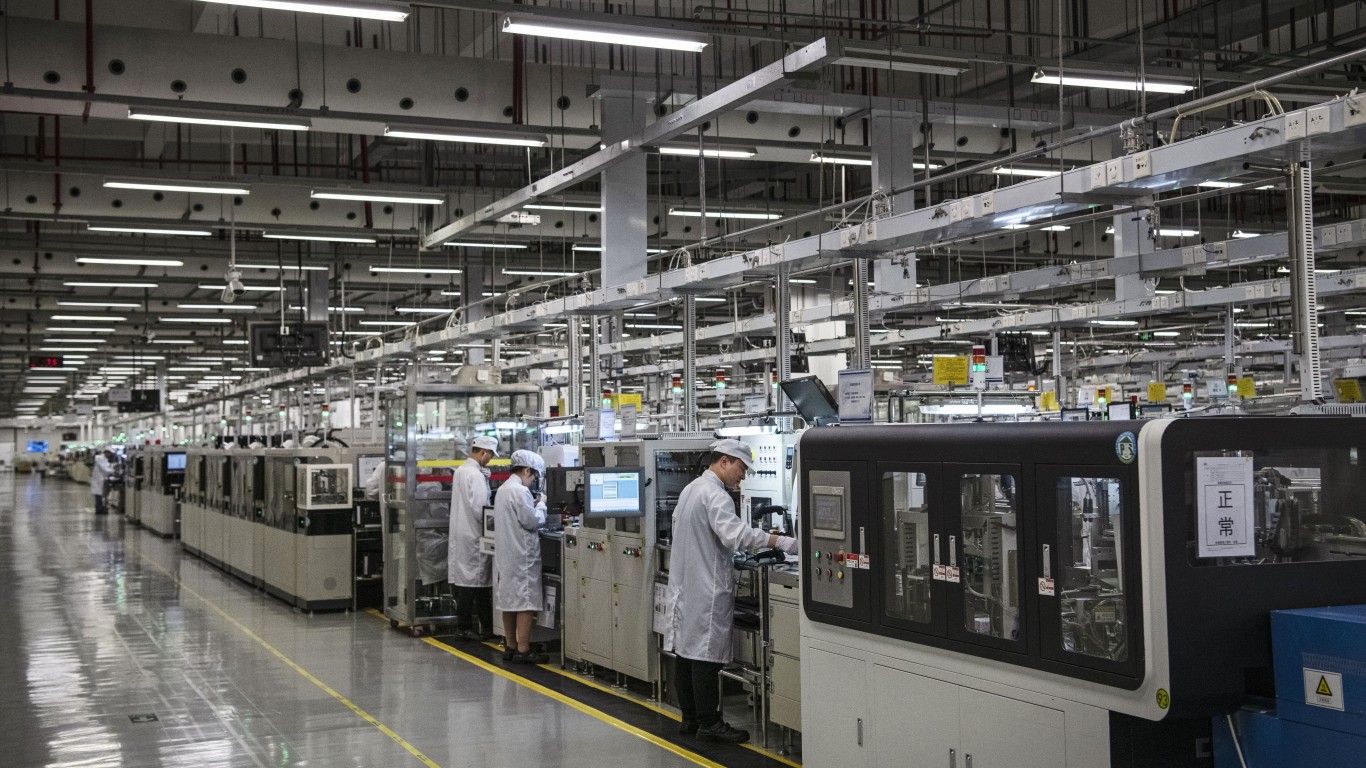
Lam is the pure play. Memory jumped to 46% of systems revenue, NAND dollars more than doubled sequentially, and Taiwan hit a record on leading-edge 2nm and 3nm investment. CEO Tim Archer said “AI-driven demand continues to reshape the semiconductor industry” and the company now sees calendar 2026 WFE in the low $150 billion range, up from a prior $140B view.
Applied is the wide portfolio. Semi Systems delivered $7.04B with segment margin expanding to 38.0%. DRAM including HBM packaging grew 52% year over year. Management launched six new chipmaking systems and said advanced packaging revenue should grow more than 70% in calendar 2026. Its EPIC Center now has 11 co-innovation engagements with TSMC, SK hynix, Micron, and Samsung.
| Business Driver | Lam Research | Applied Materials |
| Core focus | Etch and deposition | Deposition, etch, CMP, epi, metrology |
| China revenue mix | 26% | 28% |
| Next-quarter revenue guide | ~$8.10B | ~$10.25B |
Which One Actually Rides ASML Higher
Here is the argument that matters. Market correlation analysts note that Lam’s concentrated strength in critical gate-all-around (GAA) and advanced memory architectures tightly couples its technological roadmap with ASML’s generation of high-margin EUV systems. Lam’s Akara conductor etch was first adopted at 2 nanometer and below GAA nodes, and every EUV patterning step ASML sells creates downstream etch and ALD work that flows straight into Lam’s tool count. Applied earns from EUV too, especially in patterning films and metrology, but its revenue base spans display, ICAPS, and services that dilute the pure lithography beta.
Year to date, ASML is up 47.95%. Lam is up 60.06%. Applied is up 65.66%. All three cracked hard Monday, with Lam off 8.29% on the session underperforming competitors.
Next Catalyst Is the 2027 Upgrade Wave
Lam sees the $40 billion NAND upgrade opportunity landing before the end of 2027, with per-wafer SAM doubling as customers move to 500-plus layer devices. Applied is preparing to double its quarterly system output by 2028 and cited customer forecasts extending to 2030. I will watch whether HBM stack heights and GAA ramps convert Lam’s technology wins into share gains fast enough to justify a 51 trailing P/E.
Why I Lean Lam as the ASML Proxy
If your goal is tight correlation to ASML’s high-margin EUV cycle, Lam is the cleaner instrument. Its etch and ALD portfolio scales one-for-one with every advanced patterning layer ASML ships. Applied is the safer diversified compounder, trading at a friendlier 39 P/E with a bigger buyback authorization of $12.8 billion and broader packaging exposure. For a defensive play on the same AI capex theme, I lean Applied. For maximum beta to ASML’s next leg higher, Lam wins the argument (we reverse-engineered what the biggest semiconductor winners looked like early in a free playbook you can grab here).
Contact [email protected] for any questions or corrections.
Alex Sirois is a financial writer with experience spanning both retail and institutional investing. He has written for InvestorPlace and held roles at BNY Mellon and Bernstein, giving him a perspective that bridges Main Street portfolios and Wall Street analysis.
Alex holds an MBA from George Washington University and has built his career across multiple industries, including e-commerce, education, and translation — a breadth of experience that informs how he breaks down complex financial topics for everyday investors. His writing is conversational, actionable, and grounded in long-term, buy-and-hold investing principles.
At 247 Wall St., Alex focuses on delivering analysis that is both accessible and useful, with a clear emphasis on helping readers make more informed decisions with their money.