Forget the Memory Chip Arms Race. The Real Trade Is the 3 Equipment Companies Every Chipmaker Must Pay First
Samsung and the memory chip cohort, riding a euphoric wave of HBM pricing and AI memory demand, have become the loudest trade in tech right now. But the smarter seat is upstream, at the equipment vendors who collect payment before…

This post may contain links from our sponsors and affiliates, and Flywheel Publishing may receive compensation for actions taken through them.
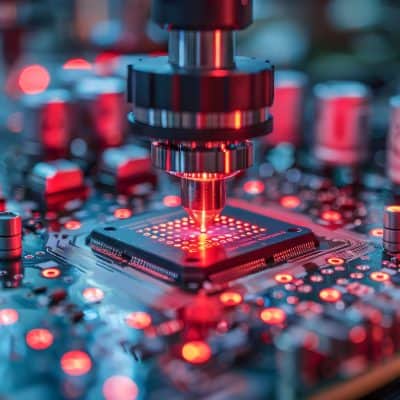
Samsung and the memory chip cohort, riding a euphoric wave of HBM pricing and AI memory demand, have become the loudest trade in tech right now. But the smarter seat is upstream, at the equipment vendors who collect payment before a single wafer ships.
The memory trade is crowded, cyclical, and dangerously dependent on a handful of hyperscalers’ appetite for AI accelerators. HBM remains a commodity in slow motion. Pricing inflects, capacity floods in, and the cycle turns. Samsung, SK Hynix, and Micron all face the same structural trap: when the industry installs the supply it is racing to build, the spot market punishes chipmakers first and fastest.
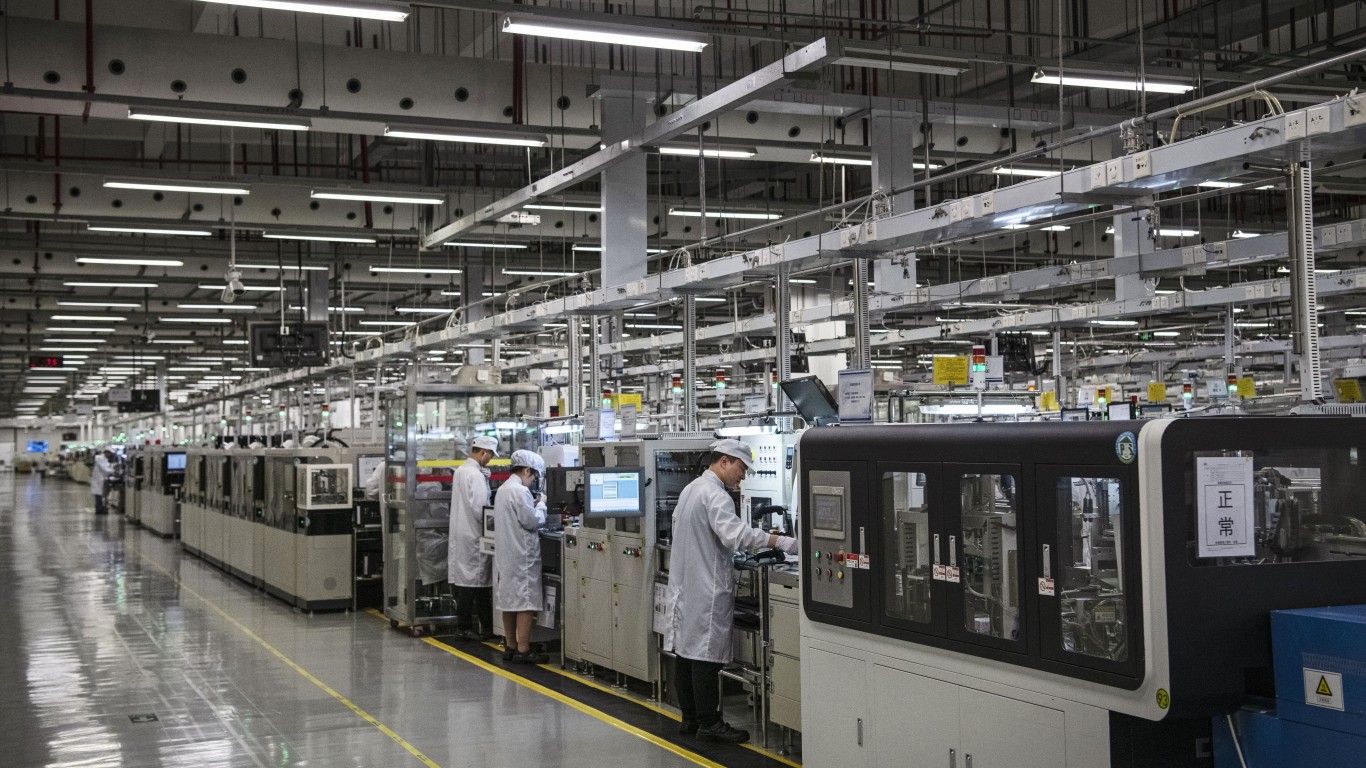
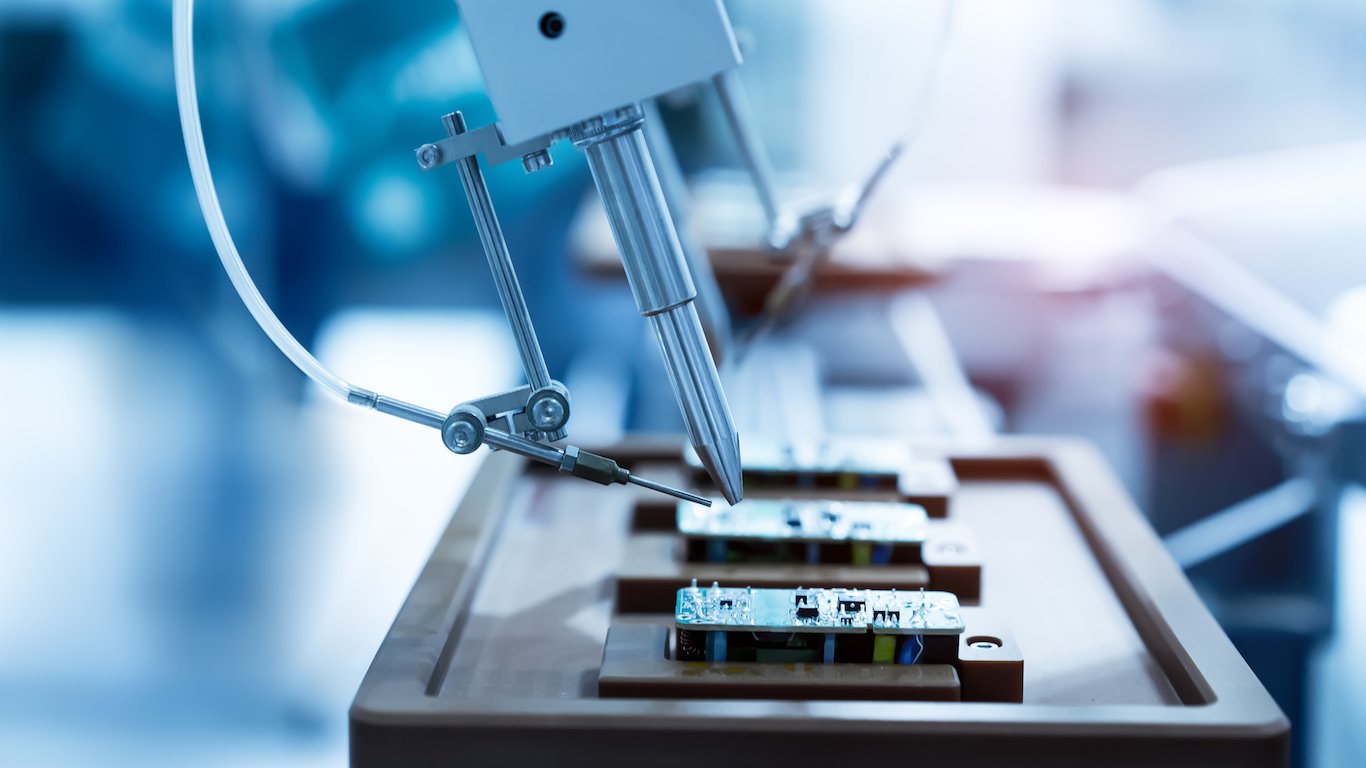
The picks-and-shovels layer offers a fundamentally different proposition. Equipment vendors collect revenue whether memory wins or logic wins, whether the dominant buyer is Nvidia, AMD, or a hyperscaler building its own silicon. Three names own this layer with monopoly or near-monopoly economics, and all three reported record results in their most recent quarters.
ASML: The EUV Monopoly
ASML (NASDAQ:ASML | ASML Price Prediction | ASML Price Prediction) is the sole supplier of extreme ultraviolet lithography systems. No advanced memory or logic node can progress without its machines, a fact that gives the Dutch company structural pricing power no competitor comes close to replicating. The company closed 2025 with a record €38.8 billion backlog and Q4 net bookings of €13.2 billion, of which €7.4 billion came from EUV systems. That order surge, more than double the prior quarter, signals that leading-edge capacity expansion is accelerating rather than plateauing.
Q1 2026 results, reported April 15, delivered net sales of €8.8 billion at a 53% gross margin, well ahead of the midpoint of the annual guidance range despite tightening export controls on China. The strong print prompted management to raise full-year 2026 revenue guidance to a range of €36 billion to €40 billion, up from the prior €34 billion to €39 billion range. The 2030 target reaches €44 billion to €60 billion at 56% to 60% gross margin, underpinned by a High-NA EUV roadmap that only ASML can supply. A €12 billion buyback program runs through 2028.
One meaningful new data point emerged in April 2026: TSMC disclosed it will skip High-NA EUV through 2029, citing the tool’s price tag of over €350 million per unit. That decision shifts early High-NA adoption to Samsung, Intel, and SK Hynix, broadening the customer base for ASML’s highest-margin systems rather than concentrating it. China’s share of system sales fell to 19% in Q1 from 36% in Q4 2025, yet ASML still raised guidance because lost DUV revenue in China is being replaced by higher-margin EUV demand from AI customers in Taiwan, Korea, and the U.S. ASML’s installed base management business generated €8.2 billion in full-year 2025 revenue, a recurring stream that smooths cyclical swings and compounds as the global EUV fleet expands.
Applied Materials: Cashing the HBM Buildout
Applied Materials (NASDAQ:AMAT) is already collecting the AI memory check that chipmakers hope keeps clearing. The company reported Q1 FY2026 revenue of $7.01 billion with non-GAAP EPS of $2.38. DRAM surged to 34% of Semiconductor Systems revenue from 27% a year earlier, a direct readout of HBM capacity buildouts at the leading memory manufacturers.
The acceleration continued sharply. On May 14, 2026, Applied Materials delivered record Q2 FY2026 results: revenue of $7.91 billion and non-GAAP EPS of $2.86, up 11% and 20% year over year respectively. GAAP EPS hit a record $3.51, up 33% year over year. CEO Gary Dickerson raised the company’s semiconductor equipment growth outlook to more than 30% in calendar 2026, up from the prior “over 20%” guidance, citing real-time visibility into customer fab expansion plans across leading-edge logic, DRAM, and advanced packaging. Advanced packaging revenue alone is expected to grow more than 50% in calendar 2026. Management guided Q3 FY2026 revenue to approximately $8.95 billion, implying continued acceleration into the back half of the year.
Applied Global Services, the company’s installed-base and spares business, hit record revenue of $1.67 billion in Q2, growing 17% year over year as fab utilization rates stayed elevated. Applied also raised its quarterly dividend 15% to $0.53 per share, and TSMC joined its EPIC co-innovation platform as a founding partner alongside Micron, Samsung, and SK Hynix. Free cash flow in Q1 jumped 91% year over year to $1.04 billion, funding capital returns while the business scales.
Lam Research: Clean Execution, Record Momentum
Lam Research (NASDAQ:LRCX) closes the trio with the strongest consecutive-quarter execution record in the group. Q3 FY2026 revenue grew 24% year over year to $5.84 billion, the third consecutive record revenue quarter, and 9% sequentially from December. Non-GAAP EPS of $1.47 exceeded the high end of the company’s own guidance range. June quarter guidance calls for revenue of approximately $6.60 billion, a meaningful sequential acceleration, with operating margin guided to 36.5%.
Every 3D NAND layer and every DRAM scaling step routes through Lam’s etch and deposition tools, making the company a structural beneficiary regardless of which memory architecture dominates. DRAM reached 27% of systems revenue in Q3, driven by HBM investments and the industry’s transition to 1C node devices. Foundry accounted for 54% of systems revenue, up 35% year over year, concentrated at the leading edge and in advanced packaging. The AI-driven shift to Gate-All-Around logic is adding another layer of etch intensity that benefits Lam disproportionately.
The Customer Support Business Group crossed $2.1 billion in quarterly revenue for the first time, up 25% year over year. Management now expects global wafer fabrication equipment spending to reach $140 billion in 2026, raised from the prior $135 billion estimate, with an upward bias as clean room capacity comes online and export restriction headwinds from China are absorbed by accelerating multinational spending elsewhere.
Why the Valuations Hold
The valuations are elevated. ASML trades at roughly 46 times forward earnings, Applied Materials at approximately 36 times, and Lam Research at around 37 times. These multiples price in sustained AI-driven capital spending through the end of the decade and leave little room for execution stumbles.
But the premium is grounded in structural reality. ASML holds a true monopoly in EUV with no credible challenger. Applied Materials and Lam Research command dominant shares in their respective process steps, with gross margins above 49% and operating leverage expanding as revenue scales. All three generate substantial free cash flow and return capital through buybacks and dividends. Memory chip makers often trade at similar multiples without the moat, without the recurring service revenue, and without the backlog visibility that already extends well into 2027.
The equipment layer collects payment first. Capacity decisions lock in equipment orders 18 to 24 months before production ramps. That lead time insulates equipment vendors from spot pricing volatility in DRAM and NAND. When HBM prices soften, Samsung’s margin compresses immediately. Applied Materials and Lam Research have already shipped the tools and recognized the revenue.
The Trade
For those tired of chasing memory headlines and navigating cyclical commodity pricing, the more durable opportunity sits at ASML, Applied Materials, and Lam Research. The cash changes hands here first, and the structural advantages compound with every node transition and every new fab that comes online.
Editor’s note: This article updates ASML’s full-year 2026 revenue guidance to the raised range of €36 billion to €40 billion (from €34 billion to €39 billion) following the company’s Q1 results reported April 15, 2026; adds TSMC’s April 2026 disclosure that it will skip High-NA EUV through 2029; and incorporates Applied Materials’ Q3 FY2026 guidance of approximately $8.95 billion in revenue and its 15% dividend increase to $0.53 per share, both announced May 14, 2026.
Contact [email protected] for any questions or corrections.
Alex Sirois is a financial writer with experience spanning both retail and institutional investing. He has written for InvestorPlace and held roles at BNY Mellon and Bernstein, giving him a perspective that bridges Main Street portfolios and Wall Street analysis.
Alex holds an MBA from George Washington University and has built his career across multiple industries, including e-commerce, education, and translation — a breadth of experience that informs how he breaks down complex financial topics for everyday investors. His writing is conversational, actionable, and grounded in long-term, buy-and-hold investing principles.
At 247 Wall St., Alex focuses on delivering analysis that is both accessible and useful, with a clear emphasis on helping readers make more informed decisions with their money.