AMD Jumps 7% as Semiconductor Rebound Reaches a Third Session; Broadcom Rises 3%, NVIDIA Edges Higher
Semiconductor stocks are posting a third straight session of gains, but one chip name is running so far ahead of the pack that it raises an uncomfortable question about whether the move reflects genuine conviction or something riskier.

This post may contain links from our sponsors and affiliates, and Flywheel Publishing may receive compensation for actions taken through them.
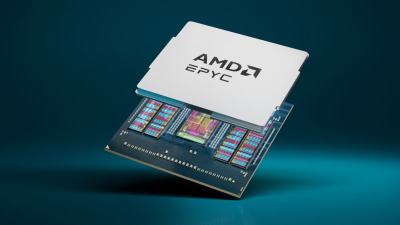
Advanced Micro Devices (NASDAQ:AMD | AMD Price Prediction) is leading a third consecutive session of gains for semiconductor stocks, with AMD stock up 7% to $548.76 in Thursday afternoon trading. The move sits inside a broad chip bounce, with the iShares Semiconductor ETF (NASDAQ:SOXX) up 3% to $519.50. AMD stock is running well ahead of the sector benchmark that holds it.
The wider NASDAQ 100 tape is quieter today. The Invesco QQQ Trust (NASDAQ:QQQ) is up 2% to $716.41, so the day’s strength is concentrated in chips rather than large-cap tech more broadly. That backdrop matters, because the AMD move is a group story rather than a solo one.
Broadcom (NASDAQ:AVGO) stock is up 3% to $349.02, extending prior gains tied to AI accelerator momentum. Also rising, NVIDIA (NASDAQ:NVDA) stock is up 2% to $218.70, edging higher as the group’s market-cap leader while AMD carries the larger percentage gain of the three.

Sector Rebound, Not a Company Event
Today’s action in AMD reflects a semiconductor rebound reaching its third consecutive session rather than an earnings release, guidance change or analyst rating action, and AMD stock is the highest-beta way to own that bounce inside the large-cap chip group.
One same-day development at AMD is worth naming, and it explicitly isn’t the catalyst here. Advanced Micro Devices said it is working with SiFive to tune its open-source ROCm software so it runs on RISC-V datacenter servers for AI workloads. No reporting connects that announcement to the size of the price move, so the article treats it as strategy rather than trigger.
The AMD announcement fits the longer argument that the company is building a software ecosystem around its silicon, not only shipping parts. A demonstration on RISC-V servers isn’t the same as broad customer adoption, though, so the news lives closer to a directional signal than to a near-term revenue line for AMD.
Chip Peers Move, but Year-to-Date Tells a Different Story
AMD stock is up 156% year to date, a run that sits in a different category from its closest large-cap chip peers. Broadcom stock is up 1% over the same period, and AMD stock has outrun both its peers and the fund that holds it by a wide margin this year. NVIDIA’s move today comes off a much larger market-cap base, which is why the same tape produces a smaller percentage number there than at AMD.

That gap between AMD and the rest of the sector is the substance behind the split view of AMD stock right now. The bull case reads the year-to-date figure as the market registering share gains in accelerators and server CPUs, the one corner of semiconductors where spending keeps expanding through cycles. The bear case reads the same figure as an overextended move with further to fall if today’s group bounce fails to hold.
Both readings rest on the same fact, which is why AMD stock keeps trading with the widest daily range in the group even on days when the direction is clear. However, the plain interpretation is that AMD is the highest-beta way to own a semiconductor recovery, and that cuts in both directions rather than confirming either camp (we reverse-engineered what the biggest tech winners looked like early and put the pattern in a free playbook here).
What to Watch Next
Investors can watch for whether AMD stock holds its intraday gain into the close, since a third up session in the group is the setup the next tape will be judged against. A close near the day’s highs would extend the technical case around AMD, while a fade into the afternoon would put today’s move in a different light and reset the near-term risk view on the name.
Traders may want to keep an eye on whether the Instinct and Helios ramp AMD has flagged for the back half shows up in supply-chain checks before the next quarterly update. Their position sizing in AMD shares should reflect that the stock carries the highest beta in this large-cap chip group, so exposure should be scaled to the drawdown they can tolerate rather than to the run already booked in the year-to-date figure.
The setup for AMD stock is a rally driven by sector flows rather than a company-specific catalyst, and that’s the plain read on the day. A sector bounce that carries the group’s most-owned momentum name to a fresh price this quickly can extend, but it can also unwind on the first weak session, and the size of AMD’s year-to-date move is what makes both outcomes matter to anyone already long the name.
Contact [email protected] for any questions or corrections.
David Moadel is financial writer specializing in stocks, ETFs, options, precious metals, and Bitcoin. David has written well over 1,000 articles for leading online publications, helping investors understand markets, income strategies, and risk.His work has appeared in The Motley Fool, InvestorPlace, U.S. News & World Report, TipRanks, ValueWalk, Benzinga, Market Realist, TalkMarkets, Finmasters, 24/7 Wall St., and others.With a master’s degree in education, David has taught at the elementary, high school, and college levels. That teaching background shapes his writing style: clear, educational, and practical. David has also built a loyal social-media audience by providing trustworthy financial content on YouTube, X/Twitter, and StockTwits.