Trump Said He Could Eliminate $19 Trillion in Debt. It Has Now Topped $40 Trillion
Donald Trump once promised to wipe out the entire national debt within eight years. A decade later, the number has moved so far in the opposite direction that the interest payments alone are reshaping what the federal government can afford…


Back in 2016, Donald Trump made one of the boldest economic claims of that year’s presidential campaign. The United States had accumulated more than $19 trillion in national debt, and Trump said he believed the entire thing could be eliminated within eight years.
A decade later, the number has gone the other direction. Total public debt outstanding has now topped $40 trillion. That does not mean one president, one Congress or one policy created the problem. Federal debt reflects decades of spending and tax decisions, economic downturns, emergency programs, interest costs and programs that grow automatically under existing law. But the jump from roughly $19 trillion to more than $40 trillion is real, and the interest bill attached to it is becoming increasingly difficult to ignore. Here is what the numbers actually show.
Trump Said the $19 Trillion Debt Could Be Eliminated in Eight Years
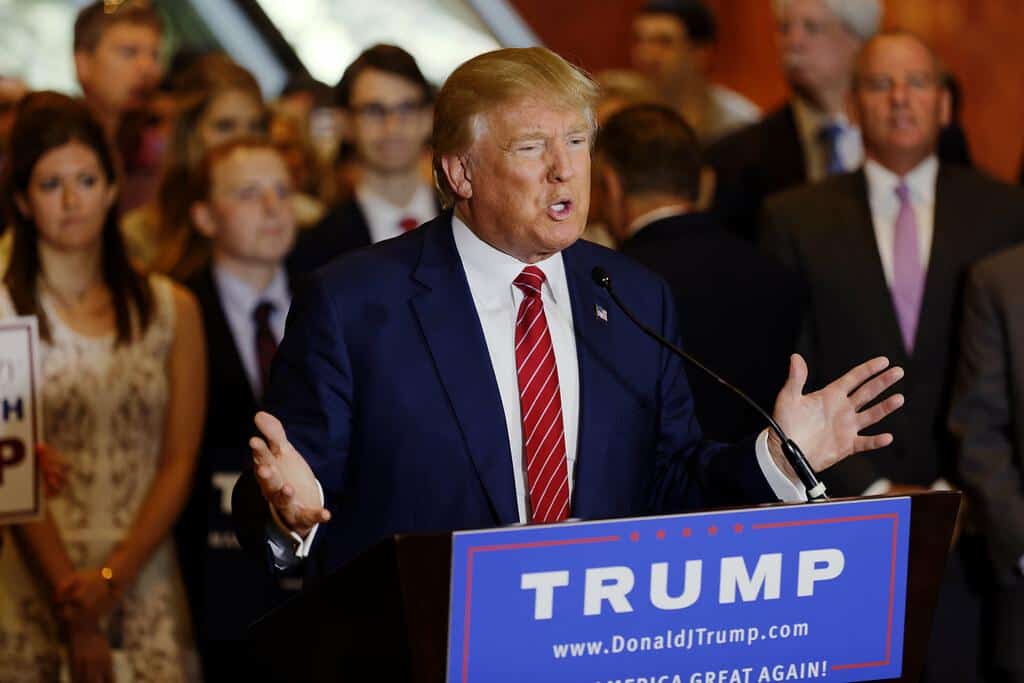
During a March 31, 2016 interview with The Washington Post, Trump was asked how quickly the United States could get rid of its roughly $19 trillion national debt. His answer was eight years. He argued that renegotiating trade deals and producing stronger economic growth could generate enough improvement to bring the balance down. The interview was published on April 2. The arithmetic behind completely eliminating that much debt was always formidable because the government was already running annual deficits rather than the enormous surpluses that paying down trillions of dollars would require.
The Debt Was Just Under $20 Trillion When Trump Took Office

When Trump was inaugurated on January 20, 2017, total public debt outstanding stood at about $19.95 trillion, according to Treasury data compiled by the Congressional Research Service. Of that amount, roughly $14.4 trillion was debt held by the public, while another $5.5 trillion consisted of intragovernmental holdings. Those distinctions matter, but either way the government’s balance sheet was already enormous before the new administration made its first budget decision.
Four Years Later, Total Debt Was About $27.75 Trillion

By January 20, 2021, total public debt outstanding had reached approximately $27.75 trillion. Debt held by the public accounted for about $21.64 trillion of that total. The increase cannot be reduced to a single policy or even a single cause. Tax and spending legislation increased borrowing before 2020, and the COVID-19 pandemic then produced an extraordinary combination of emergency federal spending, reduced economic activity and lower government revenue. The result was a huge increase in borrowing over a very short period.
The Pandemic Sent Federal Borrowing Into Overdrive

COVID-19 dramatically changed the federal budget. Congress approved trillions of dollars in bipartisan emergency measures covering stimulus payments, expanded unemployment benefits, business assistance, health care spending and other programs. At the same time, the economic downturn disrupted federal revenues. The CARES Act alone carried an estimated cost approaching $2 trillion. Later relief legislation added hundreds of billions more. Whatever fiscal path existed at the beginning of 2020 was effectively blown apart within weeks.
The Debt Kept Rising After the Pandemic Emergency

The end of the immediate pandemic emergency did not send the national debt back down. Federal deficits continued through the Biden administration and into Trump’s second administration as government spending continued to exceed federal revenue. The policies driving those deficits changed over time, but the basic arithmetic did not. Every year Washington spends more than it collects; Treasury generally has to borrow to cover the gap. Add enough annual deficits together and the accumulated debt keeps climbing.
The Latest Total Is About $40.1 Trillion

The Treasury’s daily Debt to the Penny data put total public debt outstanding at approximately $40.10 trillion on September 18, 2026, the latest daily figure available at the time of publication. That means the headline total has more than doubled from the roughly $19 trillion figure Trump discussed in 2016. It has also risen by more than $12 trillion since January 2021. Numbers this large start to lose meaning quickly, but the direction is not complicated. The federal government has continued borrowing much faster than it has been paying old debt down.
Not All $40 Trillion of Federal Debt Is the Same

That $40.1 trillion headline number is gross federal debt. As of September 18, roughly $32.4 trillion was debt held by the public, while about $7.7 trillion consisted of intragovernmental holdings. The public portion includes Treasury securities owned by investors, financial institutions, the Federal Reserve and foreign holders. Intragovernmental debt mostly represents Treasury securities held by federal accounts and trust funds. Economists and the Congressional Budget Office often focus on debt held by the public because that borrowing interacts directly with credit markets and private investment.
The Debt and the Deficit Are Two Different Things

This distinction trips people up constantly. The federal deficit is the gap between what the government collects and what it spends during a particular fiscal year. The debt is the accumulated amount the government owes after years of borrowing. Think of the deficit as what gets added to the tab during the year and the debt as the running balance. The relationship is not perfectly one-for-one because Treasury’s cash balances and other financing activities also affect borrowing, but persistent deficits are the main reason debt keeps increasing.
No President Controls the Debt by Himself

Presidents propose budgets, sign or veto legislation and can influence tax and spending policy, but Congress holds the constitutional power to tax, spend and borrow. Many federal expenses are also driven by laws enacted years earlier. Social Security and Medicare benefits, for example, do not disappear when a new president takes office. Neither do interest payments on existing debt. Economic recessions, wars, emergencies and changes in tax revenue can move the deficit dramatically as well. That is why assigning the entire national debt increase to whichever president happens to be in office misses how federal budgeting actually works.
The Government Is Still Running Trillion-Dollar Deficits

The debt is continuing to rise because the annual gap has not disappeared. The Congressional Budget Office estimated that the federal deficit totaled about $2.0 trillion during the first 11 months of fiscal 2026. That was roughly in line with the deficit over the comparable period a year earlier once calendar-related payment shifts are considered. In other words, even without another pandemic-sized emergency package, the federal government is still borrowing on a scale measured in trillions of dollars.
Interest Is Now a Trillion-Dollar Budget Expense

The size of the debt matters more when borrowing is expensive. CBO’s February 2026 baseline projected net federal interest costs of slightly more than $1 trillion for fiscal 2026, up from about $970 billion in 2025. That works out to roughly 3.3% of the entire U.S. economy. CBO projected that net interest spending would continue climbing over the next decade, reaching about $2.1 trillion in 2036. At that point, interest alone would consume nearly one-fifth of all federal spending under the agency’s baseline assumptions.
Treasury Is Borrowing in a Much More Expensive Market
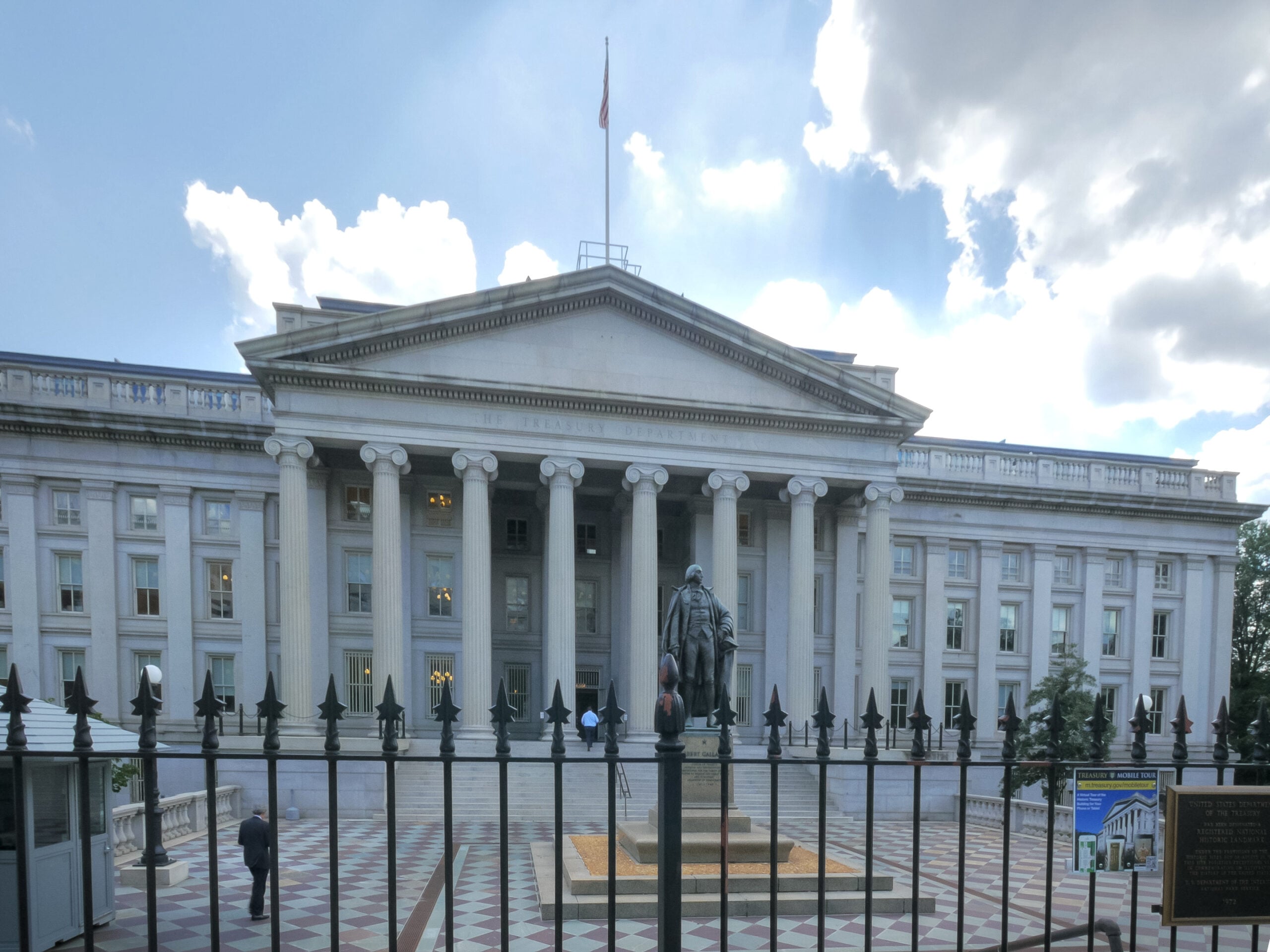
As of September 21, 2026, the Treasury’s official yield curve showed a 3-month rate of about 4.17%, a 10-year rate of 4.96% and a 30-year rate of 5.29%. Those are market yields on newly traded Treasury securities, not the average rate being paid on every dollar of federal debt. Still, they matter because Treasury constantly issues new securities and replaces maturing ones. When replacement debt carries a higher rate than the securities rolling off, the government’s interest bill rises even if Congress does not create a new spending program.
The Entire $40 Trillion Does Not Reprice Overnight

There is an important wrinkle here. A 5% 10-year Treasury yield does not mean the government suddenly pays 5% on $40 trillion. Treasury debt matures at different times and was issued at many different interest rates. CBO estimated the average interest rate on debt held by the public at about 3.4% in 2026. As older securities mature and Treasury refinances them, today’s rates gradually work their way into the government’s overall borrowing cost. That slow repricing is why higher rates can continue pushing interest expense upward years after rates first increase.
Social Security, Medicare and Interest Are Major Long-Term Pressures

The long-term problem is larger than any single annual spending fight. CBO projects that an aging population and rising health care costs will push Social Security and Medicare spending higher relative to the economy over the coming decade. Interest costs are projected to rise at the same time. That does not mean Social Security or Medicare alone caused the national debt, and those programs have dedicated revenue streams of their own. It means the combination of growing mandatory spending, interest costs and persistent gaps between total revenue and total spending makes balancing the federal budget increasingly difficult.
A Larger Debt Can Eventually Reach Your Wallet

There is no line on your mortgage statement labeled “national debt fee.” The effects are more indirect. CBO says larger federal borrowing can put upward pressure on interest rates and crowd out some private investment because the government is competing for the same pool of savings as businesses and households. Rising interest costs also consume money that could otherwise finance government programs, tax reductions or emergency responses. The larger the debt becomes, the more sensitive the federal budget becomes to relatively small changes in interest rates.
CBO’s Baseline Has Gross Federal Debt Reaching $64 Trillion

The original $50 trillion milestone makes for an eye-catching prediction, but simply extending a few recent quarters forward is not a sound way to forecast federal debt. CBO offers a more rigorous benchmark. Under its February 2026 baseline, which assumes laws generally remain as they were when the projection was prepared, debt held by the public rises to about $56 trillion by the end of 2036 and gross federal debt reaches roughly $64 trillion. Those are projections, not guarantees. Congress, presidents, courts, interest rates and the economy can all change the path. What the baseline makes clear is that under current fiscal settings, the debt is not projected to start shrinking on its own.
Contact [email protected] for any questions or corrections.