Is Jensen Huang Gaslighting You About Your Rising Electric Bill?
Jensen Huang told CBS that AI data centers are actually lowering your energy bills, but some homeowners are watching their utility costs spike hundreds of percent as new facilities come online near them. His own earnings calls reveal something that…

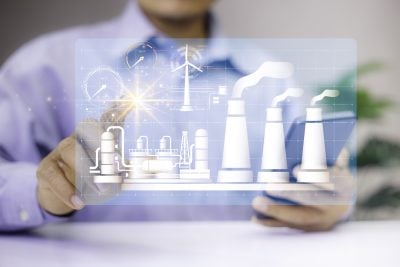
NVIDIA (NASDAQ:NVDA | NVDA Price Prediction) CEO Jensen Huang recently told CBS News that worries about data center water use are a “myth”. He also said that data centers are creating “the opposite” of higher energy bills. Some homeowners see something else when their bills come. In parts of the country, utility bills have spiked hundreds of percent as AI data centers are built and draw on local resources. Huang’s own earnings calls help explain the gap.
Huang Is Pointing to Future Data Centers
Huang told CBS that data centers have become more energy-efficient and need less water than they once did. He compared their water use to what a swimming pool evaporates in a year. He also admitted the industry made mistakes: “I would say we’re sorry we didn’t come talk to you sooner.”
His claim fits the newest sites. Liquid cooling coupled with adiabatic assist has both low PUEs and WUEs, meaning the facilities use power and water efficiently. Many older facilities still use cooling towers, which create a “large loss of consumptive, non-recyclable water”. U.S. data centers used 21.2 billion liters of water in 2014 and an estimated 66 billion liters in 2023.
Huang’s Earnings Calls Describe a Massive Power Buildout
In May, Huang called AI factories “the largest infrastructure expansion in human history.” On the August 26 call, he said: “The AI infrastructure buildout is at full steam.” Revenue reached $96.22 billion, up 105.8% from a year earlier. Data Center revenue rose 117% to $89.02 billion.
Huang also named power as a constraint. Customers now have to “secure the land, power and shell, which oftentimes is two, three years out.” He said NVIDIA has supply to meet about 70% of demand, adding, “Our demand is much higher than that.” One Ohio campus for OpenAI alone is expected to support 4.25 gigawatts of AI factory capacity.

Efficiency Fuels More Computing as Power Demand Rises
According to NVIDIA, Vera Rubin provides “30X higher throughput per megawatt” than Grace Blackwell Ultra. Huang said the ideal would be “infinity per gigawatt.” That goal means putting more computing into each gigawatt, while total power demand keeps rising. NVIDIA is also working with lenders and investment firms to raise over $500 billion in outside capital for AI infrastructure.
Grid data shows the strain. After 15 flat years, U.S. electricity demand has grown 2.1% per year over the last five years. Between 2023 and 2024, the average data center load doubled from 150 to 300 megawatts.
What Investors Should Watch
NVIDIA expects third-quarter revenue of $108.0 billion, plus or minus 2%. The stock is up 23.26% year to date. Also keep an eye on how utilities pass costs along. Dominion Energy, for example, is creating a new rate class so that large data centers pay their share. All of that power and cooling has to come from somewhere, and we featured seven suppliers behind the AI data-center expansion in a free report you can grab here.

Contact [email protected] for any questions or corrections.
After two decades of patrolling the dark corners of suburbia as a police officer, Rich Duprey hung up his badge and gun to begin writing full time about stocks and investing. For the past 20 years, he’s been cruising the markets looking for companies to lock up as long-term holdings in a portfolio while writing extensively on the broad sectors of consumer goods, technology, and industrials. Because his experience isn’t from the typical financial analyst track, Rich is able to break down complex topics into understandable and useful action points for the average investor. His writings have appeared on The Motley Fool, InvestorPlace, Yahoo! Finance, Money Morning, and, of course, 24/7 Wall St. He has been featured in both U.S. and international publications, including MarketWatch, Financial Times, Forbes, Fast Company, and USA Today.