Jensen Huang’s Huge AI Prediction Has Just One Tiny Problem
Jensen Huang has a way with grand pronouncements. On NVIDIA’s most recent earnings call, the CEO told investors that “the buildout of AI factories, the largest infrastructure expansion in human history, is accelerating at extraordinary speed.” The numbers behind that…

This post may contain links from our sponsors and affiliates, and Flywheel Publishing may receive compensation for actions taken through them.
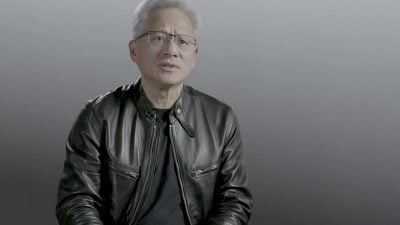
Jensen Huang has a way with grand pronouncements. On NVIDIA’s most recent earnings call, the CEO told investors that “the buildout of AI factories, the largest infrastructure expansion in human history, is accelerating at extraordinary speed.” The numbers behind that statement are real: NVIDIA (NASDAQ:NVDA | NVDA Price Prediction) just posted $81.61 billion in quarterly revenue, with Data Center alone contributing $75.25 billion, up 92% year over year.
The tiny problem? The customers paying for those factories are beginning to ask harder questions about what they’re getting back.
The Supply Side Looks Bulletproof
Huang’s supply-chain framing remains confident. Speaking alongside the SK Group chairman this past weekend, he flagged a prolonged chip shortage and detailed deeper cooperation with Korean memory suppliers, per Reuters. NVIDIA’s own balance sheet backs the bullishness: total supply-related commitments have climbed to $119.0 billion, up from $95.2 billion just one quarter earlier.
Demand-side commitments are equally ambitious. OpenAI has committed to at least 10 gigawatts of NVIDIA systems, Meta signed a multiyear deal covering millions of Blackwell and Rubin GPUs, and CoreWeave is targeting 5-plus gigawatts of AI factories by 2030.

The Tiny Problem: ROI Math Is Getting Awkward
Three recent disclosures suggest enterprise buyers are struggling to translate token spend into measurable returns.
First, Uber COO Andrew Macdonald told a May 25 conference that the company cannot draw a clear line between surging AI token spend and measurable consumer product improvements. Second, Microsoft canceled internal Claude Code licenses in its Experiences and Devices division effective June 30, citing budget overruns from token-based billing. Third, Meta shut down its internal AI token leaderboard, Claudeonomics, in April after employees were found gaming it.
The discipline behind AI demand is tightening, even as overall spend continues to grow. Reddit sentiment on NVDA has turned mixed-to-bearish, with a widely circulated post highlighting that H200 GPU rental prices fell 38% through the second half of May, an early signal that compute capacity may be outrunning monetizable workloads.
Where the Tension Resolves
NVIDIA shares closed at $205.10 on June 5, down 8% since the May 20 earnings release, even as the stock remains up 47% over the past year. Polymarket traders assign a 59% probability that NVDA settles around $200 for June.
Huang’s prediction can still be correct in aggregate. Token volumes keep climbing, hyperscaler capex keeps expanding, and Q2 revenue guidance of $91.0 billion implies continued acceleration. The question is whether enterprise CFOs will keep writing checks at the pace required to justify $119 billion in supply commitments when their own ROI dashboards still read inconclusive.

Watch the next two earnings cycles. If hyperscaler capex commentary stays firm and token growth holds, the supply-demand handshake remains intact. If enterprise pilots stall, the largest infrastructure expansion in human history meets the oldest question in business: what’s the return?
Contact [email protected] for any questions or corrections.
Joel South covers large-cap stocks, dividend investing, and major market trends, with a focus on earnings analysis, valuation, and turning complex data into actionable insights for investors.
He brings more than 15 years of experience as an investor and financial journalist, including 12 years at The Motley Fool, where he served as an investment analyst, Bureau Chief, and later led the Fool.com investing news desk. He has also co-hosted an investing podcast and appeared across TV and radio discussing market trends.