DA Davidson Cut Its Dutch Bros Target. It Still Sees Big Upside From Here
A 49% capex spike and a lost bidding war cratered Dutch Bros shares, but one analyst just reloaded his Buy rating while shifting his valuation two years forward. The question is whether slowing foot traffic or surging new stores tells…

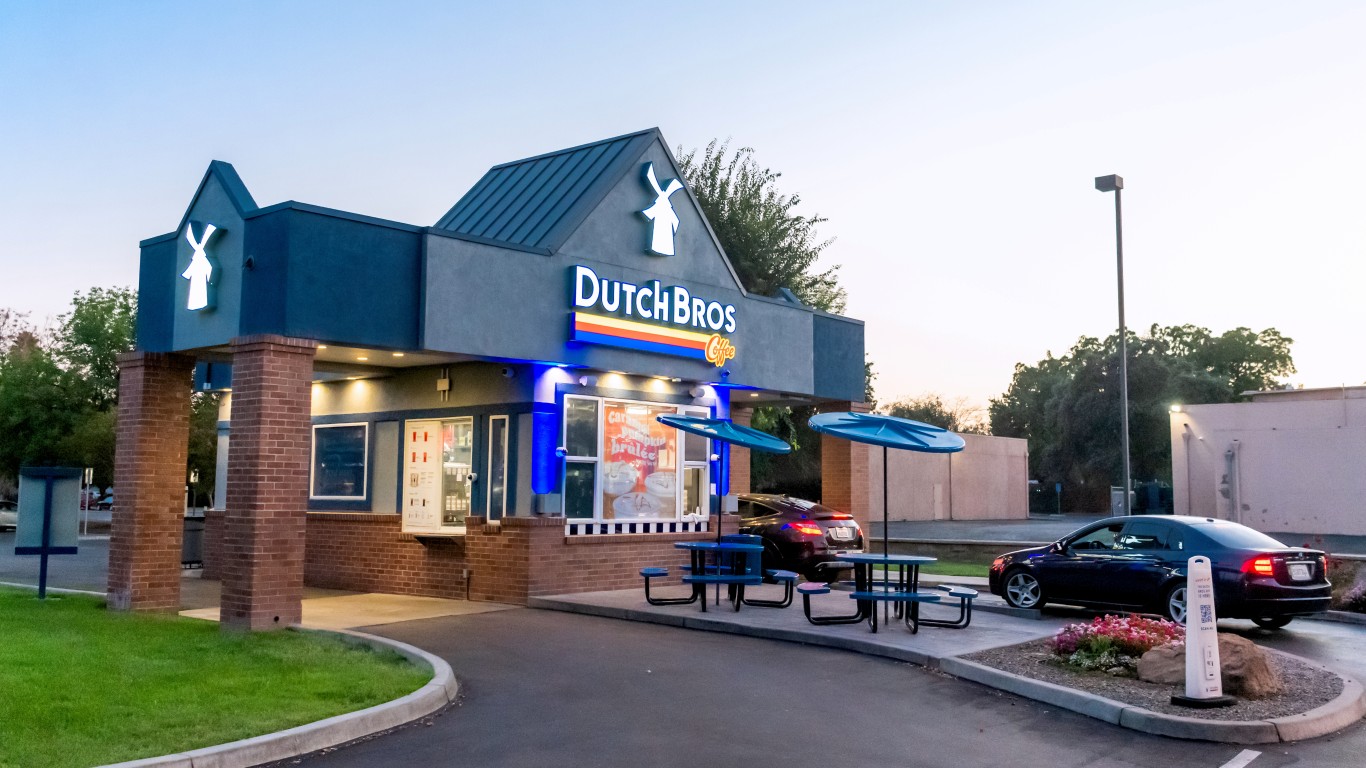
DA Davidson analyst Matt Curtis cut his price target on Dutch Bros (NYSE:BROS | BROS Price Prediction) from $85 to $60 on September 28. He kept his Buy rating unchanged.
A cut that large signals the old valuation was too generous, but the business case remains intact.
The drive-thru coffee chain trades at $37.76, about 49% below its fifty-two-week high of $74.02. Shares have lost 24.38% over the past month.
Matt Curtis called the stock’s 26% one-month decline an attractive entry point. Dutch Bros grew second-quarter revenue 32.5% and continues to open shops quickly.
It hinges on one number. Whether the cut target and unchanged rating signals confidence or retreat depends on how many customers actually showed up.
Curtis Moved His Valuation Out to 2027
Matt Curtis based the new target on 23 times fiscal 2027 EBITDA, pushing the return further out instead of anchoring it to this year.
He also wrote that “third-party credit card data and store checks suggest underlying traffic remains healthy.”
Curtis expects Dutch Bros to land near the middle of its 5% to 6% fiscal 2026 comparable sales outlook.
Comparable sales measure revenue at locations open at least a year, stripping out growth from new stores, and the debate turns on whether growth comes from new shops or from existing ones selling more.
A Capex Jump and a Lost Bid Broke the Stock
Capital spending triggered the selloff. The Motley Fool noted that 2026 capex guidance jumped 49%, and shares fell 20% in the week after midyear results.
Dutch Bros raised its 2026 capex outlook to $350 million to $370 million, largely for its Phoenix franchise acquisition, even though revenue beat expectations.
Then rival 7 Brew outbid Dutch Bros for 73 Salad and Go locations with an offer of more than $143 million.
Chief executive Christine Barone responded that the company has always been disciplined about capital allocation, which signals real restraint since overpaying for conversion sites would have compounded the spending worry that triggered the slide.
Transactions Are Fading Faster Than Comps
Dutch Bros still posted 5.8% same-shop sales growth in the second quarter, but transaction growth slowed to 1.7%.
In the third quarter of 2025, Dutch Bros reported 4.7% transaction growth. That slowing is the most important number in this story.
When comps rise while traffic barely moves, growth comes from price and mix, not more customers. Pricing has a ceiling; traffic can keep compounding.
Management guided third-quarter system comps to 4% to 5%. The company said effective pricing would be less than a point in the back half, so ticket gains shrink as transaction comparisons toughen.
Three Target Cuts Signal a Valuation Reset
TD Cowen cut its target to $59 from $73, and Melius Research lowered its target to $70 from $95. Three cuts signal a broad reset in what investors will pay for restaurant growth.
One major data provider’s quote page puts the average target at $75.48, although that provider’s own pages disagree. Ratings stand at 4 Strong Buy, 20 Buy, 1 Hold, and 1 Sell.


Dutch Bros ended 2025 with 1,136 shops and raised 2026 revenue guidance to $2.10 billion to $2.13 billion while targeting at least 185 openings.
The market has ignored that. Shares are down 38.35% this year while the S&P 500 is up 12.27%.
Should You Buy or Sell BROS Stock
Dutch Bros looks compelling at $37.76. The price sits well below TD Cowen’s $59 target, and director Todd Penegor bought 2,000 shares at $51.56 on August 13.
Transactions are slowing but still growing. New shops keep lifting revenue, and second-quarter net income rose 101.4%.

Pricing rolls off in the back half, which makes the third quarter a clean test of demand. If system comps land inside the guided range with positive transactions, the stock is pricing in a slowdown the business hasn’t delivered.
One datapoint would change my call. If third-quarter transaction growth turns negative, existing shops are losing customers, and new openings would only be hiding a shrinking base.
BROS stock is a buy, but be prepared for a slow recovery.
Contact [email protected] for any questions or corrections.
Omor Ibne Ehsan is a writer at 24/7 Wall St. He is a self-taught investor with a focus on growth, cyclical, and dividend equities that have strong fundamentals, value, and long-term potential. He also has an interest in high-risk, high-reward investments such as penny stocks.