What It Actually Takes for Bank of America to Keep Raising Its Dividend
Bank of America just raised its dividend again, but a razor-thin capital cushion separates the next raise from a payout freeze. Here is the precise mechanism that determines whether shareholders get another bump or watch buybacks disappear first.

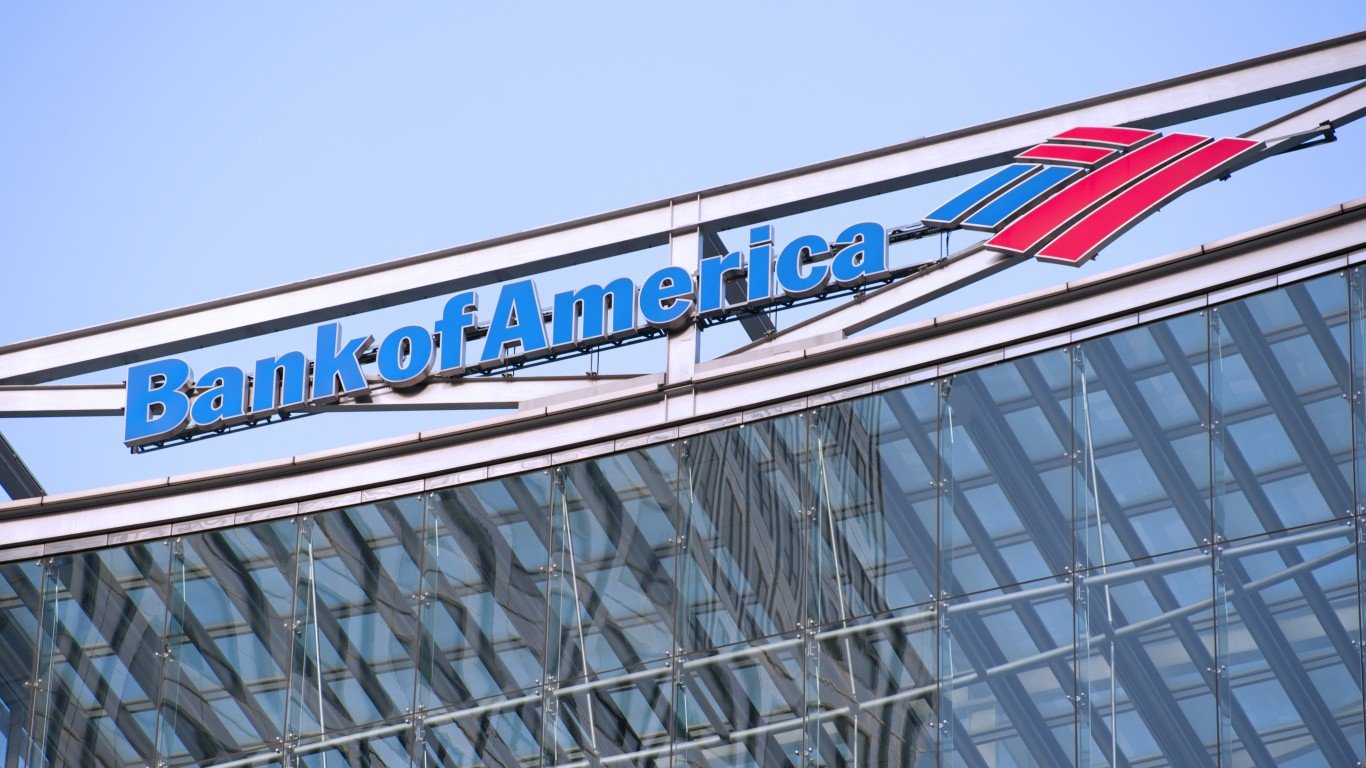
Bank of America (NYSE:BAC | BAC Price Prediction) raised its quarterly common dividend to $0.32 from $0.28, declared on July 24, 2026. The annualized forward payout now stands at $1.28 per share. Second-quarter EPS was $1.21, and the bank paid $2.0B in common dividends against $9.07B of net income. Capital is the constraint.

Why Record Profits Still Hit a Capital Ceiling
As a systemically important bank, Bank of America must hold common equity Tier 1 (CET1) capital above a regulatory floor. Every dollar paid out reduces that pool. Every new loan raises risk-weighted assets, which raises required capital. CFO Alastair Borthwick laid out the math during July’s earnings call:
“Tier 1 common equity grew to nearly $202 billion while our RWA increased to $1.8 trillion driven by loan growth and capital markets activity.”
“We remain in a strong position with our CET1 ratio stable at 11.2% and that remains well ahead of our 10% minimum ratio.”
That reserve is the smallest among peers. JPMorgan Chase (NYSE:JPM) reported a 14.3% CET1 ratio in Q1 2026, and Citigroup (NYSE:C) ended 2025 at 13.2%. Bank of America’s average loans rose 8% to $1.2 trillion, consuming capital peers with more slack can return.
Stress Tests Set the Payout Calendar
The Fed’s annual stress test resets each bank’s buffer, and dividend increases arrive after summer results. CEO Brian Moynihan tied credit discipline to those results on the July 14, 2026 call:
“We stick to our credit knitting, so to speak. It’s been consistent. It’s been long-term. You can see it in the stress test results, again, that just got issued.”
Buybacks Take the Bigger Slice
Dividends and repurchases draw from the same capital. In Q2 2026, the bank spent $6.0B on buybacks versus $2.0B on dividends. In Q1, repurchases were roughly $7.2B of $9.3B returned.
The dividend held at $0.18 through mid-2021, then stepped to $0.21, $0.22, $0.24, $0.26, $0.28 and $0.32, one raise annually since 2021. Management treats the dividend as a sticky commitment and buybacks as the flexible valve.
What Must Hold, and What Would Stall Raises
Raises continue if:
- Net interest income compounds. Q2 NII hit $16.00B, up 9%.
- Credit stays healthy. The net charge-off ratio improved to 0.47% from 0.55%.
- CET1 stays clear of the 10% minimum while loans grow.

Raises stall if:
- Rates fall. A 100 bps downward shift would reduce NII by about $2.2B.
- $70.3B of commercial real estate exposure goes bad.
- Capital rules tighten or Global Markets revenue falls.
Borthwick highlighted one internal tool:
“As we continue to pay that down, that’ll free up more capital. It’ll help us on the return on tangible common equity as well.”
Our View: Steady Raises, Flexible Buybacks
Bank of America will raise its dividend annually, and the jump to $0.32 signals board confidence in the stress-test outcome. The real limit is the gap between an 11.2% CET1 ratio and the 10% floor. When capital tightens, buybacks shrink first and the dividend holds. The next checkpoint is the October 14 third-quarter report.
Contact [email protected] for any questions or corrections.
Chris Lange is a financial and geopolitical writer with more than a decade of experience covering a myriad of topics. He has published thousands of articles for 24/7 Wall St., with past coverage focused heavily on stocks, IPOs, healthcare, defense, global affairs, and technology.
His work has been quoted, or referenced by a number of outlets including Business Insider, USA Today, Yahoo Finance, MSN, The Motley Fool, and many other publications. A graduate of Southwestern University, he studied business with a focus on investments and has previous experience in banking and startups.
When not reading or writing the news, he is following his passion for Lacrosse, playing chess, or building solar projects with his dad.