He Sold His Father’s Gold at $4,700 an Ounce. Two Years Later, Medicare Could Double His Part B Premium
Selling inherited gold coins felt like a straightforward windfall until Medicare entered the picture. A single transaction can quietly reshape what a retiree pays in premiums two years later, and most people discover the connection far too late to do…


The inheritance itself generally was not federal taxable income, thanks to the stepped-up basis rules that usually reset inherited property to its fair market value at the date of death. But any appreciation that occurred after his father’s death can still create a taxable capital gain, increase the MAGI Medicare uses for IRMAA, and, for a sale completed in 2026, ordinarily show up in the premium calculation for 2028.
The Inheritance Wasn’t the Tax Bill
Receiving the gold coins from his father generally was not federal taxable income. The IRS says property received as a gift, bequest, or inheritance usually is not included in income. That part of the story is straightforward.The surprise comes later. Once inherited property is sold, the tax question changes from “Was the inheritance taxable?” to “How much gain was created after the inheritance?” That gain can affect more than the tax return. For a Medicare beneficiary, it can also raise future Part B and Part D costs.
The Tax Basis Usually Resets at Death

Inherited property generally receives a new tax basis tied to its fair market value on the date of the owner’s death, subject to exceptions such as an alternate valuation elected by an estate. That is the step-up in basis people are usually talking about.If Dad bought the coins decades ago for a fraction of their eventual value, the heir generally does not inherit that old purchase price as his basis. The appreciation that occurred during Dad’s lifetime can effectively disappear from the heir’s capital-gain calculation. The appreciation after Dad’s death does not.
For Coins, Spot Gold Is Not Automatically the Basis

This is where a sloppy estimate can become expensive. The stepped-up basis is the fair market value of the actual inherited property, not automatically the spot price of gold multiplied by the ounces in the collection. Some coins trade close to their metal value. Others carry collectible or numismatic premiums based on rarity, grade, condition, and demand. If the collection was worth more than its melt value when the father died, using only the old gold price could understate the heir’s basis and overstate the taxable gain. A defensible date-of-death appraisal matters.
The Gain After His Father Died Is Still Taxable

Assume the collection’s defensible date-of-death value worked out to about $1,900 per ounce of gold content and the heir later sold it for roughly $4,700 per ounce. The taxable gain is built from the difference between the sale proceeds and adjusted basis, not from the full $4,700.That distinction is the whole story. The step-up can erase the father’s lifetime appreciation from the son’s gain, but it does not freeze the value forever. Any post-death appreciation can still show up on the son’s tax return when he sells.
Inherited Gold Coins Get Collectibles Tax Treatment

Gold coins fall under the federal tax rules for collectibles. The IRS specifically includes coins and metals such as gold, silver, and platinum in that category. Net long-term collectibles gain can be taxed at a maximum federal rate of 28%, although the actual tax rate can be lower depending on the taxpayer’s overall taxable income.Inherited property also gets a helpful holding-period rule: the IRS treats inherited property as held for more than one year regardless of how long the heir actually owned it. That generally puts the gain in the long-term bucket rather than short-term ordinary-income treatment.
A $50,000 Gain Does Not Require a Giant Collection

Using a purely illustrative $1,900-per-ounce date-of-death value and a $4,700 sale price, the appreciation is $2,800 per ounce. About 18 ounces of gold content would create roughly $50,400 of gain before considering selling expenses or other basis adjustments.And $4,700 is not a fantasy number for 2026. The World Gold Council reported that gold reached highs of roughly $4,700 an ounce during the August rally. That makes this kind of Medicare problem much easier to stumble into than it would have been when gold traded at much lower levels.
Medicare Counts the Gain in MAGI

For Medicare IRMAA, Social Security generally starts with adjusted gross income and then adds tax-exempt interest. That means a taxable capital gain from selling the coins can raise the same MAGI number used to determine income-related Medicare surcharges.Tax-exempt municipal-bond interest counts too, even though it is not included in federal taxable income. This is why retirees can get caught by IRMAA even when they think they have carefully managed their taxable income. Medicare is looking at a slightly different number.
A 2026 Sale Usually Shows Up in 2028 Medicare

IRMAA normally works on a two-year lookback. Social Security says the income information used for a premium year is generally from two years earlier. That means a gain reported on a 2026 federal return would ordinarily be used when Medicare determines 2028 income-related premiums.The important caveat is that the actual 2028 IRMAA brackets and Part B premiums have not been published yet. So nobody can honestly tell this retiree today exactly what a 2026 sale will cost him in Medicare premiums in 2028. The current 2026 schedule is useful only as an illustration of how large the jumps can be.
The 2026 IRMAA Tiers Show How Sharp the Jump Can Be

For a single filer in 2026, the standard Part B premium is $202.90 per month when MAGI is $109,000 or less. Above $109,000 through $137,000, Part B rises to $284.10. Above $137,000 through $171,000, it jumps to $405.80.The higher single-filer tiers are $527.50 above $171,000 through $205,000, $649.20 above $205,000 but below $500,000, and $689.90 at $500,000 or more. Part D IRMAA surcharges rise alongside those tiers from $14.50 to as much as $91 per month. Joint filers use higher thresholds, beginning above $218,000 in 2026.
$95,000 of Income Plus the Coin Gain Can Double Part B
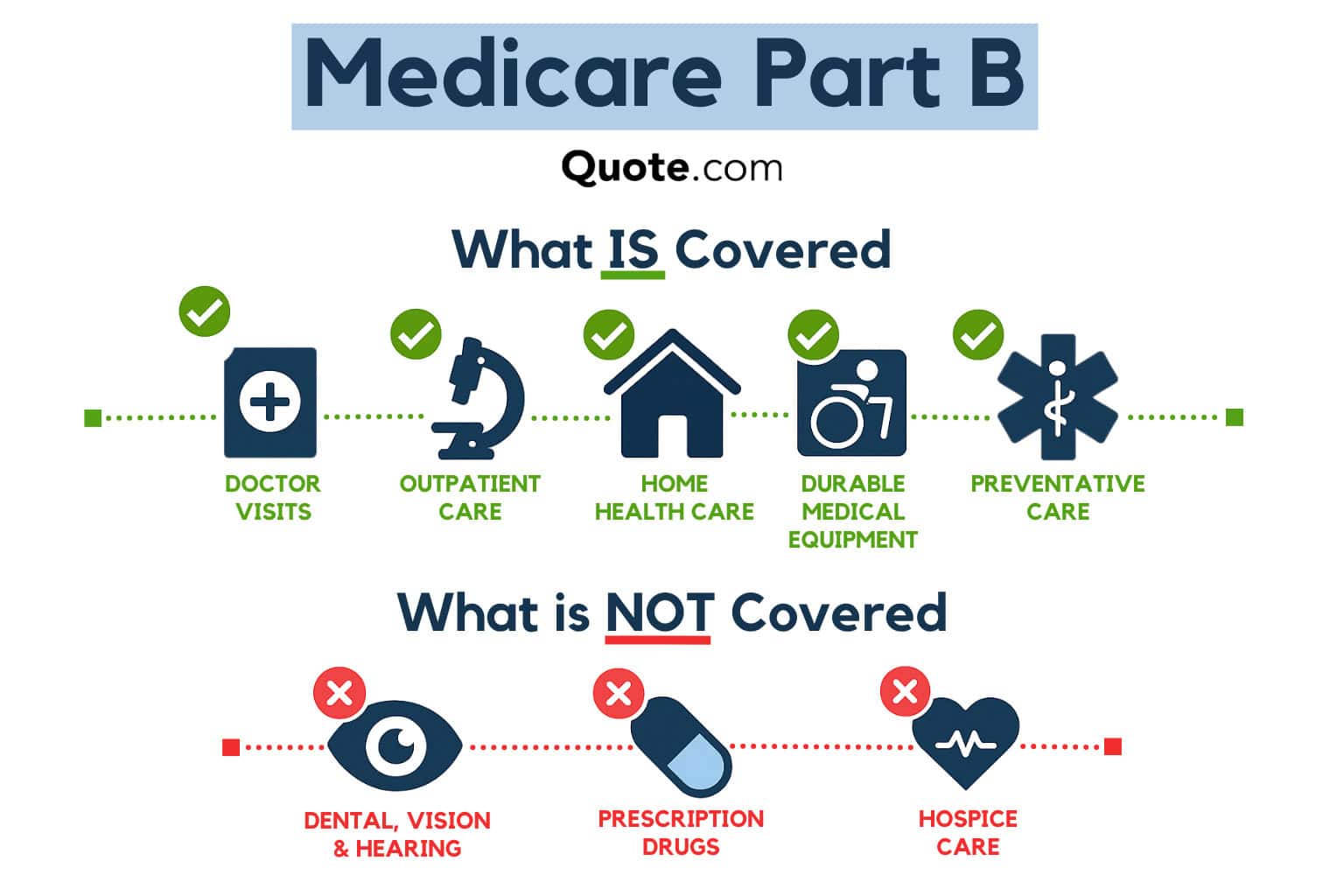
Take a single retiree with about $95,000 of other MAGI before the coin sale. Add a $50,000 taxable gain and he lands around $145,000, assuming no other adjustments. Under the 2026 schedule, that falls in the $137,000-to-$171,000 tier.Part B would be $405.80 per month instead of $202.90, exactly double the standard 2026 premium. The same tier adds a $37.50 monthly Part D surcharge on top of whatever the retiree already pays for his drug plan. Using 2026 numbers, that combination adds $2,884.80 over 12 months compared with the standard Part B premium and no Part D IRMAA.
SSA-44 Usually Will Not Undo a Voluntary Coin Sale
Form SSA-44 can help when a Medicare beneficiary’s income falls after one of Social Security’s recognized life-changing events. The listed events include marriage, divorce or annulment, death of a spouse, work stoppage or reduction, loss of income-producing property, loss of pension income, and certain employer settlement payments.A voluntary decision to sell an inherited coin collection is not on that list. So if the sale creates a one-year MAGI spike, the fact that income falls back down the following year does not automatically give the retiree an SSA-44 escape hatch for the premium year tied to that sale.
The Smart Move Happens Before the Dealer Gets the Coins

Before a large inherited collection changes hands, the retiree should know three numbers: the defensible date-of-death basis, the expected taxable gain, and the resulting MAGI for the year of sale. That makes it possible to see whether selling part of the collection in a different tax year, reducing a planned Roth conversion, or realizing available capital losses could change the outcome.Very large gains can create another federal issue too. The 3.8% Net Investment Income Tax can apply when a single filer’s MAGI exceeds $200,000 or a married couple filing jointly exceeds $250,000. The point is not that every gold sale needs a complicated strategy. It is that once the coins are sold, most of the useful planning options are already gone.
Contact [email protected] for any questions or corrections.