Jobless Claims Near a 57-Year Low, but Companies Still Aren’t Hiring
Unemployment claims just hit their lowest level since 1969, yet the September jobs report barely moved. Something in the labor market broke, and the break is quiet enough that most people have not noticed it yet.

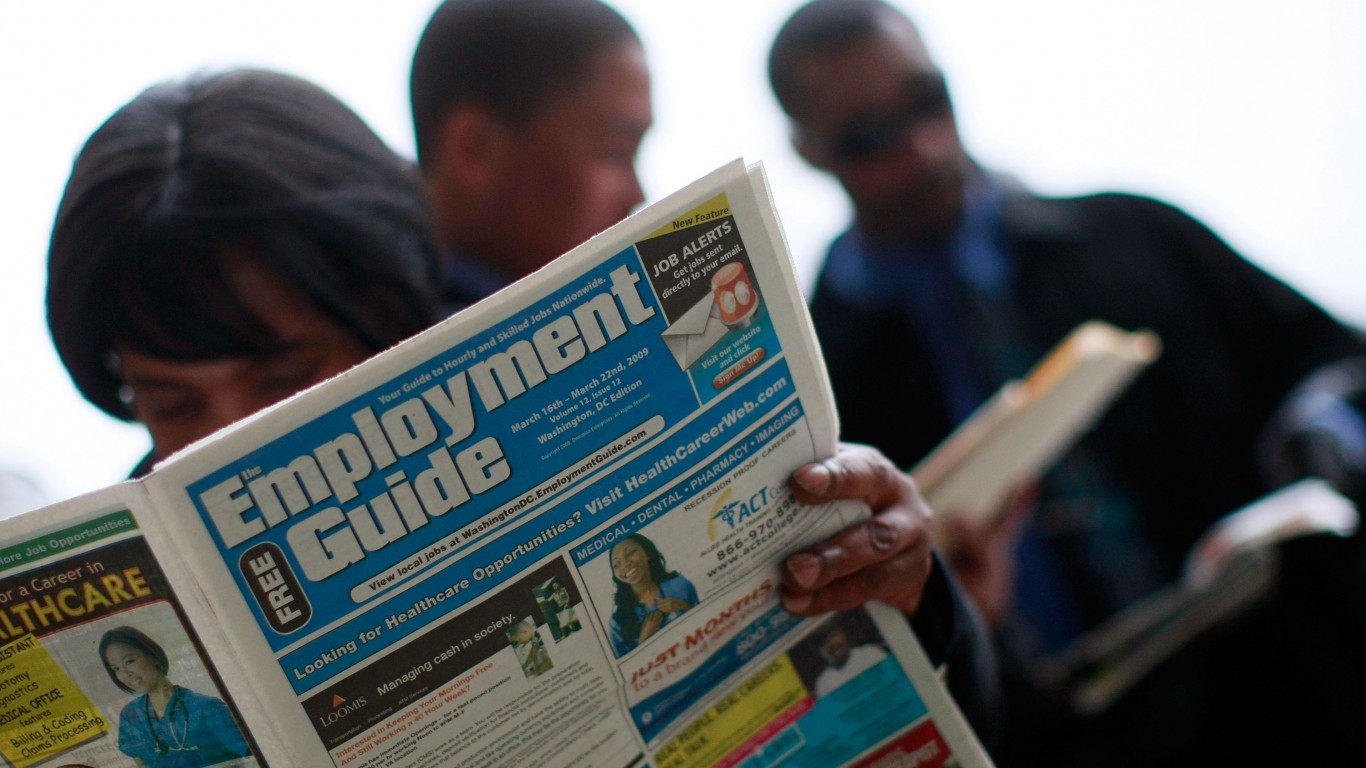
Fewer Americans filed new unemployment claims last week than in almost any week in more than half a century. Initial claims fell to 197,000 for the week ended September 26, the lowest since 1969, according to the Labor Department. Claims have now held below 200,000 for three straight weeks.
The September jobs report told a different story. Employers added just 29,000 jobs, and the unemployment rate rose to 4.2% from 4.1%. That gap sums up the 2026 labor market: companies have stopped firing people and stopped hiring too.
Hiring Plans Sit 23% Below Last Year
Outplacement firm Challenger, Gray & Christmas found hiring intentions 23% below last year’s levels. The seasonal hiring surge that usually starts in September never showed up: “companies are in a wait-and-see period.”
Job openings fell to 7.08 million in August from 7.585 million in April. Payrolls are up only about 496,000 from a year ago. Average hourly pay reached $37.81 in September, up about 3% from a year earlier. For anyone trying to get hired, the market is far colder.
Entry-level workers are getting shut out fastest. Demand for mid-career workers is up 11%, while entry-level hiring fell 2.4%. Companies are holding experienced staff and closing junior recruitment that used to feed them.
Why Employers Froze Hiring Now
Three pressures hit at once. The US-Israeli war with Iran pushed diesel prices to record highs. Tariffs on Canadian goods raised factory input costs. The Federal Reserve raised its benchmark rate in September, its first hike in three years, and indicated more to come. All three squeeze profit margins. Leaving a job open costs nothing and goes unnoticed.
Artificial intelligence gives executives an easy story to tell. AI has become the cleanest narrative for headcount reduction, even when the real reason is ordinary cost cutting. Layoff totals for the year also look better than they are, because last year’s numbers were distorted by government layoffs.
Carl Weinberg, chief economist at High Frequency Economics, sees where this could lead: “At some point, elevated energy costs and material prices will force firms to lay off marginal workers to protect profit margins, but there is no sign of that here.”
Recession Alarms Are Still Quiet, for Now
The usual recession signals are quiet. The Sahm Rule indicator, which has historically indicated a recession at 0.50, now stands at 0.00. The 10-year Treasury yield is 0.45% above the 2-year yield, so the yield curve is positive. The economy grew at a 2.2% annualized pace in the second quarter.
The data point to late-cycle weakness. The labor market is weakening through thin hiring and targeted cuts instead of mass layoffs.
Signals That Will Show Whether Layoffs Are Coming
Unemployment claims are the number to track. If weekly claims climb back toward 230,000, where they stood in early June, employers have gone from freezing hiring to cutting jobs. The Fed’s October 27-28 meeting will show whether officials see a tight labor market that needs cooling or a fragile one that needs protecting. Challenger’s October report will show whether holiday hiring is late or isn’t coming at all.
Contact [email protected] for any questions or corrections.
After two decades of patrolling the dark corners of suburbia as a police officer, Rich Duprey hung up his badge and gun to begin writing full time about stocks and investing. For the past 20 years, he’s been cruising the markets looking for companies to lock up as long-term holdings in a portfolio while writing extensively on the broad sectors of consumer goods, technology, and industrials. Because his experience isn’t from the typical financial analyst track, Rich is able to break down complex topics into understandable and useful action points for the average investor. His writings have appeared on The Motley Fool, InvestorPlace, Yahoo! Finance, Money Morning, and, of course, 24/7 Wall St. He has been featured in both U.S. and international publications, including MarketWatch, Financial Times, Forbes, Fast Company, and USA Today.