LHX vs. NOC: Which Defense Dividend Will Actually Protect Your Retirement?
Both L3Harris and Northrop Grumman have cratered nearly 20% this year while raising guidance and growing their backlogs to record levels, which means one of these defense dividends is quietly becoming a retirement income bargain and the other carries a…

This post may contain links from our sponsors and affiliates, and Flywheel Publishing may receive compensation for actions taken through them.

Should a retirement-focused investor own L3Harris Technologies (NYSE:LHX | LHX Price Prediction) or Northrop Grumman (NYSE:NOC) right now? Both defense contractors posted record backlogs this summer and raised 2026 guidance. Both stocks have still dropped hard: L3Harris is down 19.4% year to date and Northrop is down 15.91%. Their yields are almost the same, so the choice turns on how safe each payout is and how much you pay for it.
Income Today: Northrop Grumman Raises Faster
L3Harris pays $1.25 a quarter, or $5 a year going forward. At $233.71, that works out to a yield of about 2.14%. Northrop pays $2.47 a quarter, or $9.88 a year, which is about 2.09% at $473.63.
Dividend growth breaks the tie. Northrop’s quarterly payout rose from $1.57 in 2021 to $2.47, a gain of about 57%, and its latest raise was 6.9%. Over that period, L3Harris went from $1.02 to $1.25, up about 23%, and its latest raise was 4.2%. L3Harris does have the longer recorded run. Its CFO, Ken Sharp, said “We’re in 24 years of dividend growth, so making sure that we get the dividend aristocrat I think is important to us” (a dividend aristocrat is an S&P 500 company with at least 25 straight years of increases). Winner: Northrop, because its raises build faster.


Payout Durability: L3Harris Carries More Cushion
L3Harris’s dividend uses roughly 31% of its free cash flow guidance of about $3.0B. Free cash flow is the cash left over after capital spending. Second-quarter free cash flow rose 37% to $771M, and management projects about $4 billion of cash on hand. Northrop’s dividend uses roughly 43% of the midpoint of its $3.1B–$3.5B adjusted free cash flow guidance.
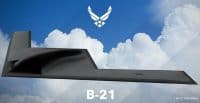
Northrop has more contract visibility. Its $104.69B backlog represents about 2.4 years of trailing revenue, compared with 1.8 years for L3Harris’s $42.0B. That backlog is expensive to deliver, though. Northrop plans $1.85 billion of capital spending in 2026 and about 4.5% of sales in 2027 and 2028 to ramp up B-21 bomber production.
The B-21 is a fixed-price contract that has already produced cost overruns. In the second quarter, Northrop also took cost-estimate charges of $68M and $91M on two programs. CEO Kathy Warden said: “We are not done with the qualification. Until we are, there is risk.” Winner: L3Harris.
Valuation: L3Harris Delivers More Growth per Dollar
Both stocks trade about 38% below their 52-week highs (37.6% for L3Harris, 38.3% for Northrop). L3Harris sits almost exactly at its 52-week low of $233.01, well below its 200-day average of $310.17. Northrop’s 52-week low is $470.06.
Northrop looks cheaper at first glance: 15 times trailing earnings against 24 for L3Harris. On forward earnings the gap almost goes away: 18 for L3Harris and 17 for Northrop. Northrop’s forward multiple sits above its trailing one, which means earnings are projects to decline. Its quarterly earnings fell 5.8% year over year, while L3Harris’s rose 28.3%. The PEG ratio, which divides the P/E by expected growth, tells the same story: 1.19 for L3Harris against 3.407 for Northrop. Winner: L3Harris.


Verdict: L3Harris Offers the Stronger Retirement Income Profile
For a retirement income investor, L3Harris wins. You get a slightly higher yield, a payout that uses less than a third of free cash flow, a large cash cushion and faster earnings growth, all at a share price near its 52-week low. Northrop’s faster raises depend on a capital-heavy bomber ramp and programs still in testing. That adds execution risk to the income stream.
One thing worth watching: Warden projects the Air Force to decide on speeding up B-21 production by year end. If that decision comes through and the Defense Systems cost overruns stop, Northrop’s faster dividend growth strengthens its case for investors with a longer horizon who can wait for it to build.
Contact [email protected] for any questions or corrections.
Chris Lange is a financial and geopolitical writer with more than a decade of experience covering a myriad of topics. He has published thousands of articles for 24/7 Wall St., with past coverage focused heavily on stocks, IPOs, healthcare, defense, global affairs, and technology.
His work has been quoted, or referenced by a number of outlets including Business Insider, USA Today, Yahoo Finance, MSN, The Motley Fool, and many other publications. A graduate of Southwestern University, he studied business with a focus on investments and has previous experience in banking and startups.
When not reading or writing the news, he is following his passion for Lacrosse, playing chess, or building solar projects with his dad.