Money Market Funds vs. Dividend Stocks: Where Retirement Income Actually Belongs
The money market fund yields more right now, the dividend stock has raised its payout for 63 straight years, and taxes treat them completely differently. Knowing which one actually belongs in your retirement account requires looking at a risk most…


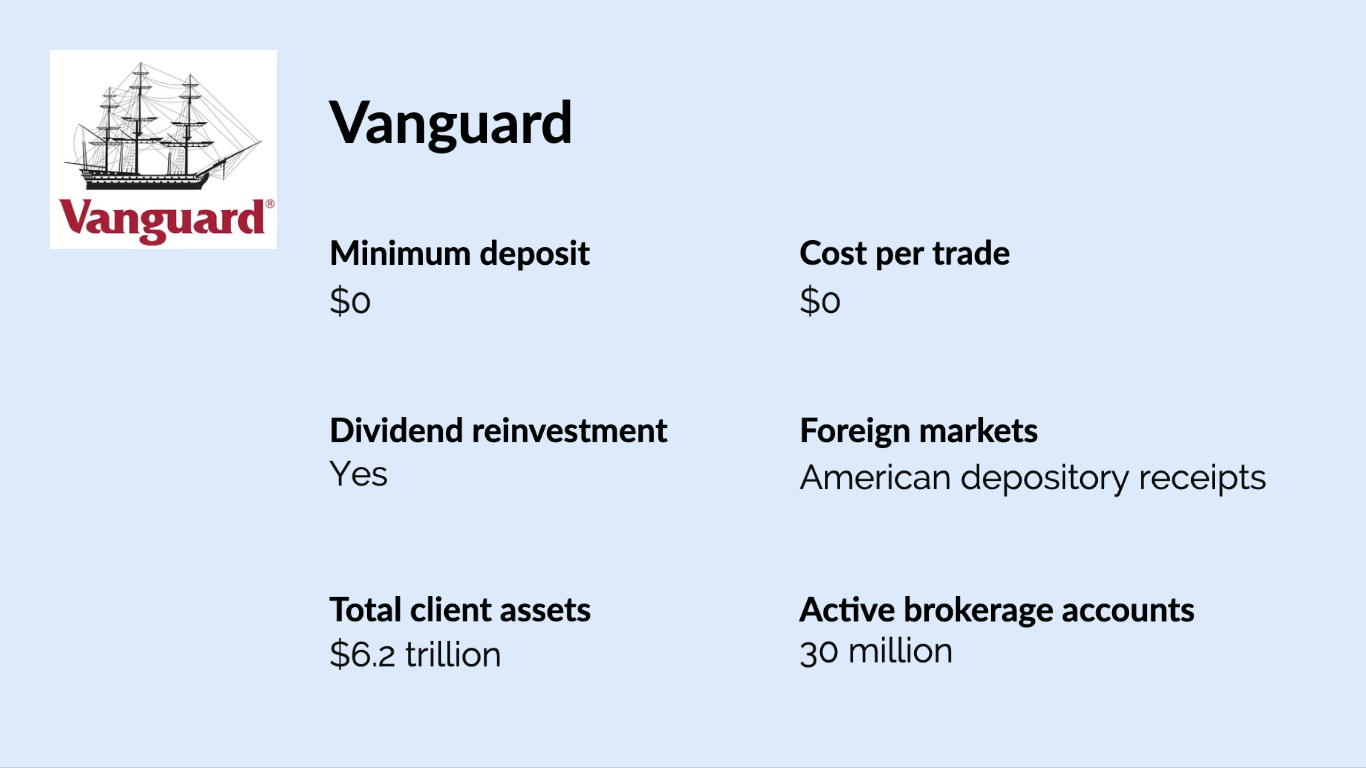
Vanguard Federal Money Market Fund (VMFXX), one of the largest government money market funds, paid $0.036757 per share in distributions over the 12 months through its September 30, 2026 payout. With its share price at $1.0000 on October 13, 2026, that is a trailing distribution yield of about 3.68%. The fund’s latest monthly payout runs at an annualized pace of about 3.64%. On the same date, 4-week Treasury bills averaged a 3.98% yield, and Coca-Cola (NYSE:KO | KO Price Prediction) carried a dividend yield of 2.26%. On paper the cash fund pays more. That comparison only starts the analysis for someone who needs income for the next 20 years.
How a Money Market Fund Holds $1 and Why Its Yield Floats
A money market fund is a mutual fund that buys very short-term debt: Treasury bills, government agency paper and repurchase agreements backed by Treasuries. Government funds such as VMFXX aim for a stable share price of $1, and the fund’s stated objective is current income “while maintaining liquidity and a stable share price of $1.” Under SEC rules, government and retail funds may keep that stable price, while institutional prime and institutional tax-exempt funds must let their price float with the value of their holdings. Institutional prime funds also face a required liquidity fee framework under Rule 2a-7.
You never hold anything to maturity. The fund’s holdings mature within days or weeks and the proceeds are rolled into new paper at whatever rates prevail at that point. As a result, the yield resets constantly and tracks the Federal Reserve’s policy rate closely. Nothing is fixed.
The fed funds target upper bound stands at 4.00% as of October 14, 2026, after the Fed raised it from 3.75% on September 17, 2026. That increase followed a cut from 4% to 3.75% on December 11, 2025. Fees are taken out before you get paid: VMFXX’s net expense ratio is 0.11%, while Fidelity Government Money Market Fund (SPAXX) charges 0.42%, so yields differ from fund to fund.
A money market fund is not a bank deposit and carries no FDIC insurance. SIPC coverage at a brokerage protects your holdings, up to its limits, if the broker itself fails. A drop in the fund’s value falls outside that protection. During the 2007-2008 financial crisis, a major prime fund “broke the buck” and dropped below $1, which is the episode that set off the reforms. Government funds holding Treasuries carry far less of that risk, but the $1 price is an unguaranteed target.
Dividend Safety First: Can Coca-Cola Keep Paying?
A higher yield means nothing if the payment is at risk, so the stock side of this comparison starts with safety. Coca-Cola’s dividend increase in 2026 was its 63rd consecutive annual increase, the kind of run that sets it in the small club of Dividend Kings we ranked by valuation in a free report here. It paid $0.53 per share on October 1, 2026, which puts the forward annual rate at $2.12. That works out to about 64% of trailing diluted EPS of $3.33, a payout that leaves room for earnings to slip.
One weak spot: reported free cash flow for 2025 came to $5.296 billion, short of the $8.8 billion the company paid out in dividends that year. A one-time contingent payment linked to the fairlife acquisition caused most of that gap. Coca-Cola has since raised its 2026 free cash flow guidance to approximately $12.4 billion, up from $12.2 billion. The balance sheet has room too. On the July call, the CFO said, “Our balance sheet remains strong with our net debt leverage of 1.4 times EBITDA, which is below our target range of 2 to 2.5 times.”
Two risks stand out: Coca-Cola is in a long-running tax dispute with the IRS that now sits with the 11th Circuit Court of Appeals, and management says the timing of a decision is unknown. Currency swings also hit reported results. Neither looks like a threat to the dividend right now. Still, the payment remains a discretionary board decision.
Cut Risk Versus Reinvestment Risk: Both Halves of the Trade
The first half favors the cash fund. Coca-Cola can cut its dividend, and once a money market distribution is paid, nobody can take it back. On the other side, the fund’s next distribution can be smaller, and history shows how fast that happens. VMFXX paid $0.003577789 per share for August 2025 and $0.00307354 for August 2026. In December 2020, after the Fed had cut rates to near zero, the monthly payout fell to $0.00002 per share. This shows reinvestment risk: when short-term rates fall, a money market yield falls with them almost immediately, and a retiree living on that income takes a pay cut with no warning.
The second half favors the stock. A dividend can grow and a money market yield cannot grow on its own. Coca-Cola’s quarterly payment went from $0.44 in 2022 to $0.46 in 2023, $0.485 in 2024, $0.51 in 2025 and $0.53 in 2026. Management is guiding to 9 to 10% comparable EPS growth for 2026, and that is the earnings base future increases come from.
The cost is price risk. A yield measures income only and excludes price changes. Coca-Cola shares rose 31.41% year to date, from $68.57 to $90.11 as of October 13, 2026. The 52-week range runs from $65.19 to $91.94. That rally is why the yield now looks thin: the price rose faster than the dividend. At a trailing P/E of 27, the stock can lose value even with the dividend intact. A beta of 0.318 points to lower-than-market volatility, but low volatility still means the price moves. The money market fund’s $1 share price barely moves at all.
Taxes Can Flip the Answer
Money market distributions show up on your tax forms as dividends, but most of the money comes from interest. A fund can report a payout as qualified dividend income only up to the qualified dividends it received itself, under 26 U.S.C. § 854(b)(1)(C)(ii), and a fund holding T-bills receives almost none. In practice, the distributions are taxed at ordinary income rates. For 2025, those federal brackets run from 10% to 37%. Government funds have one advantage: the part of the income that comes from Treasury obligations is often exempt from state income tax. How much qualifies depends on your state’s rules and the fund’s year-end tax statement.
Coca-Cola’s dividends come from a domestic corporation, so they count as qualified dividend income and are taxed as net capital gain under 26 U.S.C. § 1(h)(11). For most retirees that means a rate of 0%, 15% or 20%, provided they hold the shares long enough before the ex-dividend date (§ 1(h)(11)(B)(iii)). Unlike Treasury income, Coca-Cola’s dividends get no state tax break.
These rules apply only in a taxable account. IRS guidance says the investment-income rules do not apply to investments held in IRAs and 401(k) plans, and withdrawals from a traditional IRA are taxed as ordinary income no matter what produced them. Inside a tax-deferred retirement account, Coca-Cola’s qualified-dividend advantage goes away. Outside tax-deferred accounts, it can close much of the gap between the two headline yields.
Who Each Option Suits
A government money market fund fits investors seeking principal stability and same-day access to cash: next year’s spending, an emergency reserve, or money waiting to be invested, held by people who accept that their income will drop when the Fed cuts rates. A dividend stock like Coca-Cola fits retirees with a time horizon of a decade or more who can bear price swings in exchange for income that has grown for 63 straight years. That trade works best where the 0% to 20% qualified rates apply. Many retirees will end up holding both, with each account doing the job it fits.
Contact [email protected] for any questions or corrections.
Chris Lange is a financial and geopolitical writer with more than a decade of experience covering a myriad of topics. He has published thousands of articles for 24/7 Wall St., with past coverage focused heavily on stocks, IPOs, healthcare, defense, global affairs, and technology.
His work has been quoted, or referenced by a number of outlets including Business Insider, USA Today, Yahoo Finance, MSN, The Motley Fool, and many other publications. A graduate of Southwestern University, he studied business with a focus on investments and has previous experience in banking and startups.
When not reading or writing the news, he is following his passion for Lacrosse, playing chess, or building solar projects with his dad.