PepsiCo Yields 4.2%. Can Tax-Free Municipal Bonds Beat It?
For retirees in high tax brackets, the headline yield on a dividend stock often tells less than half the story. Before you count PepsiCo's income as income, there is a tax column that can flip the comparison entirely.


Municipal bonds pay holders interest that is generally exempt from federal income tax. Taxable yields have risen: the ten-year Treasury par yield stood at 5.15% on October 19, 2026, and the 52-week Treasury bill averaged 4.47% the same day. Muni yields differ by issuer, credit rating, maturity, and state, so this edition covers the muni side broadly and puts it against a well-known payer: PepsiCo (NASDAQ:PEP | PEP Price Prediction), which yields about 4.20% as of October 20, 2026. For a retiree in a high tax bracket, the tax column often decides the matter before the yield column does.
What a Municipal Bond Actually Promises You
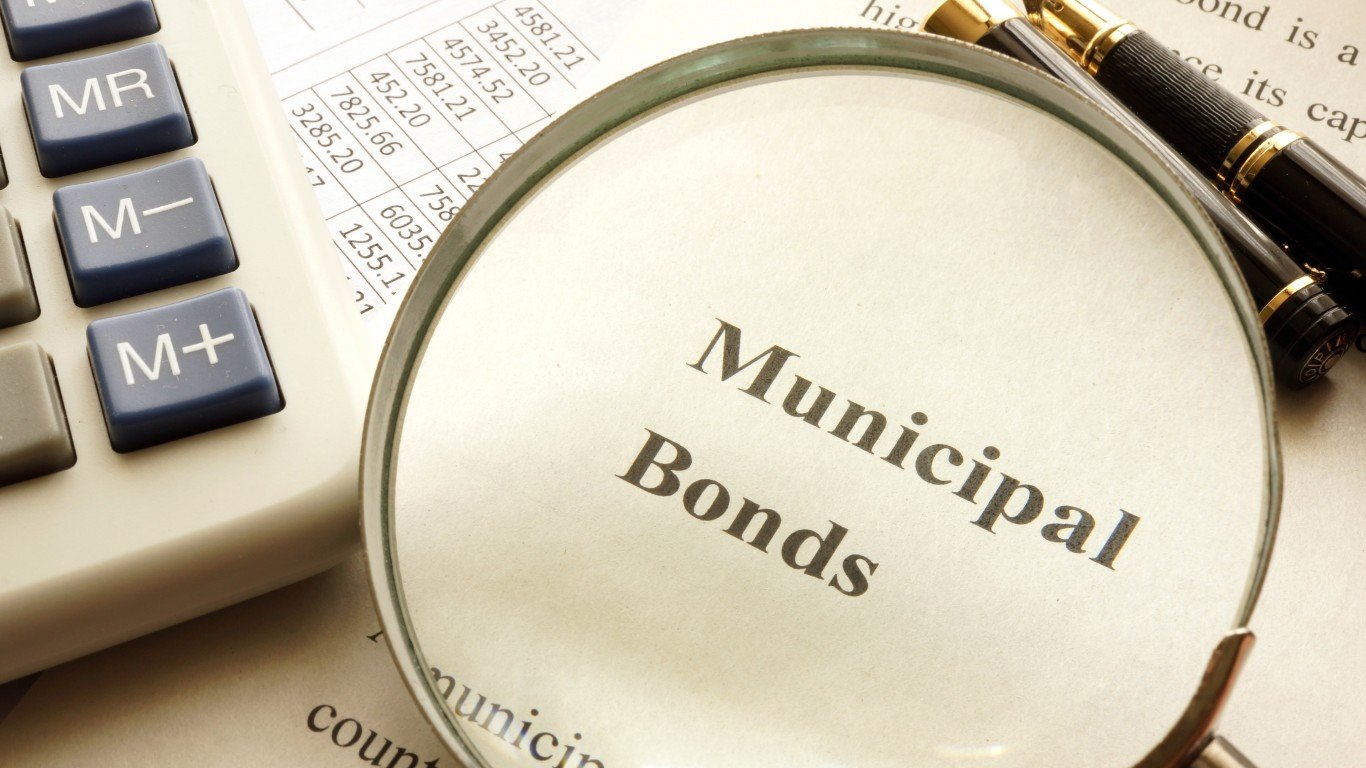
A municipal bond is a loan to a state, city, school district, utility, hospital authority, or other public body. The issuer pays interest on a set schedule, usually twice a year, and returns the face value (par) at maturity. Under federal law, gross income “does not include interest on any State or local bond,” 26 U.S.C. § 103(a), though there are exceptions.
Most munis carry a fixed coupon set when they are issued. That coupon remains fixed until the bond matures or is called. The bond’s market price changes daily. When rates rise, as they did when the Fed lifted its upper target to 4.00% on September 17, 2026, from 3.75%, existing bond prices fall. Some munis, such as variable-rate demand notes, reset their rates on a schedule, so read the offering terms before assuming a rate is locked.
Backing depends on the bond type:
- General obligation bonds rely on the issuer’s taxing power.
- Revenue bonds rely on income from a specific project, such as tolls, water fees, or hospital charges.
Munis carry no FDIC insurance, and the federal government does not guarantee them. Private bond insurers wrap some, and that protection is only as good as the insurer’s own finances.
Four Risks the Coupon Doesn’t Cover
- Default risk: High-grade muni defaults are historically rare, but they happen, especially with revenue bonds tied to a single project.
- Price risk: Hold to maturity, and you get par back if the issuer pays. Sell early after rates rise and you may take a loss.
- Call risk: Many munis let the issuer redeem early, usually after rates have fallen. Your highest-coupon bonds are often the first to go.
- Reinvestment risk: After a bond matures or gets called, you reinvest at whatever rates are available then, and they may be lower.
PepsiCo’s Dividend Against a Fixed Coupon
Dividend safety comes first, because a higher yield is no bargain if the dividend could be cut. PepsiCo has announced its 54th consecutive annual dividend increase, a 4% raise that lifted the annualized payout to $5.92 per share starting with the June 2026 payment. The quarterly check is $1.48, up from $1.4225 and $1.355 in the two prior cycles. In 1999 it paid $0.13 a quarter.
The coverage picture is solid but has reduced. PepsiCo expects to return about $8.9 billion to shareholders in fiscal 2026, including roughly $7.9 billion in dividends. It targets free cash flow conversion of at least 80%, and interest coverage runs about 10.3x. A debt-to-equity of roughly 2.45 suggests the company relies heavily on borrowed money.
Earnings are showing the pressure. Third-quarter adjusted EPS of $2.34 beat the $2.30 estimate, and revenue rose 5.6% to $25.27 billion. North America snacks core operating profit fell 12%, though. Management cut fiscal 2026 core EPS growth guidance to 2.5% to 3.5% from 5% to 7%, blaming input cost inflation. When dividends grow faster than earnings for long, the cushion shrinks. Keep an eye on next year’s raise.
Both sides of the comparison count:
- A dividend can be cut, and a muni coupon cannot. PepsiCo’s board decides each payment. Its record shows no dividend reductions, but that record describes what the company paid in the past and guarantees nothing about future payments. A muni coupon is a contract. Barring default, it gets paid.
- A dividend can grow, and a fixed coupon cannot. A muni bought this year pays the same dollars in its final year as in its first, and inflation erodes that income every year. PepsiCo’s payout has risen with inflation over decades.
The principal acts differently too. PepsiCo shares traded at $134.16 on October 20, 2026, down 9.58% over one year and 2.67% over five years, but up 72.36% over ten. A stock has no maturity date and no promise to return what you paid. A muni held to maturity does make that promise, backed by the issuer’s credit. A yield on a stock or a bond measures income alone. Price changes decide what you actually earn.

Tax Treatment That Often Decides the Answer
Municipal Bond Interest
Federal tax exemption is the main appeal, but it comes with limits:
- Private activity bonds: Interest on private activity bonds that don’t meet the qualified-bond rules is taxable under 26 U.S.C. § 103(b)(1). Some munis that are tax-exempt for regular tax still count toward the alternative minimum tax, and the IRS reports that portion separately on Form 1099-INT, box 9.
- State taxes: Many states tax interest from other states’ bonds. New York, for example, adds back “interest income on obligations of any state other than this state,” under N.Y. Tax Law § 612(b)(1). In-state bonds often escape state tax as well, which matters most in states with high tax rates.
- Social Security: Tax-exempt interest is added back when figuring out how much of your Social Security benefit is taxable, under 26 U.S.C. § 86(b)(2)(B). Muni income can still raise your tax bill indirectly.
- Account placement: Holding munis in an IRA wastes the exemption, because IRA withdrawals follow retirement-plan tax rules (IRS Publication 550).
To compare a muni with a taxable yield, use the tax-equivalent yield: divide the muni yield by one minus your marginal tax rate. The higher your bracket, the more the exemption is worth. For tax year 2026, the 24% bracket starts above $105,700 for single filers ($211,400 for married couples filing jointly). The 32% bracket starts above $201,775 ($403,550 for married couples filing jointly). The top 37% rate applies above $640,600 ($768,700).
PepsiCo Dividends
PepsiCo dividends generally count as qualified dividend income, which the tax code taxes at capital gains rates under 26 U.S.C. § 1(h)(11). Depending on your income, that rate is 0%, 15%, or 20%. Shares must be held for more than 60 days within 121 days around the ex-dividend date to qualify. Higher earners may also owe the 3.8% net investment income tax under 26 U.S.C. § 1411(a)(1). Retirees with taxable income in the 0% qualified-dividend bracket get little extra from muni tax exemption. A retiree paying 32% or more in ordinary income tax, plus state tax, gets a lot.
Who Each Income Stream Suits
Municipal bonds suit retirees in high federal and state brackets who need a fixed payment schedule and a known return of principal at a specific date, and who can hold to maturity and accept call and reinvestment risk. PepsiCo suits retirees in lower brackets, or with long time horizons, who want income that can grow with inflation and who can accept share-price swings and the chance of a dividend freeze. Many households split the job: munis cover fixed bills, and dividend growers cover the rising costs ahead (the mix, the payment calendar, and the withdrawal order are detailed in a free guide to building a paycheck from savings).
Municipal bonds suit retirees in high federal and state brackets who need a fixed payment schedule and a known return of principal at a specific date, and who can hold to maturity and accept call and reinvestment risk. PepsiCo suits retirees in lower brackets, or with long time horizons, who want income that can grow with inflation and who can accept share-price swings and the chance of a dividend freeze. Many households split the job: munis cover fixed bills, and dividend growers cover the rising costs ahead.
Contact [email protected] for any questions or corrections.
Chris Lange is a financial and geopolitical writer with more than a decade of experience covering a myriad of topics. He has published thousands of articles for 24/7 Wall St., with past coverage focused heavily on stocks, IPOs, healthcare, defense, global affairs, and technology.
His work has been quoted, or referenced by a number of outlets including Business Insider, USA Today, Yahoo Finance, MSN, The Motley Fool, and many other publications. A graduate of Southwestern University, he studied business with a focus on investments and has previous experience in banking and startups.
When not reading or writing the news, he is following his passion for Lacrosse, playing chess, or building solar projects with his dad.