AMD Jumped 5% and Is Closing In on $1 Trillion Again
AMD crossed into trillion-dollar territory once before and lost it fast, but a surprise partnership announcement just sent the stock surging again with earnings and a critical product milestone days away.


AMD (NASDAQ:AMD | AMD Price Prediction) became a trillion-dollar company this fall and regained the title within weeks. On Tuesday, October 27, 2026, AMD rose 5.45% to close at $560.26. The move followed its announcement at 9:20 a.m. ET that it and Meta Platforms (NASDAQ:META) are expanding their partnership.
That one session left AMD’s market value at $914.61 billion. The stock added another 0.61% after hours to reach $563.65 as of 7:59 p.m. ET.

For shareholders, the problem is that the stock is up 161.61% year to date and down 11.16% over the past month. One market report tied the rally to the expanded Meta deal and to broader AI-infrastructure enthusiasm after Anthropic publicly filed for its IPO on Monday, October 26. All that expansion still has to be powered, cooled, and connected by somebody, which is why we pulled seven of those suppliers into a free report on the AI boom beyond the chipmakers.
What Meta Has Deployed, What It Is Testing and What Comes Later
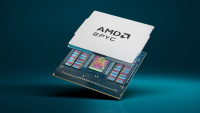
Part of the deal is already running. AMD EPYC processors power the computing behind Meta’s Muse personal AI agent; Meta has deployed millions of EPYC chips, and Instinct GPUs are in production at Meta.
Helios is still at the trial stage: “Initial AMD Helios rackscale solutions are installed and being tested by Meta,” ahead of a broader launch. A rack-scale product is a full rack of chips, connected and cooling sold as one system, and NVIDIA (NASDAQ:NVDA) has led that format so far.
Everything else is planned, including a custom Instinct GPU for Meta and a future EPYC generation called Verano.
AMD chair and CEO Lisa Su said: “Meta is a strategic partner for AMD, and we have built this partnership through years of deep technical collaboration.” But the planned products generate no revenue for AMD until products ship to Meta.
Why AMD’s Investment in Meta Stock Carries Benefits and Costs
AMD will also invest in Meta’s equity offering. A supplier that buys stock in its customer shows confidence and ties the two companies closer together. However, some of the cash AMD makes from Meta then goes straight back to Meta.
NVIDIA made a similar arrangement, investing in the offering as Meta expands its use of Nvidia’s Vera Rubin systems. That means Meta is taking capital from both of its main chip suppliers while keeping them in competition.
How AMD Lost the $1 Trillion Mark and What It Needs to Regain It
At about 1.63 billion shares outstanding, a trillion-dollar valuation works out to roughly $612.57 a share. To get there, AMD needs to add about $85 billion in value, a gain of about 9.3%.
The stock first closed above roughly a trillion on Monday, September 21, when it rose 9.95% to $615.52. Its record close of $649.42 came on October 6 and was worth about $1.06 trillion.
Its last close above the line was $620.68 on October 8. It fell to $608.10 the next day. Then it hit a low close of $507.93 on October 22 after an 8.10% drop. Three straight gains since then have added about 10.3%, though the stock still sits below its $658.52 fifty-two-week intraday high.
Chip Stocks Rallied, and AMD Beat NVIDIA by a Wide Margin
Chip stocks led the market for a third straight session. The Philadelphia Semiconductor Index rose 3.60% to 11,482.51, while the Nasdaq Composite gained 1.18% and the S&P 500 added 0.60%.

NVIDIA rose only 0.9%. Investors treated the news as specific to AMD, and it barely affected confidence in NVIDIA’s lead in rack-scale systems.

What AMD Investors Need to Know Before Third-Quarter Results
Investors with a multiyear horizon will likely weigh the growth case against volatility like that 8.10% one-day drop. Second-quarter Data Center revenue rose 107% to $6.72 billion, and AMD guided third-quarter revenue to about $13 billion.
Several risks stand out: Helios is still in testing, the trailing P/E is about 211x, and growth depends on a small number of hyperscalers and AI labs.
The next test comes when AMD reports third-quarter results after the close on Tuesday, November 3, 2026. On the 5 p.m. ET call, listen for confirmation that Helios shipments began as planned, a date for Meta’s broader launch, and higher data-center GPU guidance.
A close above roughly $612.57 after that report would put AMD back at a trillion on the strength of its results. Closing under $507.93 would suggest the market still sees Meta’s Helios work as a trial rather than a commitment.
Contact [email protected] for any questions or corrections.
Omor Ibne Ehsan is a writer at 24/7 Wall St. He is a self-taught investor with a focus on growth, cyclical, and dividend equities that have strong fundamentals, value, and long-term potential. He also has an interest in high-risk, high-reward investments such as penny stocks.