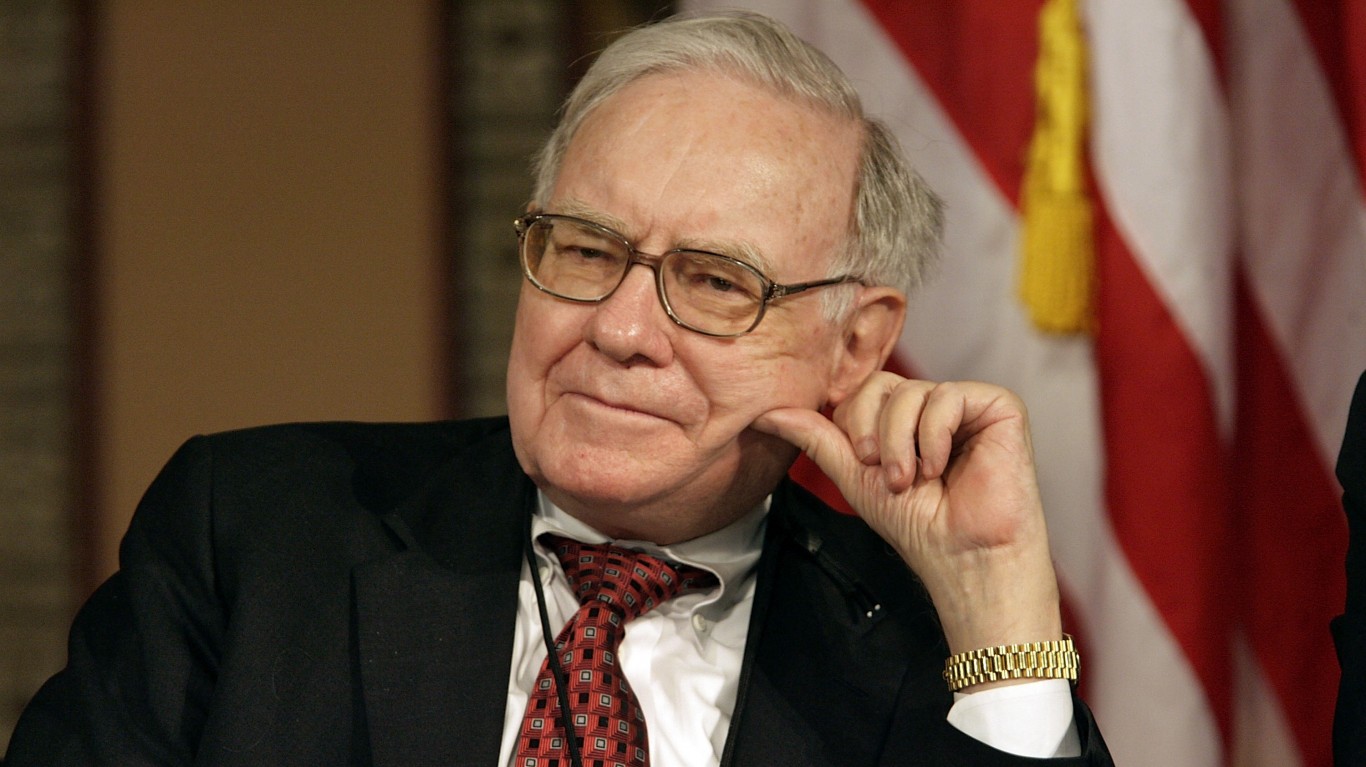
In 1956, A Physics Professor Drove To Nebraska To Hand A Young Investor $120,000. The Investor’s Name Was Warren Buffett. 14 Years Later Homer Dodge’s Stake Grew To About $2.1 Million. By 2013, The Berkshire Shares Alone Would Have Been Worth More Than $2.7 Billion
A physics professor drove to Omaha, handed a stranger a small fortune, and never looked back. What happened to that money over the next 57 years is the kind of story that reframes everything you think you know about patience…

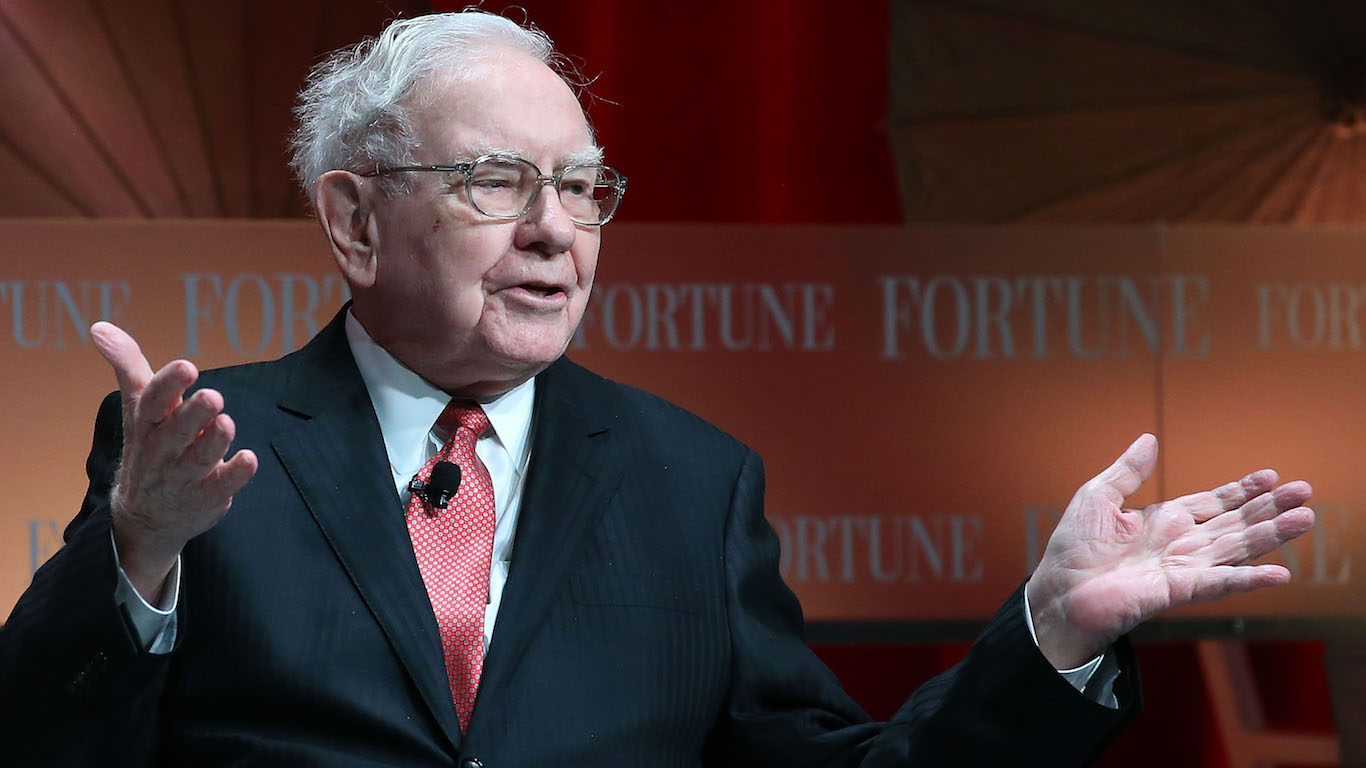
In the summer of 1956, Homer Dodge, a physicist who built the University of Oklahoma’s physics and astronomy department, pulled up to Warren Buffett’s Omaha house with that canoe strapped to the roof of his car, according to biographer Alice Schroeder’s account.
Bloomberg reports Dodge invested $120,000 in a partnership that year, and Buffett set one up with his money. But at that time, Buffett was a young man without a famous track-record, and he had no conglomerate and no following on Wall Street.
Dodge’s son Norton told Fortune: “My father saw immediately that Warren was brilliant at financial analysis.” Schroeder went even further with Bloomberg: “Homer almost single-handedly made Buffett,” she said.
Fourteen Years Turned a Professor’s Savings Into Millions
The partnership vaulted from there. By the time the Buffett Partnership was dissolved, and the partners’ money distributed in 1970, Dodge’s investment would have grown to $2.1 million, Bloomberg estimated. In a Dec. 26, 1969 letter, Warren Buffett said he expected to pay partners 64% of their investment in cash and the balance in stock. He added a line that reads like prophecy now: “I am very happy to have a material portion of my net worth invested in these companies on a long term basis. Obviously, I think they will be worth significantly more money five or ten years hence.”
Bloomberg estimated the portion Dodge received in Berkshire and other stock may have totaled to about $750,000, which Bloomberg pegged as the equivalent of 15,897 Berkshire shares. Bloomberg also estimated Dodge would have collected about $1.1 million in cash after taxes.
Bloomberg’s What-If Math Topped $2.7 Billion
Bloomberg ran two scenarios. If Dodge put the cash into Bill Ruane’s Sequoia Fund, which Buffett recommended to partners, Bloomberg estimated it would have been worth about $390 million in 2013. What’s particularly striking is the stock side: Bloomberg calculated the 15,897 shares the estate may have received would have been valued at more than $2.7 billion in 2013. Both figures are Bloomberg’s estimates, built from partnership letters and Schroeder’s account, and they describe what the shares would be worth if held.
Holding that long is rare, even for the master. Across a career of owning hundreds of stocks, Buffett today holds only 10 that he has kept for 10 years, investor Ian Cassel noted on The Investor’s Podcast in September 2026.
What Actually Happened to the Dodge Money
Fortune reported that by Homer Dodge’s death in 1983, the sum had multiplied into the tens of millions. Alice Schroeder told Bloomberg the children may have avoided the 60% maximum estate tax in place that year. Much of the legacy later went to philanthropy. Inside Philanthropy reported on July 27, 2026 that the Avenir Foundation, launched in 1993 and based in Lakewood, Colorado, received 2,000 Berkshire shares from Dodge’s estate. Inside Philanthropy said its endowment climbed from around $1 million to $1.2 billion as of late 2024, and it became a major donor after Dodge’s daughter, Alice Dodge Wallace, died in 2020.
The pattern rhymes with a 1961 couple we profiled whose combined estates topped $750 million after investing with Buffett.
Berkshire Enters Its Own Succession Era
The company Dodge helped launch has grown unrecognizably. Class A shares traded at $815,117.60 as of 11:14 AM ET Oct. 29, 2026, and Class B shares have climbed 277.34% over the past 10 years. Greg Abel, who is succeeding Buffett as CEO, made a $15 million personal investment in company shares. In results filed Aug. 11, 2026, operating earnings rose to $12.98 billion from $11.16 billion, and Berkshire became to net buyer of stocks for the first time in over three years, deploying about $23.5 billion into equities.
Valuation remains grounded. Class B shares trade at about 11 times earnings and 1.06 times book value, a multiple that prices the empire near its net assets. Berkshire still pays no dividend, retaining earnings in the same compounding engine that rewarded Dodge. I’m watching how Abel deploys a cash pile that reached a record $380 billion earlier this year.

Why the Holding Period Mattered More Than the Entry
Dodge’s return came from backing a skilled manager early and holding through decades of compounding. Most investors cannot identify the next Buffett in a 25-year-old stranger. They can, however, hold diversified investments for the long run, which is why Buffett has long directed ordinary savers toward low-cost funds tracking the benchmark S&P 500. Wall Street has historically rewarded that patience over decades, through recessions, rate shocks and leadership changes alike. The Dodge story shows how time, more than any single trade, built the fortune (we studied a batch of recent runners most investors walked past and pulled out the pattern in a free report).
Contact [email protected] for any questions or corrections.
AJ spent 10 years writing about financial markets at The Motley Fool. His coverage centers on technology stocks and the broader macroeconomic trends, from interest rates to geopolitics, that shape where markets are headed next. AJ is drawn to the stories where big-picture economics and individual companies collide.