AMD Just Doubled Its Own Long-Term Growth Target for 2027
Lisa Su gave a growth target on AMD's latest earnings call that left analysts scrambling to reconcile it with the company's official long-range financial model, and the gap between the two numbers raises serious questions about supply, dilution, and who…


AMD (NASDAQ:AMD | AMD Price Prediction) Chair and CEO Lisa Su gave a growth figure on November 3, 2026, that the company’s long-range plan never called for. On the third-quarter earnings call, she said, “Based on our current visibility, we now expect revenue to grow more than 80% in 2027, which is more than twice the long-term financial model we outlined at our Financial Analyst Day last November.”
Su’s comparison measures a one-year forecast against a multi-year model. AMD’s official long-term model, published November 11, 2025, set a compound annual growth rate (average yearly growth) over three to five years, plus a non-GAAP EPS goal. That model remains in place because Su gave a one-year target for 2027 and AMD announced no new model or analyst day.
Shares finished at $483.90 on November 3, up 3.65%, and traded at $520.522 about an hour after the results were filed. They still sit well below the 52-week high of $658.52 after falling 23.66% in the month before the report.

A Bigger Number Than the August Signal

On the August 4 call, Su had already said growth would run “substantially above” the old target. She expected data center segment revenue “to more than double.”
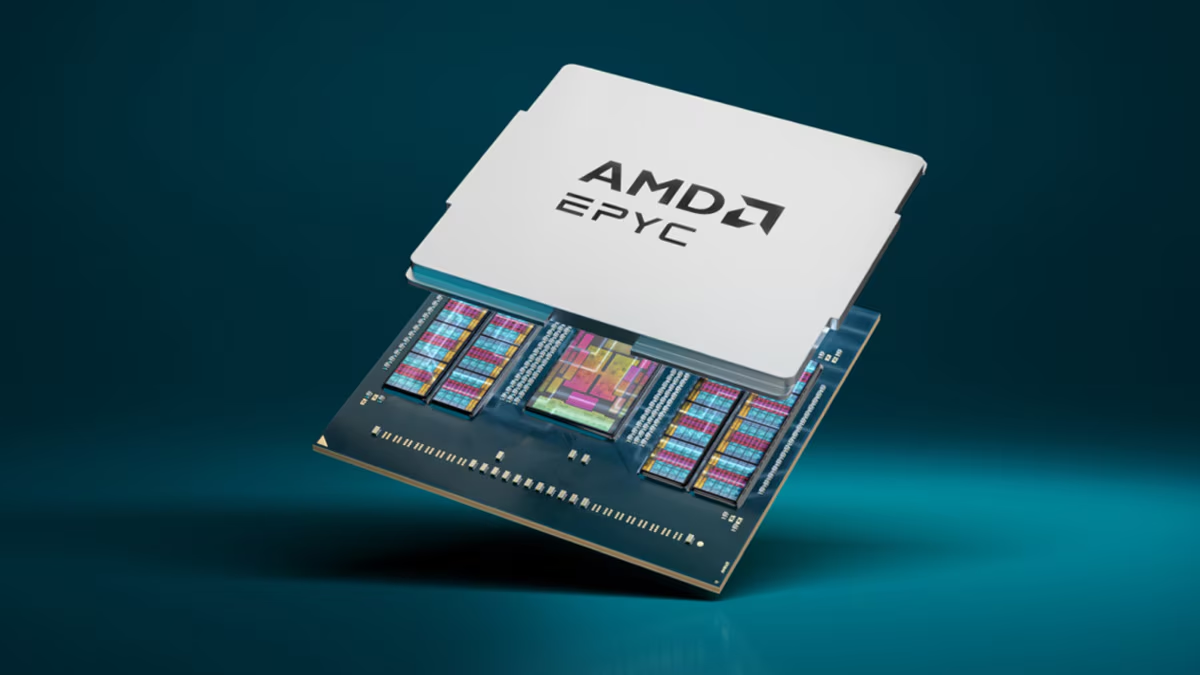
What changed is a specific growth figure for total 2027 revenue, and server revenue is now expected “to double year over year in 2027.” Su said customers had expanded their EPYC and Instinct plans and AMD had “secured more supply to support that growth.”
Data Center Takes Over the Mix
Su expects data center to make up more than 80% of total revenue in 2027, up from 64% in the third quarter. The fourth quarter should also be the first in which data center AI revenue tops server revenue. Su called these segment figures markers, so they point the direction but don’t count as formal guidance.
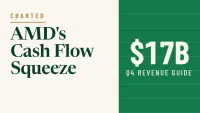
The starting base is already large. Third-quarter revenue came in at $13.377 billion, up 44.68%, with Data Center at $8.546 billion, up 97%, and AMD guided fourth-quarter revenue to about $17.0 billion, plus or minus 3%.
What 80% Growth Means in Dollars
Add the first nine months of reported revenue to the fourth-quarter midpoint, and you get an estimated 2026 total of about $52.166 billion. Growth above 80% would put estimated 2027 revenue above about $93.9 billion. AMD has not given a dollar revenue forecast for 2027.
Su named Helios lead customers “including Anthropic, Meta, Microsoft, OpenAI, and Oracle” and said, “It is true that demand is higher than supply.” Strong demand supports pricing, but supply limits how much of it AMD can actually ship. All of that AI capacity also has to be powered, cooled, and networked by someone, which is the angle we took in a free report on seven AI infrastructure suppliers that aren’t chipmakers.
Costs Behind the Growth
GAAP EPS of $1.46 included a $1,097M customer warrant fair-value charge, or $0.66 per share. AMD leaves that charge out of its non-GAAP EPS of $2.09.
CFO Jean Hu said the warrants begin diluting shareholders once vesting and exercise conditions are met. More shares split the same profit into smaller pieces, so per-share growth can lag revenue growth.
The PC business also faces weaker demand. Su said, “In 2027, we are planning for PC market unit shipments to decline by a double-digit percentage.” Free cash flow fell to $554M while inventory rose to $11.463B.
What the 2027 Forecast Means for AMD Investors
The optimistic outlook gained support on this call. The 2027 forecast is more than twice the old model, demand is ahead of supply, and the fourth-quarter guide already implies about 66% growth.
There are real reasons for caution: a few AI buyers drive the ramp, the warrants will dilute holders, and the forecast also depends on wafers, packaging, and memory arriving on time. At about 32 times forward earnings, though, the one-month selloff has lowered the multiple investors are paying for that risk.

The first check comes when NVIDIA (NASDAQ:NVDA) reports on November 17, the next read on AI chip demand. The harder test is AMD’s fourth-quarter report. If revenue comes in below the $17.0 billion floor, the 2027 forecast loses credibility.
Contact [email protected] for any questions or corrections.
Omor Ibne Ehsan is a writer at 24/7 Wall St. He is a self-taught investor with a focus on growth, cyclical, and dividend equities that have strong fundamentals, value, and long-term potential. He also has an interest in high-risk, high-reward investments such as penny stocks.