3 Dependable Dividend Stocks for a $250,000 Passive Income Strategy
One of these dividend payers slashed its quarterly check in 2022, and another has a stock that has gone nowhere in five years. Why would a retiree still trust them with a third of a $250,000 income plan?

This post may contain links from our sponsors and affiliates, and Flywheel Publishing may receive compensation for actions taken through them.
Retirement changes what a portfolio is for. Once the paychecks stop, the question shifts from how much a stock might gain to how reliably it covers the bills each quarter. For retirees and near-retirees, that usually means putting reliability ahead of the highest yield.
Three long-standing dividend payers from consumer staples and telecom show how that can work. Splitting $250,000 equally across them, about $83,333.33 in each, would produce more than $9,700 in annual passive income at current forward yields. Below is what each holding would produce, why each yield sits where it does, and how well each payout is covered.
Procter & Gamble
- Stock #3: Procter & Gamble (NYSE: PG) | PG Price Prediction
- Yield (forward): 2.57%
- Shares for $83,333.33: 492.78
- Annual Passive Income: ~$2,145.55
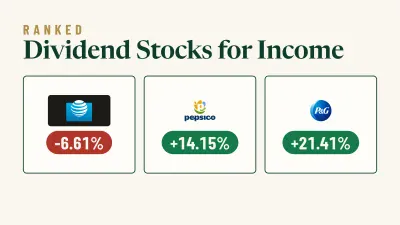
P&G sells everyday essentials in about 65 countries through five segments, with brands such as Tide, Pampers, Gillette, Crest, and Charmin. It has the lowest yield of the three because investors pay up for that stability. Shares have risen 21.41% year to date to $169.11.
Coverage is solid. The $4.354 annualized dividend uses about 63% of fiscal 2026 core EPS of $6.89, and fiscal 2027 guidance ranges from $6.89 to $7.11. P&G marked its 70th consecutive year of dividend increases. For fiscal 2027, it plans to pay over $10 billion in dividends and buy back about $5 billion of stock. The main risk is about $1.4 billion in after-tax commodity cost pressures, and management said: “We expect these headwinds to increase in the next few quarters.”
PepsiCo
- Stock #2: PepsiCo (NASDAQ: PEP)
- Yield (forward): 4.13%
- Shares for $83,333.33: 580.96
- Annual Passive Income: ~$3,439.30
PepsiCo sells snacks and drinks in more than 200 countries and territories under brands like Lay’s, Doritos, Gatorade, and Pepsi. Its yield is high for a staples company because the stock has gone nowhere for years. It is up just 1.57% over five years, even after a 14.15% gain over the past month.
The $5.92 forward dividend uses about 74% of trailing diluted EPS of $7.95. That margin is tighter than P&G’s but still covered. PepsiCo plans $7.9 billion in 2026 dividends and targets free cash flow conversion of at least 80%. The quarterly payout has risen every year since 1999, most recently to $1.48. Weakness in North American snacks presents the biggest concern: core operating profit at PepsiCo Foods North America fell 12% in the third quarter, and management cut 2026 core EPS growth guidance to +2.5% to +3.5%.
AT&T
- Stock #1: AT&T (NYSE: T)
- Yield (forward): 5.02%
- Shares for $83,333.33: 3,767.33
- Annual Passive Income: ~$4,181.74
AT&T provides wireless, fiber, and fixed wireless service and now reaches more than 39 million fiber locations. It is targeting 60 million by the end of 2030. The high-yield payout comes from a capital-heavy business with mature growth, and the stock has slipped 6.61% year-to-date to $22.12.
Retirees should know the history. In 2022, AT&T cut its quarterly dividend from $0.52 to $0.2775 and has held it at that level every quarter since. The smaller payout is well covered. The $1.11 annual dividend uses about 46% of the company’s adjusted EPS outlook of about $2.40. Free cash flow is estimated at $18 billion+ in 2026, rising to $21 billion+ by 2028. The chief concern is debt. Net leverage rose to 3.13x after a $23 billion spectrum purchase from EchoStar, and management expects to return to the 2.5x range during 2029.
Income at a Glance
| Name Yield Annualized Income Base for Retirement | ||
|---|---|---|
| Procter & Gamble | 2.57% | $2,145.55 |
| PepsiCo | 4.13% | $3,439.30 |
| AT&T | 5.02% | $4,181.74 |
| Total | 3.91% | $9,766.58 |
Combined, these three positions produce $9,766.58 in annual passive income on a $250,000 investment, a blended yield of 3.91%. AT&T contributes $4,181.74, PepsiCo adds $3,439.30, and Procter & Gamble rounds out the group with $2,145.55.
Spreading the income across household staples, food and drinks, and connectivity means no single industry downturn can stop all three payouts. Each company pays quarterly, so the checks arrive on a regular schedule. That steady cash flow is what lets a retiree plan around income instead of hoping for gains.
Contact [email protected] for any questions or corrections.
Lee Jackson has covered Wall Street analysts' equity and debt research and equity strategy daily for 24/7 Wall St. since 2012. His broad, diverse career, including a stint as creative services director at an NBC affiliate in Austin, Texas, gives him unique insight into the financial industry.
Lee Jackson's journey in the financial industry spans more than 30 years, including nearly two decades as an institutional equity salesperson at Bear Stearns, Lehman Brothers, and Morgan Stanley. His career spanned pivotal sell-side Wall Street events, from the dot-com rise and bubble to the Long-Term Capital Management debacle, 9/11, and the Great Recession of 2008. This reflects his resilience and adaptability amid market volatility.
Lee Jackson’s practical financial industry experience, gained through a career at some of the biggest banks and brokerage firms, is complemented by a lifetime of writing across various platforms. This unique combination allows him to shed light on the intricacies of Wall Street in a way only someone with deep insider experience and knowledge can. Moreover, his extensive network across Wall Street continues to provide direct access for him and 24/7 Wall St., a privilege few firms enjoy.
Since 2012, Jackson’s work for 24/7 Wall St. has been featured in Barron’s, Yahoo Finance, MarketWatch, Business Insider, TradingView, Real Money, The Street, Seeking Alpha, Benzinga, and other media outlets. He attended the prestigious Cranbrook Schools in Bloomfield Hills, Michigan, and has a degree in broadcasting from the Specs Howard School of Media Arts.