F-150 Lightning Sales Drop To Zero
Ford's $30 billion EV bet just hit a milestone nobody expected, and the company is celebrating. Why would an automaker cheer the collapse of its flagship electric truck, and what is it betting on instead?


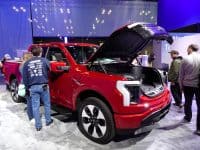
It is very good news for Ford (NYSE: F | F Price Prediction). In October, it sold no F-150 Lightning. The EV pickup was the flagship of Ford’s planned $30 billion plunge into the EV business. The last of the remnants of that have barely survived.
F-150 Lightning sales in October of last year were 1,543. Early estimates were that Ford would sell tens of thousands a month. Ford can turn its focus to gas-powered vehicles and a foray into hybrids (Toyota (NYSE: TM) posted extraordinary earnings largely driven by its hybrid success). Ford sold 13,818 hybrids in October, which was down 20%, but it says it will push aggressively into this sector of the car business.
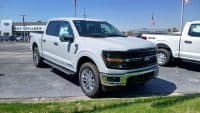
Perhaps the very best news for Ford is that sales of its F-Series pickup rose 8.2% to 73,482. Sales earlier in the year were down because of production and supply chain issues. The F-150 is the top-selling vehicle in the US and represents more than 30% of Ford’s monthly total. No vehicle is more critical to Ford’s success.
Ford management has made a good decision to focus on gas-powered vehicles, which have driven its revenue for years. Overall hybrid sales across the industry have been good, but they still make up a tiny percentage of overall US car sales. The future of EVs has been crippled. The federal government discontinued a $7,500 tax incentive, which pushed sales down 30% year over year in the first three quarters of 2026. Potential buyers have continued to worry about range and the number of charging stations.
Ford can hold its own in the American car market, or even do better. Its brand is among the strongest in the US. Its SUVs and pickups are still wildly popular. If global oil supply rises and gas prices drop, Ford will have the wind in its sails.
Ford’s main anxiety is that Chinese EVs can be sold in the US. They are both inexpensive and apparently full of features that should appeal to owners. As Democrats take much of the power in Washington, Ford’s employee base will likely be protected. That means there won’t be Chinese EVs in the US anytime soon.
The new Ford looks like the old Ford, and that is good news.
Contact [email protected] for any questions or corrections.
Douglas A. McIntyre is the co-founder, chief executive officer and editor in chief of 24/7 Wall St. and 24/7 Tempo. He has held these jobs since 2006.
McIntyre has written thousands of articles for 24/7 Wall St. He is an expert on corporate finance, the automotive industry, media companies and international finance. He has edited articles on national demographics, sports, personal income and travel.
His work has been quoted or mentioned in The New York Times, The Wall Street Journal, Los Angeles Times, The Washington Post, NBC News, Time, The New Yorker, HuffPost USA Today, Business Insider, Yahoo, AOL, MarketWatch, The Atlantic, Bloomberg, New York Post, Chicago Tribune, Forbes, The Guardian and many other major publications. McIntyre has been a guest on CNBC, the BBC and television and radio stations across the country.
A magna cum laude graduate of Harvard College, McIntyre also was president of The Harvard Advocate. Founded in 1866, the Advocate is the oldest college publication in the United States.
TheStreet.com, Comps.com and Edgar Online are some of the public companies for which McIntyre served on the board of directors. He was a Vicinity Corporation board member when the company was sold to Microsoft in 2002. He served on the audit committees of some of these companies.
McIntyre has been the CEO of FutureSource, a provider of trading terminals and news to commodities and futures traders. He was president of Switchboard, the online phone directory company. He served as chairman and CEO of On2 Technologies, the video compression company that provided video compression software for Adobe’s Flash. Google bought On2 in 2009.