He Inherited $500,000 and Won’t Spend a Dollar of It. His Wife Wants a Kitchen. Warren Buffett Wrote the Tiebreaker in 2013
A wife wrote to MarketWatch's Moneyist that her husband inherited $500,000 from his mother and refuses to spend any of it 18 months before he retires. Here is what money like that should do for a couple near retirement: pay…

This post may contain links from our sponsors and affiliates, and Flywheel Publishing may receive compensation for actions taken through them.
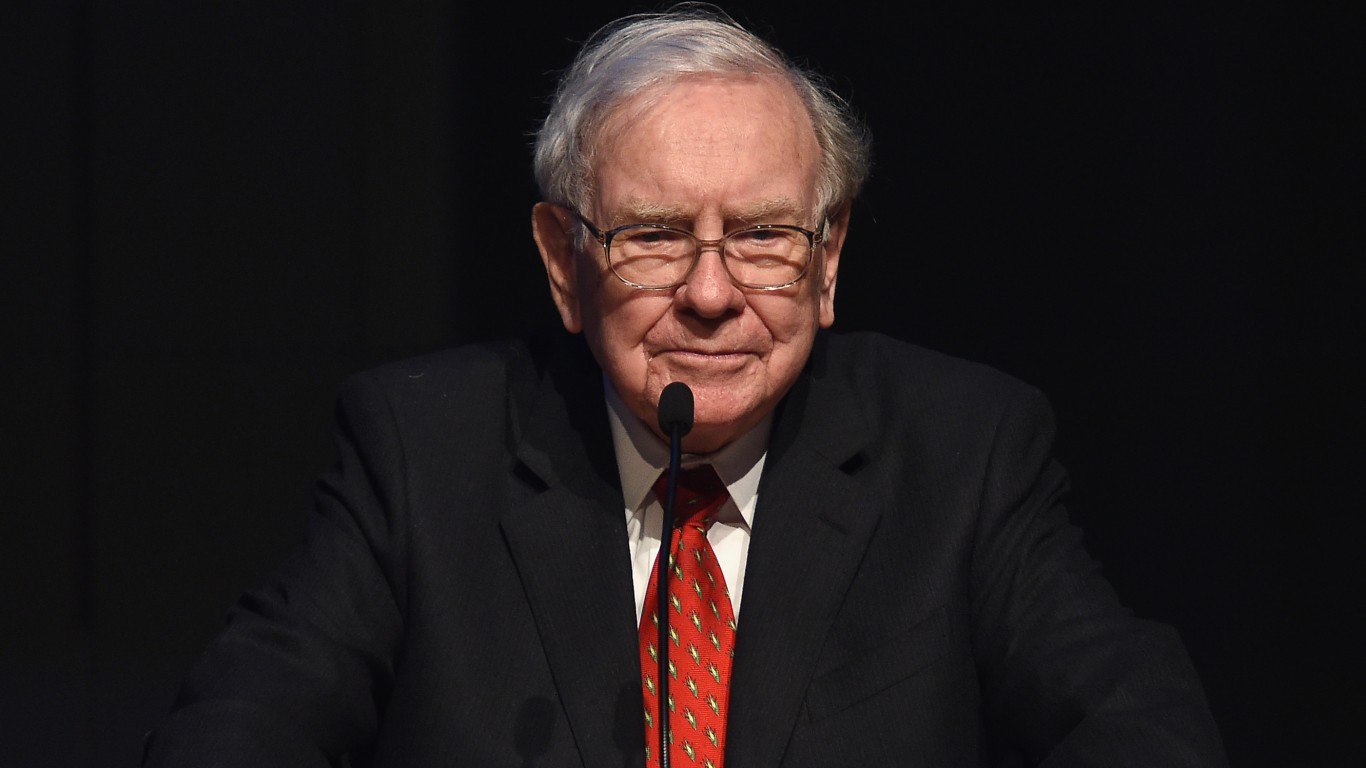
A husband who inherited $500,000 from his mother and will not spend a dollar of it 18 months before he retires is sitting on the cheapest money his household will ever spend, and Warren Buffett’s instruction for his own wife’s inheritance tells him where it belongs: 90% in a very low-cost S&P 500 index fund and 10% in short-term government bonds. Buffett wrote that line in his 2013 shareholder letter for the trustee of the cash his will leaves to his wife.
The fight ran in MarketWatch’s Moneyist column on Friday. A wife of 30 years wrote that her mother-in-law died in April and left her husband $500,000, most of it from the sale of her small house in Scranton, Pennsylvania, and that he retires in 18 months. She proposed spending $130,000 ($45,000 on a kitchen from 1999, $70,000 on two cars with 310,000 combined miles, $15,000 on a trip to Italy) and investing the other $370,000. He said no: nearly all of it invested and untouched, “for security,” nothing decided until they meet their adviser in January. The columnist put their retirement portfolio at $2.1 million.
A plan to leave all $500,000 invested and untouched “for security” reads as a warning sign that the couple has no spending plan at all, only a balance; the limit of that reading is that waiting until January costs them almost nothing, and holding a reserve in the last year before a paycheck stops is sound. Buffett’s instruction is a signal about what inherited money is for: nine dollars in ten go to work for the long run and the tenth sits in safe bonds to be spent, and its limit is that he wrote it for a widow with no fixed yearly draw, so a couple 18 months from their last paycheck needs a bigger spending sleeve than 10%. Here is what the money should do, worked through a couple like them; the same steps apply if you are the one holding the check. He is 63 and retires at 65, she is 61 and has worked part time since 2004. Before the inheritance they had $1,600,000: $1,250,000 in his pre-tax 401(k) and $350,000 in a joint brokerage account. His Social Security at 67 would be $3,400 a month.
What the money already paid, and whose it is
Pennsylvania charges a 4.5% inheritance tax on what a child receives, $22,500 on $500,000, and the estate normally pays it before the check arrives. Federal tax takes nothing: an inheritance is not income, and the estate is far below the $15 million exemption for 2026. So the $500,000 is clean, after-tax cash. It is also his: Pennsylvania’s divorce code keeps a bequest out of the marital estate unless it is commingled. That is a legal fact and a poor reason to let the money sit, because most of their other savings is pre-tax, and that decides which dollars are cheap to spend.
The list costs $130,000 from this money and about $142,000 from the 401(k)
The list is $130,000, 26% of the inheritance and 6.2% of the couple’s $2.1 million. Under the 4% rule the columnist cited, $2.1 million supports $84,000 a year, or $7,000 a month; spend the list and $1,970,000 supports $78,800. The kitchen, the cars and Italy cost them $5,200 a year of safe withdrawal, or $433 a month. That is the honest price, and you should know it before you argue.
Which account pays changes the price. Inherited cash pays $130,000. To net $130,000 from his 401(k) in his first retired year, with $39,850 of deductions (the 2026 standard deduction of $32,200, the $1,650 extra for a spouse over 65 and the $6,000 senior deduction) and no other income, he would withdraw $141,868, about $142,000, and send $11,868 to the IRS. Taken while he still draws a salary in the 24% bracket, the list costs $171,000 of 401(k) money. If you hold inherited cash and a pre-tax account, spend the inherited dollars first.
Buffett's tenth
Buffett’s split on $500,000 is $450,000 in the index fund and $50,000 in short-term government bonds. At the 4.17% the three-month Treasury bill paid on Thursday, that reserve earns $2,085 a year, and the whole $500,000 parked in bills until the January meeting earns $3,475, so the husband’s wish to decide nothing yet is cheap to grant. Vanguard’s research found a lump sum beat spreading it over three months 68% of the time, so once you decide, move the long-term share in one step. For this couple the reserve should be bigger than a tenth, because the money has a job to do first.
The bridge from 65 to 70
The strongest thing $500,000 can do for a man retiring at 65 is let him leave his Social Security alone until 70. Claiming at 65 cuts his $3,400 benefit by 13.33% (five-ninths of 1% a month for 24 months) to $2,947; waiting to 70 adds 8% a year for three years, to $4,216. The gap is $1,269 a month, $15,232 a year, for the rest of his life, and if he dies first his wife’s survivor check is based on the same number. Her own spousal benefit, half of his $3,400, is $1,700 whatever he does; the survivor benefit is the one that moves.
The price is the $176,800 he would have collected from 65 to 70 at the reduced rate; at $1,269 a month he is ahead 139 months after 70, at 81.6. Five years of spending at $84,000 a year is $420,000. After the list and a $50,000 reserve, $320,000 of the inheritance remains, enough for 3.8 of those years, and the brokerage account covers the rest: they hold $850,000 outside retirement accounts.
The Roth window the bridge opens
From 65 to 70, with no salary and no Social Security, their taxable income is close to zero, which is the window for moving 401(k) money into a Roth IRA at the lowest rate they will ever see. Filling the 12% bracket means converting $140,650 a year ($100,800 of taxable income plus $39,850 of deductions) for $11,600 of tax, which is 8.2% of the amount moved. Over five years that is $703,250 converted for $58,000 of tax, paid from the inherited cash and the brokerage account. The same $140,650 taken later as income would cost $30,943 at 22% or $33,756 at 24%.
Left alone at the 5.8% midpoint of Vanguard’s ten-year stock forecast, the $1,250,000 grows to $2,196,679 by 75, when his required minimum distributions begin, and the first one is $89,296, taxed on top of two Social Security checks. With the conversions, the pre-tax balance at 70 is $867,363 instead of $1,657,060, and the rest sits in a Roth that passes to the four children tax-free. The plan fits: spending plus conversion tax is $478,000 against $670,000 outside retirement accounts, leaving $192,000 at 70.
Where this is weak
The couple’s ages, balances and his $3,400 benefit are our assumptions on the letter; the $500,000, the $130,000 list and the $2.1 million are theirs. The 2026 brackets stand in for 2028, his first retired year, and are indexed, so the real numbers run a little higher. The 4% rule ignores taxes, and the brokerage account’s gains are taxable when sold. A 5.8% return is a forecast midpoint, and the delay to 70 only pays if he lives past 81.6; if your health is poor, claim earlier.
The bottom line
A $500,000 inheritance 18 months before retirement is the one pool of money in the house that was taxed before it arrived and will never be taxed again, so it should be the first money you spend. For this couple it pays the $130,000 list for $433 a month of safe withdrawal, keeps a $50,000 reserve in Treasury bills, and bridges the five years from 65 to 70 so his Social Security grows from $2,947 to $4,216 a month, a gain of $1,269 that his wife’s survivor check inherits. The paycheck-free years also let them move $703,250 to a Roth for $58,000 of tax. Buffett’s 90/10 tells you the long-term share belongs in a low-cost index fund; what it should not do is sit untouched while you argue about a kitchen.
Contact [email protected] for any questions or corrections.
I've spent more than 15 years inside enterprise software, working alongside the finance, sales operations, and HR leaders who run the revenue engines at some of the largest tech companies in the country.
My day job is helping enterprise executives make smarter decisions about retention, compensation, and growth. These are the same operational levers that show up in every earnings report investors actually read. That perspective shapes my writing for 24/7 Wall St.
The headline numbers are easy. The interesting stuff is underneath: how companies make money, what executives are worried about, and what any of it means for the person checking their 401(k) on a Sunday afternoon. I write about personal finance and business as someone who has spent her career inside the rooms where these decisions get made.