National Fuel Gas Has Paid a Dividend for 124 Straight Years. Can It Keep Going?

This post may contain links from our sponsors and affiliates, and Flywheel Publishing may receive compensation for actions taken through them.
National Fuel Gas (NYSE:NFG | NFG Price Prediction) opened its fiscal 2026 results with a line few companies can write. NFG said it has now paid its dividend for the 124th consecutive year. The timing makes the question urgent. The company is about to split in two, and income investors want to know whether the streak survives the breakup.
NFG CEO David Bauer: “Fiscal 2026 was an excellent year for National Fuel. The Company grew adjusted earnings per share 9% year over year, while generating significant free cash flow and continuing to return cash to our shareholders through our dividend, which we’ve paid for the 124th consecutive year.”
Three-Legged Business That Paid Through Wars and Depressions
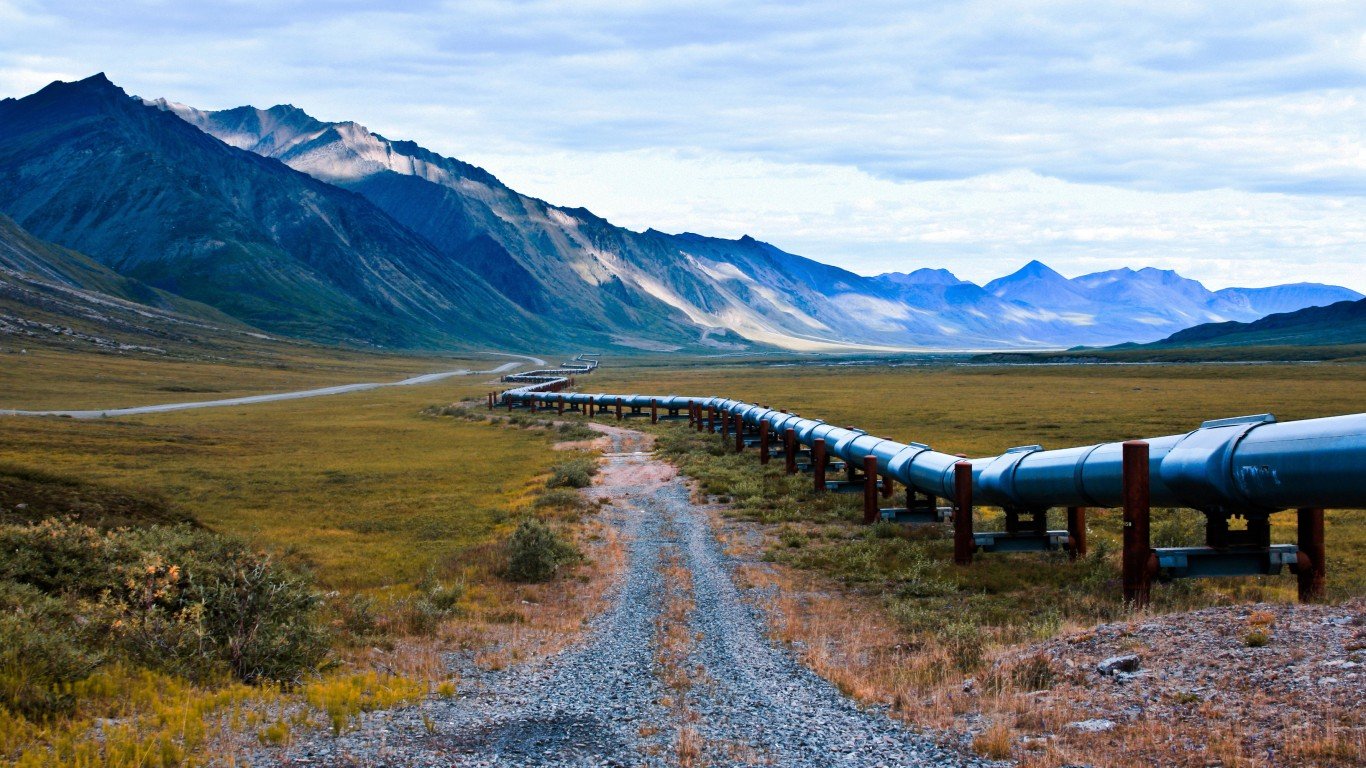
The formula has three parts. National Fuel owns a regulated utility, interstate pipelines and storage, and a natural gas producer, Seneca Resources. The regulated pieces earn steady, approved returns in good times and bad. Seneca adds upside when gas prices rise. That mix funded a 56th consecutive annual increase, raising the rate 4% to $2.22 per share.
Coverage Still Looks Comfortable as Earnings Dip
Fiscal 2027 adjusted EPS guidance of $6.00 to $6.40 sits below fiscal 2026’s $7.55, yet the dividend takes only about 35% to 37% of it. Even at $2.50 gas, the low end of $5.60 yields roughly 40%. At $74.16, shares yield about 3.0% after falling 5.49% year to date.

Cash is tighter. Free cash flow was $198.6 million after $1.091 billion of capex. Leverage ended the year at 1.9 times debt to EBITDA, and CFO Tim Silverstein said the growth plan holds without new stock: “We can do this without the need for external equity financing.”
How Atmos and ONEOK Stack Up
Atmos Energy (NYSE:ATO), a pure regulated gas utility, raised its dividend 9.0% to $4.36, about 48% of the low end of its fiscal 2027 EPS guidance. Midstream giant ONEOK (NYSE:OKE) pays $4.28 annualized, roughly 68% of its $6.30 2026 EPS midpoint. National Fuel has the smallest payout of the three, but also a slower raise than Atmos.

Biggest Risk to the Streak Sits in Seneca’s Wells
Guidance assumes $2.85 per MMBtu gas, an $0.80 drop from last year, and Seneca missed its production target on underperforming wells. Then comes the spin, set for the second half of calendar 2027. The remaining company will be fully regulated with about $5 billion in rate base. Management offered no post-spin dividend policy on the call. A second risk is a reset: the board could size the remaining payout to regulated earnings alone, keeping the streak alive on paper while cutting the check per share.
Bauer framed the company’s durability this way:
“We build our business to go through the cycle, right? We’ll have periods where we’ll have politicians in favor of us and others where they’re not in favor of us, but our business is designed to go through that cycle.”
What Retirees Should Weigh Before the Split
Post-spin National Fuel will look a lot like Atmos: regulated returns, 5%-7% rate base growth and an Ohio utility that adds about 335,000 customers. That profile suits a retiree’s need for predictable income, and current coverage lets the boardroom keep the 124-year record intact. Shareholders will also receive Seneca stock, whose payout appeal will rise and fall with gas prices. The key document is the Form 10, which management said could go public around March or April. Keep an eye on the stock until then, because that filing should show how the dividend gets divided.
Contact [email protected] for any questions or corrections.
Chris Lange is a financial and geopolitical writer with more than a decade of experience covering a myriad of topics. He has published thousands of articles for 24/7 Wall St., with past coverage focused heavily on stocks, IPOs, healthcare, defense, global affairs, and technology.
His work has been quoted, or referenced by a number of outlets including Business Insider, USA Today, Yahoo Finance, MSN, The Motley Fool, and many other publications. A graduate of Southwestern University, he studied business with a focus on investments and has previous experience in banking and startups.
When not reading or writing the news, he is following his passion for Lacrosse, playing chess, or building solar projects with his dad.