OpenAI Raised Only $15 Billion, Half What It Wanted

This post may contain links from our sponsors and affiliates, and Flywheel Publishing may receive compensation for actions taken through them.
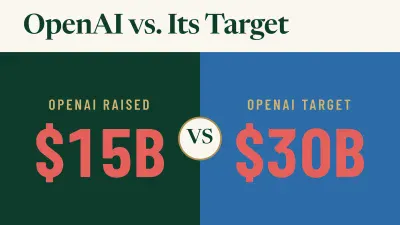
On Thursday, November 12, 2026, people familiar with the matter said OpenAI raised $15 billion in its latest round. It valued OpenAI at $1.25 trillion.
OpenAI first set out to raise up to $30 billion at a $1.4 trillion valuation, so the raise is half of what it wanted only when measured against that original target. By October 31, it had cut the goal to around $20 billion, and against that figure, the raise equals 75%.
OpenAI has not confirmed the round, the amount, the investors or a lead investor. It is also unclear whether the company will raise more.
Microsoft (NASDAQ:MSFT | MSFT Price Prediction), OpenAI’s largest strategic investor and cloud partner, barely moved. Shares rose 0.36% to close at $523.00, a market value of about $3.88 trillion. In a Thursday evening quote that can change before Friday’s open, the stock traded at $521.09 as of 7:59 p.m. ET, down 0.37%.
Investors kept the valuation where OpenAI set it but put in less money than it asked for. That gap is the part of the report most relevant to Microsoft shareholders.

How the Round Shrank Before It Closed
By October 31, OpenAI had about $11 billion in commitments. On November 6, a first close of $11 billion at the same valuation was reported.
The $15 billion is the reported total, and no one has confirmed whether it includes that first close. SoftBank Group and Abu Dhabi’s MGX have been reported as participants, and no lead investor has been disclosed.
SoftBank Group’s U.S. shares closed down 5.60% at $11.79, a market value of about $133.18 billion. No report linked that move, or Microsoft’s, to OpenAI.
Investor Appetite Thinned at a Trillion-Dollar Price
OpenAI CFO Sarah Friar has called the valuation pre-money, meaning the company’s value before the new cash goes in. That price is nearly 50% above March, when OpenAI raised $122 billion at an $852 billion post-money valuation.
Based on figures shared with investors, third-quarter revenue exceeded $10 billion, up about 50%. To justify the price, OpenAI has to keep growing at about that rate for years, and the smaller raise suggests fewer investors were willing to pay for that outcome.
NVIDIA (NASDAQ:NVDA) has invested at least $30 billion in OpenAI, a customer that buys large amounts of compute. When a chip supplier funds its own customer this way, the agreement holds up only as long as outside money keeps coming in.
OpenAI is reportedly expecting a 2027 IPO. Public buyers would then be asked to pay at least this valuation.
Microsoft’s Exposure Is Large but Contained
Microsoft uses the equity method for its OpenAI stake, so its share of OpenAI’s profits or losses runs through net income. That stake added $207 million in the September quarter, compared with a $3.1 billion loss a year earlier.
Cloud demand is the bigger link. Azure grew 48% to $33.165 billion, and commercial remaining performance obligations, which is signed revenue Microsoft has not yet recognized, reached $677 billion.
Microsoft also owns a stake in Anthropic, which produced a $3.2 billion gain in the June quarter. Microsoft’s model-routing tools let Anthropic and OpenAI compete for individual customer workloads.
Microsoft’s Earnings Base Stays Intact Despite OpenAI’s Smaller Raise
Microsoft earned $133.749 billion on $331.839 billion of revenue in fiscal 2026 and trades at 29 times earnings. A partner’s smaller raise leaves that base intact.

The main risk for Microsoft is its spending, because Microsoft spent $39.367 billion on capital projects in the September quarter and expects about $170 billion for the calendar year. If OpenAI buys less compute, some of that capacity could go unused, though the power, cooling, and networking suppliers behind that expansion are a separate trade we mapped in a free report on seven AI infrastructure stocks that aren’t chipmakers.
CFO Amy Hood said demand “continues to exceed available supply,” which limits that risk for now. Even so, the stock is down 3.76% over one month, a period that included the November 5 selloff in chip and cloud stocks.
NVIDIA’s earnings report, expected November 17 after the close but not yet confirmed by the company, is the next read on AI spending. Microsoft forecasts December-quarter Azure growth of 49% to 50% in constant currency, and a result below that range would mean OpenAI’s tighter budget has reached Azure.
Contact [email protected] for any questions or corrections.
Omor Ibne Ehsan is a writer at 24/7 Wall St. He is a self-taught investor with a focus on growth, cyclical, and dividend equities that have strong fundamentals, value, and long-term potential. He also has an interest in high-risk, high-reward investments such as penny stocks.