Small Caps Are Wobbling. These Dividend Stocks Are Solid Buys.

This post may contain links from our sponsors and affiliates, and Flywheel Publishing may receive compensation for actions taken through them.
Small caps have spent the year climbing, with the Russell 2000‘s main tracking fund up 13.63% year to date. Rallies in this corner of the market rarely move in a straight line. When the mood turns choppy, the small companies that hold up tend to be the ones with real cash flow, a covered dividend and a balance sheet that does not depend on easy credit. We ran five well-known small-cap income names through those three tests, and three of them passed.
Small-Cap Income Comes With Trade-Offs Worth Knowing
The index gain hides a lot of movement in individual stocks. Over the past month, Otter Tail (NASDAQ:OTTR | OTTR Price Prediction) fell 15.43% while Tennant Company (NYSE:TNC) rose 13.01%. Those are big swings for stocks that retirees usually buy for stability. Small caps also trade more lightly and get less attention from Wall Street. Otter Tail carries just four analyst ratings, all Hold. They can also be more sensitive to changes in interest rates and credit conditions.
That is why each name below had to clear three bars. Its free cash flow (operating cash flow minus capital spending) for the full year had to exceed its dividend bill, its debt had to be something the business can carry, and its payout record had to check out against actual dividend history. The three that passed have market values ranging from $1.28 billion to $3.16 billion.
Getty Realty: A 7.07% Forward Yield Backed by AFFO
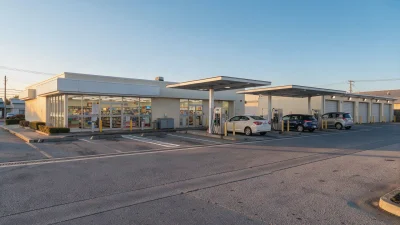
Getty Realty (NYSE:GTY) is a net-lease REIT that owns 1,224 freestanding properties across 46 states, rented mainly to convenience and automotive retailers. At $28.28, the stock has a trailing yield of 6.82%. The new $0.50 quarterly rate works out to a forward yield of 7.07%, which makes Getty the only ultra-high-yield name on this list.
Dividend safety: For a REIT, the best way to measure coverage is adjusted funds from operations (AFFO), a cash-earnings figure. Getty raised its 2026 AFFO guidance to $2.53 to $2.54 per share, so the $2.00 annualized dividend uses about 79% of the midpoint. In 2025, operating cash flow of $127.4 million less $0.4 million of capital spending left $127.0 million, against $108.7 million paid in dividends. The buffer is thinner quarter to quarter: last quarter’s free cash flow of $31.1 million just covered the $30.9 million paid out. On the balance sheet, shareholders’ equity is $1.28 billion against total assets of $2.57 billion.
Track record: The latest 3.1% increase marks Getty’s 13th consecutive year of dividend growth. The dividend data support the recent rise from $0.45 a quarter in 2024 to $0.47, $0.485 and now $0.50. The streak started after the payout was cut to $0.125 in 2012.
Why it stands out now: The business is growing. Third-quarter revenue rose 13.3% to $62.99 million. Getty invested $297.4 million across 68 properties at a 6.9% initial cash yield, and its investment so far this year tops $502.3 million, including the $261 million Refuel deal. Even so, the shares trade well below their 52-week high of $36.21.
Risk: Getty pays for its growth with outside money. It took out a new $200 million senior unsecured term loan after the quarter, and higher interest costs would reduce the AFFO buffer that protects the dividend.
Otter Tail: Utility-Backed Raises Near a 52-Week Low
Otter Tail runs three businesses: a regulated electric utility (Otter Tail Power), a manufacturing segment and a PVC pipe maker. Its $0.5775 quarterly dividend comes to $2.31 a year, a forward yield of 3.07% at $75.30.
Dividend safety: The utility could pay the dividend on its own. Guidance calls for $2.62 to $2.68 per share from the Electric segment this year. Adjusted EPS guidance of $5.73 to $6.03 puts the payout at about 39% of the midpoint. In 2025, operating cash flow of $386.0 million minus $288.1 million of capex left $97.9 million, against $88.1 million in dividends. Cash is tighter this year. In the latest quarter, operating cash flow of $125.2 million came in just under $126.8 million of capex. Shareholders’ equity stands at $1.91 billion, and the company absorbed a $103.5 million PVC antitrust settlement while keeping the dividend steady.
Track record: The dividend data show a payment every quarter back to 1999 and a raise every year since 2014. Over that period, the quarterly rate has gone from $0.3025 to $0.5775. This year’s raise was 10%.
Why it stands out now: After the recent slide, the stock trades near its 52-week low of $74.51. Its forward P/E of 15 compares with a trailing 18. The company’s long-term target of 7% to 9% annual EPS growth was maintained, and a beta of 0.419 points to a steadier ride than most small caps.
Risk: The plastics business rises and falls with housing. Last quarter, PVC prices fell 9%, volumes slipped 5% and segment revenue dropped 12.9%.
Tennant Company: Robotics Growth Fuels a Rising Dividend
Tennant makes commercial floor-cleaning equipment, including a fast-growing line of autonomous mobile robots. It has the smallest yield in this group: $1.30 in annualized dividends comes to 1.72% at $75.44. Tennant makes the list because the dividend keeps growing.
Dividend safety: In 2025, operating cash flow of $65.0 million minus $21.7 million of capex produced $43.3 million of free cash flow, against a $21.9 million dividend bill. The payout equals about 32% of the midpoint of adjusted EPS guidance. This year has been less smooth. Operating cash flow was negative $31.2 million in the first quarter, then recovered to $11.9 million in the third quarter, against $6.7 million of capex and a $5.2 million dividend. Net leverage rose to 2.0x from 1.0x at the end of last year, which is still a level the business can carry.
Track record: The data show a payment every quarter back to 1999 and a raise every year since 2020. Over that period, the quarterly rate has gone from $0.23 to $0.325. The newest raise was 4.84%.
Why it stands out now: The growth story is playing out. Third-quarter adjusted EPS of $1.40 exceeded the $0.98 consensus estimate. Orders rose 9.5%, and robotics sales climbed 71% to $37.3 million. Management maintained adjusted EPS guidance of $3.80 to $4.45, and the stock trades at a forward P/E of 13.
Risk: Margins may not be as strong as they look. Third-quarter gross margin of 42.3% included a one-time tariff refund worth 190 basis points, or about $6.1 million. Problems with a new ERP (business software) system pressured margins earlier this year.
Two Popular Income Picks That Missed the Cut
Northwest Natural (NYSE:NWN) yields 3.79% and just announced its largest dividend increase since 2012, raising the quarterly payout to $0.50. Cash flow falls short. In 2025, operating cash flow of $269.1 million fell short of $466.9 million in capex, leaving free cash flow of negative $197.8 million. Long-term debt also rose to 59.1% of capitalization from 55.0%. Regulated utilities commonly borrow to fund growth like this, but that means the dividend is not covered by free cash flow, which is the first test.
Universal Corporation (NYSE:UVV) yields 8.7%, an ultra-high yield of the sort that often signals trouble ahead (we laid out the seven warning signs in a free dividend-trap guide). Operating cash flow was negative $96.7 million last quarter after negative $117.1 million the quarter before. For the fiscal year that ended in March, free cash flow of $80.3 million fell short of the $81.3 million dividend, and net debt stands at $1.15 billion. Management says it aims to "delever our balance sheet and reduce interest expense to support earnings per share and dividend coverage ratios." Until it does, the payout fails the coverage test.
Three Income Profiles Built for Different Goals
Getty Realty, Otter Tail and Tennant offer three kinds of income: a 7.07% forward yield backed by AFFO, a utility-anchored payout with long-running increases, and a smaller dividend growing with a robotics business. All three covered dividends with free cash flow last year, carry manageable debt and have confirmed dividend records. Next, watch earnings for Getty’s post-loan AFFO, Otter Tail’s PVC pricing and Tennant’s margins without the tariff refund. Each combines small-cap exposure with a dividend covered by free cash flow.
Contact [email protected] for any questions or corrections.
Lee Jackson has covered Wall Street analysts' equity and debt research and equity strategy daily for 24/7 Wall St. since 2012. His broad, diverse career, including a stint as creative services director at an NBC affiliate in Austin, Texas, gives him unique insight into the financial industry.
Lee Jackson's journey in the financial industry spans more than 30 years, including nearly two decades as an institutional equity salesperson at Bear Stearns, Lehman Brothers, and Morgan Stanley. His career spanned pivotal sell-side Wall Street events, from the dot-com rise and bubble to the Long-Term Capital Management debacle, 9/11, and the Great Recession of 2008. This reflects his resilience and adaptability amid market volatility.
Lee Jackson’s practical financial industry experience, gained through a career at some of the biggest banks and brokerage firms, is complemented by a lifetime of writing across various platforms. This unique combination allows him to shed light on the intricacies of Wall Street in a way only someone with deep insider experience and knowledge can. Moreover, his extensive network across Wall Street continues to provide direct access for him and 24/7 Wall St., a privilege few firms enjoy.
Since 2012, Jackson’s work for 24/7 Wall St. has been featured in Barron’s, Yahoo Finance, MarketWatch, Business Insider, TradingView, Real Money, The Street, Seeking Alpha, Benzinga, and other media outlets. He attended the prestigious Cranbrook Schools in Bloomfield Hills, Michigan, and has a degree in broadcasting from the Specs Howard School of Media Arts.