5 REITs That Turn Long-Term Leases Into Reliable Dividend Income
Net lease REITs promise bond-like income without the credit risk, but not every triple-net landlord is built the same way. These five stand apart on balance sheet strength, tenant quality, and dividend durability in ways the yield alone will not…

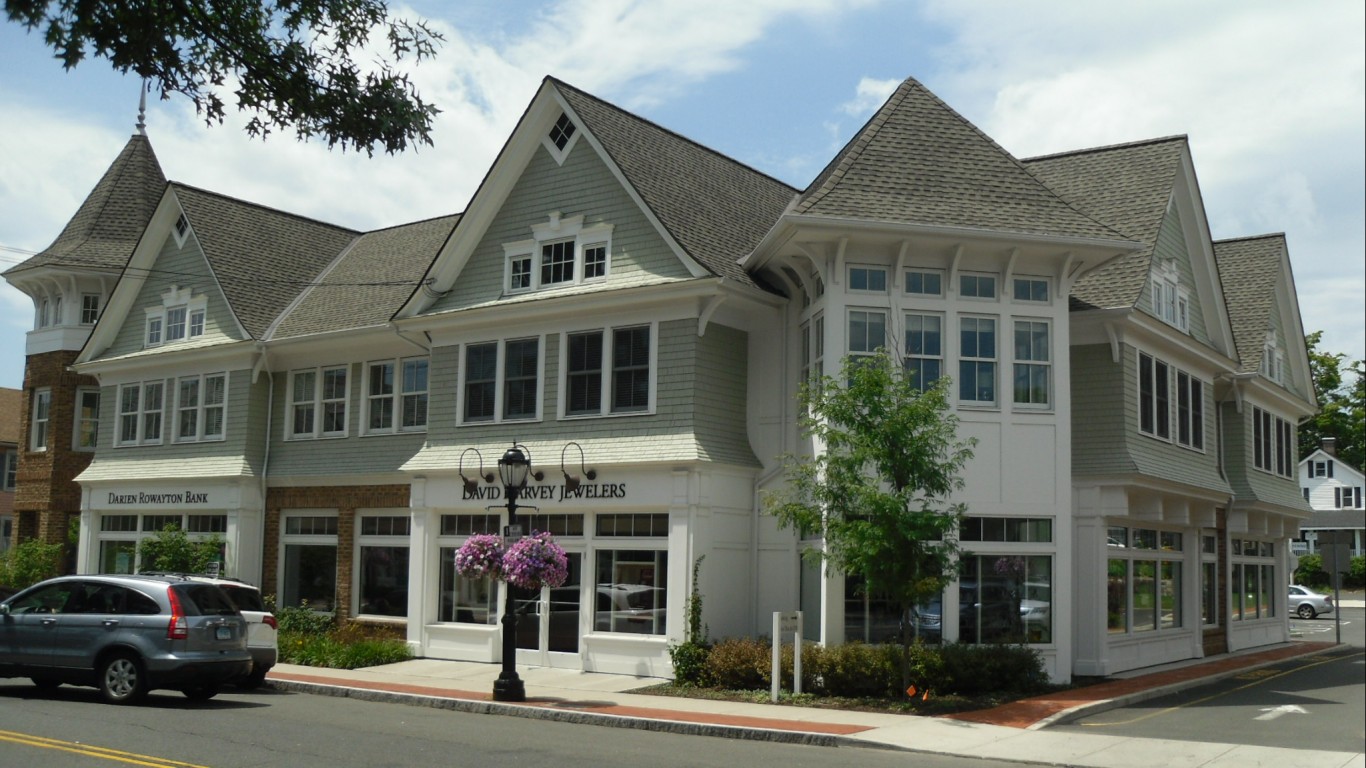
A net lease is a rental structure where the tenant, not the landlord, pays for property taxes, insurance and maintenance in addition to base rent. That arrangement, often called triple-net or NNN, strips most operating volatility out of the landlord’s cash flow and turns a building into something closer to a long-duration bond with contractual escalators. It is the reason net lease REITs are pitched as retirement-income vehicles: initial cash cap rates across this roster currently sit in a 7.0% to 7.8% range, with lease terms often stretching well past a decade. For dividend safety we use adjusted funds from operations (AFFO) coverage, not an earnings payout ratio, because REIT net income is distorted by non-cash depreciation. Every name below is an equity REIT that owns real property. Mortgage REITs, which finance real estate with borrowed money and carry a very different interest-rate and credit-risk profile, are excluded from this roster.
Realty Income: Monthly Payer With Global Reach
Realty Income (NYSE:O) owns a diversified global net lease portfolio spanning retail, industrial, gaming and, increasingly, data centers, with a market cap of roughly $56.2 billion. Investment-grade clients accounted for 34% of annualized rent, up from 32% in the first quarter, and Q2 2026 portfolio occupancy was 98.8% with a blended rent recapture rate of 102.7%.
The monthly dividend was most recently $0.2715 per share, with an annualized forward rate of $3.258. At a current price of $59.43, that is a high-yield payout that management raised for the 115th consecutive quarter. Monthly checks are the whole reason retirees gravitate here, and we rounded up seven other payers on that same 30-day schedule in a free report you can grab here. AFFO per share grew 3.8% to $1.09 in the quarter, and full-year 2026 AFFO guidance was raised to $4.44 to $4.45, comfortably covering the annualized dividend.
The bull case is scale and capital access: Realty Income sourced more than $62 billion year-to-date, closed a $6 billion hyperscale data center joint venture with Cloud Capital, and carries a Fitch A rating with Stable Outlook. CEO Sumit Roy said, “We are pleased to raise our 2026 AFFO per share guidance to $4.44 to $4.45.” The main risk is credit concentration lower down the rent roll: 65.7% of ABR comes from non-investment-grade tenants, and leverage ticked up to 5.4x net debt/EBITDAre.
Agree Realty: Investment-Grade Retail With a Fortress Balance Sheet
Agree Realty (NYSE:ADC) is a pure retail net lease REIT that ended Q2 2026 with 2,825 properties spread across all 50 states and the District of Columbia. Tenants skew heavily toward the largest, most creditworthy chains: ~73.2% of ABR comes from investment-grade retailers, and the roster includes recent additions such as Walmart Supercenter ground leases and a $75 million BP-branded travel-center portfolio guaranteed by A-rated BP North America.
Portfolio occupancy hit a company-record 99.8% with fully loaded credit and occupancy loss of just 10 basis points year to date. The monthly dividend was raised to $0.267, an annualized forward of $3.204, or a mid-single-digit yield at the current $71.15 share price. Management pegged the AFFO payout ratio at 70% of AFFO per share for the second quarter and called the dividend “very well covered.”
The bull case rests on underwriting discipline and liquidity. CEO Joey Agree cited “a fortress balance sheet backed by $1.9 billion of liquidity,” with net debt to recurring EBITDA of 5.2 times, or 3.7 times pro forma for settling all outstanding forward equity. The risk is interest expense: it rose to $40.3M vs $32.3M year over year, and the company still faces the cost of a contemplated 10-year unsecured debt issuance against a 4.7% 10-year Treasury.
NNN REIT: 37 Consecutive Years of Dividend Increases
NNN REIT (NYSE:NNN) is a pure-play triple-net retail REIT with 3,774 freestanding single-tenant properties concentrated in auto service, convenience, discount retail and early childhood education. What makes it distinctive for retirement income is duration: weighted average lease term is 10.1 years, matched by a weighted average debt maturity of approximately 10.1 years, described by management as nearly double the nearest peer.
Occupancy was 99.1%, and Q2 acquisitions closed at a 7.3% initial cash cap rate with an average lease duration of just shy of 18 years. The quarterly dividend was raised to $0.62, an annualized $2.48, marking the 37th consecutive annual dividend increase. Management cited an AFFO payout ratio of 69% against Q2 AFFO of $0.90 per share and raised full-year AFFO guidance to $3.55 to $3.59.
The bull case is a self-funded model with a granular, resilient tenant base and near-immaterial credit watch list. The risk is refinancing: NNN has a $350 million debt maturity in December 2026, and management estimated 10-year debt pricing in the mid-5% to 5.6% range, well above legacy coupons.
W. P. Carey: Industrial Tilt With CPI-Linked Rent Growth
W. P. Carey (NYSE:WPC) is a diversified global net lease REIT with a heavy industrial and warehouse tilt and meaningful European exposure. Roughly 47.8% of ABR is linked to CPI escalators, and over 99% of ABR has contractual rent increases. Same-store rent growth was 2.6% constant currency in Q2 2026, ahead of peers on the roster.
The largest quarterly deal was a $400 million sale-leaseback with Garden Corps covering 43 manufacturing, packaging and industrial outdoor storage facilities across 24 states on a 20-year triple-net master lease. The quarterly dividend was raised to $0.94, an annualized forward of $3.76, at a payout ratio management described as just over 70%. AFFO per share reached $1.34 in Q2, and full-year guidance was raised to $5.19 to $5.27. At the current $69.07 price, the forward yield sits in high-yield territory.
CEO Jason Fox said “AFFO growth now above 5% at the midpoint.” The balance sheet is conservative, with 95% fixed-rate debt at a weighted average of 3.2% and net debt to adjusted EBITDA of 5.1 times including unsettled forward equity. The risks are real: a $79.4M Q2 impairment, European same-store rent of -2.6% constant currency, FX exposure and lingering fallout from the Hellweg tenant, whose exposure has been reduced to 90 basis points of ABR and which missed its June rent payment.
Essential Properties: Middle-Market Sale-Leasebacks With Low Leverage
Essential Properties Realty Trust (NYSE:EPRT) focuses on middle-market, service-oriented tenants, including car washes, medical and dental, early childhood education, quick-service restaurants, auto service and convenience. The portfolio spans 2,493 properties leased to over 500 tenants, with a weighted average lease term of 14.3 years and weighted average rent coverage of 3.5x.
Q2 investments totaled $332.4M at a 7.8% weighted-average cash cap rate, with 84% sale-leasebacks and 72% involving existing tenants. Occupancy was 99.6%. The quarterly dividend was raised to $0.32, an annualized forward of $1.28. AFFO per share grew 9% to $0.50, and the AFFO payout ratio was a conservative 64%, generating retained free cash flow of $43 million in the quarter, or roughly $170M annualized.
The bull case is the strongest balance sheet on the roster: pro forma net debt to EBITDAre of 3.5x and $1.7B of liquidity, layered on a highly granular portfolio with average investment size of $3.1 million per property. The risk is the $430M term loan maturing Feb 2027, currently priced at approximately 2.3%, which will refinance into a materially higher coupon.
Committed View
All five names are equity net lease REITs with occupancy at or near 99%, AFFO payout ratios in the mid-60s to low-70s, and raised 2026 guidance. For retirement-income buyers, that combination is what matters most, ahead of the headline yield. Realty Income offers monthly checks and unmatched scale; Agree Realty offers the cleanest investment-grade retail tenant base; NNN offers the longest dividend-increase streak; W. P. Carey offers CPI-linked industrial growth; Essential Properties offers the lowest leverage and highest coverage. Each stands on operating durability rather than yield alone, and that is the correct order of priorities.
Contact [email protected] for any questions or corrections.
Chris Lange is a financial and geopolitical writer with more than a decade of experience covering a myriad of topics. He has published thousands of articles for 24/7 Wall St., with past coverage focused heavily on stocks, IPOs, healthcare, defense, global affairs, and technology.
His work has been quoted, or referenced by a number of outlets including Business Insider, USA Today, Yahoo Finance, MSN, The Motley Fool, and many other publications. A graduate of Southwestern University, he studied business with a focus on investments and has previous experience in banking and startups.
When not reading or writing the news, he is following his passion for Lacrosse, playing chess, or building solar projects with his dad.