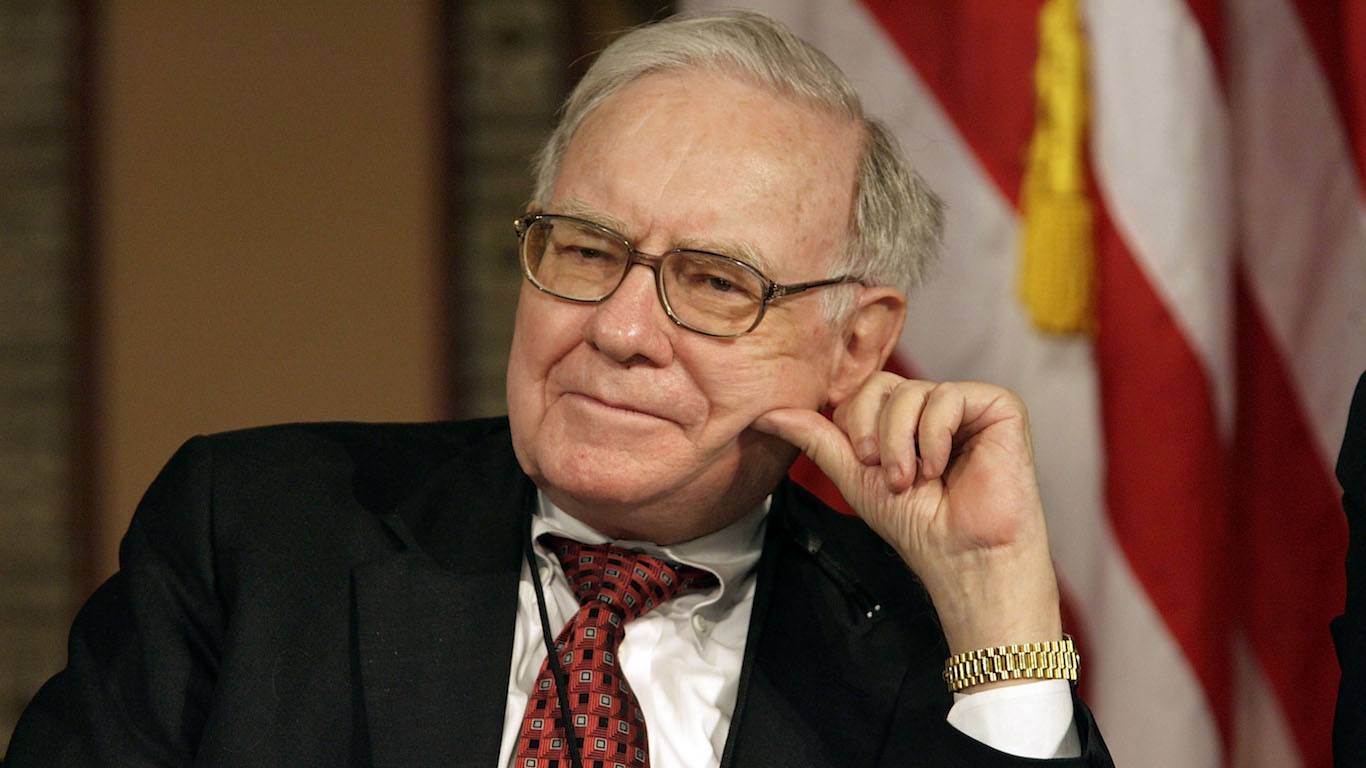
In 1952, A North Carolina Man Was The Best Man At His Friend’s Wedding. 10 Years Later, He Gave The Groom $125,000 To Invest. The Groom’s Name Was Warren Buffett. In 2014, Fred Stanback Donated $397 Million In Berkshire Stock To Charity.

This post may contain links from our sponsors and affiliates, and Flywheel Publishing may receive compensation for actions taken through them.
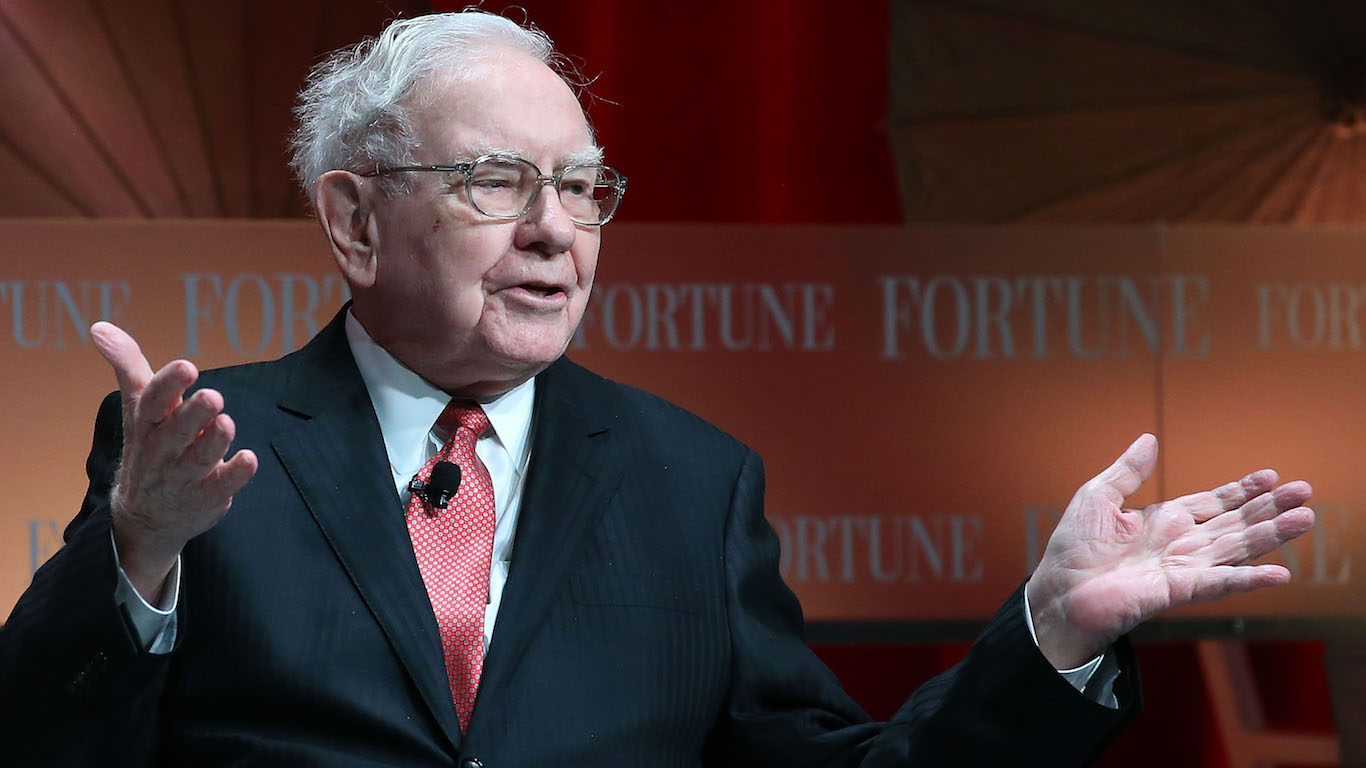
In April 1952, Warren Buffett, 21 years old, married Susan Thompson at Dundee Presbyterian Church in Omaha. His best man was a friend from business school, a young man from Salisbury, North Carolina, named Fred Stanback.
The two had met at Columbia, where Buffett had gone to study under Benjamin Graham. Stanback had arrived from Duke with a business degree from the class of 1950. He was the classmate who would cut class with Buffett for a shareholder meeting: in 1951 the pair crossed the river to Jersey City for the annual meeting of Marshall-Wells, a hardware wholesaler Buffett owned a few shares of, according to Brett Gardner’s book on Buffett’s early investments.
After Columbia, Stanback went home. In 1952 he joined the Stanback Company, the Salisbury maker of Stanback headache powders that his father and his uncle had built, and he spent his working life there, retiring as chairman and treasurer, according to Duke, which gave him its University Medal in 2024. Buffett went home too. In May 1956 he formed his first partnership with $105,000 from seven limited partners, most of them family. On January 1, 1962, he folded his partnerships into one, Buffett Partnership, Ltd., with net assets of $7,178,500, and moved out of his bedroom into an office at Kiewit Plaza, as his letters to partners record.
That year, 10 years after the wedding, Stanback entrusted $125,000 to the groom, Forbes reported in 1998. It was about 1.7% of the partnership. Read one way, that check is the purest bet in investing: money placed on a person rather than a stock, and left there for half a century. The limit of that reading is that it paid because the friend turned out to be Warren Buffett, and nobody standing at that altar in 1952 could have known it.
What the partnership did with $125,000
Buffett’s letters give the limited partners’ net results for every year, after his own share of the profits. From 1962 through 1969, the eight years Stanback’s money could have been in the partnership, those results compounded at 24.3% a year. The Dow, with dividends, did 4.7% a year over the same stretch. The partnership never had a losing year in that span. The Dow had three.
Left alone, $125,000 placed at the start of 1962 becomes about $711,389 by the end of 1969. The same money in the Dow becomes about $180,552.
In 1969 Buffett wound the partnership up, telling partners that bargains were hard to find, and, as Forbes put it, "he returned most of the investors’ money and their prorata Berkshire shares." His wind-up letter put Berkshire Hathaway’s stated book value at about $45 a share. At $45, that $711,389 buys 15,809 shares.
What those shares are worth now
Berkshire’s Class A shares closed at $889,794 on Friday. At that price, 15,809 shares are worth about $14.1 billion. Over nearly 65 years that is 19.6% a year on the original $125,000.
The same $125,000 in the S&P 500 with every dividend reinvested, using Damodaran’s annual return series and this year’s move in the SPDR S&P 500 ETF, would be about $78 million today, or 10.4% a year. The Berkshire path is about 180 times the index path.
That is arithmetic on a path, not a statement of Stanback’s account. The published record shows what he gave; nobody outside the family knows what he kept, sold or passed on along the way. The path does show what holding through meant. Berkshire’s share price fell 59.1% from 1973 to 1975, 37.1% in 1987, 48.9% from 1998 to 2000 and 50.7% from 2008 to 2009, by the company’s own count in its 2017 letter. Every one of those falls was a chance to be sensible and sell.
The $397 million nobody announced
In 2014, Stanback gave $397 million of Berkshire Hathaway stock to the Foundation for the Carolinas, a Charlotte community foundation that runs donor-advised funds, according to the foundation’s tax filings as reported by the Los Angeles Times in 2017 and the Charlotte Observer in 2019. He made no announcement. A HuffPost contributor who read the filings wrote that the gift "would have put him among the top 5 charitable donors in 2014 if he had sought publicity."
Berkshire’s Class A shares ended 2014 at $226,000. At that price, $397 million was about 1,757 shares. The stock has risen 3.94 times since, so the shares in that one gift would be worth about $1.56 billion today. The gift came 52 years after the $125,000 and 62 years after the wedding.
Stanback and his wife, Alice, received the North Carolina Award, the state’s highest civilian honor, in 2008, mostly for decades of giving to land conservation in the Carolinas.
The lesson for a retiree’s portfolio
Few readers will hold one stock for 52 years. Many hold one for 25 or 30, and at some point they face the same three doors Stanback faced with his Berkshire: sell it and pay the tax, give it and pay none, or hold it until death and let the step-up in basis erase the gain for the heirs.
Take a 74-year-old widower, a scenario, filing single in 2026. He has $1.3 million in a traditional IRA, $36,000 a year in Social Security, and $600,000 in one stock he bought in the 1990s for $60,000, which pays him $12,000 a year in dividends. He gives $30,000 a year to his church and the local college. His required minimum distribution at 74 is $50,980. Here is his federal income tax under four ways of making the same $30,000 gift, with the 2026 brackets, the standard deduction, the $6,000 senior deduction and its phase-out, and the new rule that itemized charitable gifts count only above 0.5% of income:
- Cash from the IRA withdrawal, deducted as an itemizer: $6,869.
- Sell $30,000 of the stock and give the cash: $11,392. The $27,000 of gain inside those shares costs $4,524, between the 15% capital gains rate and the senior deduction it shrinks.
- Give the shares themselves: $6,869. The charity sells them and pays nothing. He keeps his cash, and the gain leaves his hands untaxed, which is exactly what a $397 million gift of Berkshire stock did.
- A qualified charitable distribution, $30,000 straight from the IRA to the charities: $3,044. The money never shows up in his income, it counts toward the $50,980 he has to take anyway, and with his income lower the senior deduction comes back in full. That is $3,825 less tax than the cash gift. The 2026 limit is $111,000 a person, and the QCD is open from age 70 1/2.
The expensive door is the one most people take by accident. If he sold the whole $600,000 position this year, the $540,000 gain would add about $102,047 to his federal bill: the 15% rate on most of it, 20% on the top slice, $16,476 of net investment income tax, and the senior deduction gone. That is 18.9% of the gain. Held until his death, the same shares pass to his children with their cost reset to the market price, and the $540,000 is never taxed at all.
Stanback’s one stock happened to be Berkshire. Most single stocks do not compound at 19.6% a year for 65 years, and a position that has grown to a third of a retiree’s money is a risk as well as a trophy. Giving shares instead of cash trims it without paying the tax on the way out. The QCD gives from an IRA without paying income tax on the way out. A reader who uses both can give more, keep more and leave more.
The bottom line
A friend stood up for Warren Buffett in April 1952, handed him $125,000 in 1962, and in 2014 gave away $397 million of what it became without a press release. The arithmetic says the full 1962 path would be worth about $14.1 billion today against $78 million in the index, and that the 2014 gift alone would be worth about $1.56 billion now. For a retiree with one old winner the same doors stand open, and the tax code prices them very differently: give the shares, or give from the IRA, and the gain is never taxed. Sell, and about a fifth of it goes to Washington.
Contact [email protected] for any questions or corrections.
AJ spent 10 years writing about financial markets at The Motley Fool. His coverage centers on technology stocks and the broader macroeconomic trends, from interest rates to geopolitics, that shape where markets are headed next. AJ is drawn to the stories where big-picture economics and individual companies collide.