AMD Will Capture More Market Share Than Broadcom to End November as Nvidia’s Leadership Vacuum Persists

This post may contain links from our sponsors and affiliates, and Flywheel Publishing may receive compensation for actions taken through them.
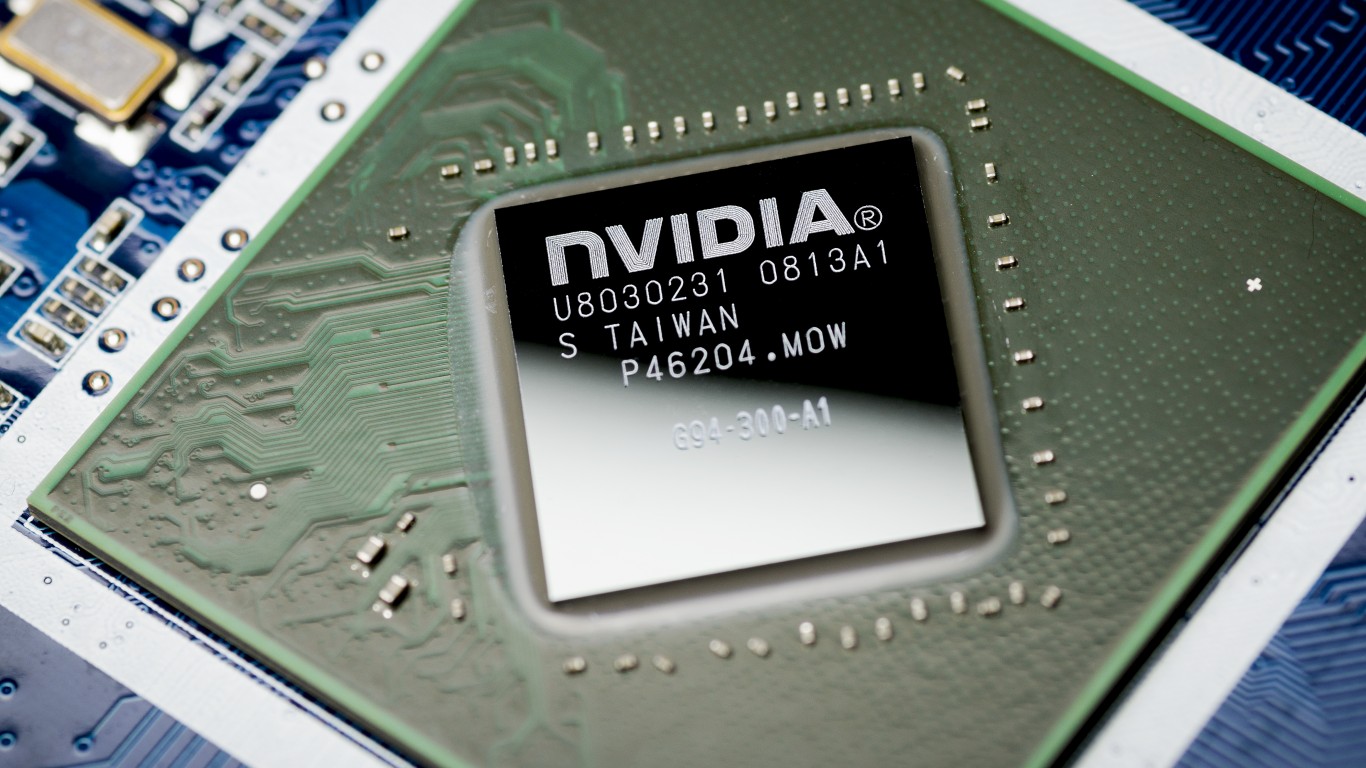
AMD (NASDAQ:AMD | AMD Price Prediction) and Broadcom (NASDAQ:AVGO) both posted record AI quarters. AMD reported on Nov 3, 2026, and Broadcom reported on Sept 2, 2026. NVIDIA (NASDAQ:NVDA) now has no permanent CEO after Jensen Huang resigned on November 12. AMD shares are up 149.37% year to date. Broadcom is up 0.81%.
Helios Racks Carry AMD While Custom TPUs Carry Broadcom
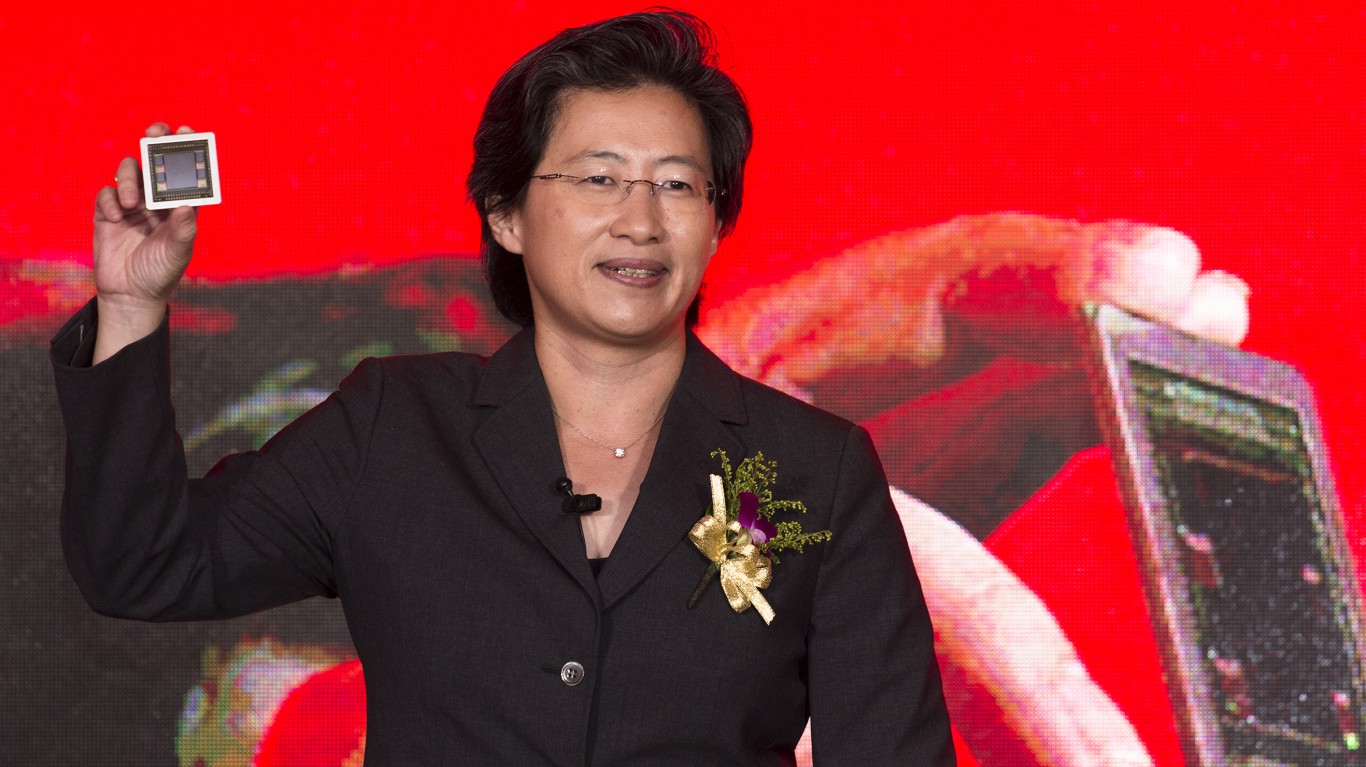
AMD’s Data Center segment reached $8.546B, up 97%[1]. Q3 was the first quarter in which MI455 GPUs and Helios racks shipped for revenue, and Anthropic, Meta, Microsoft, OpenAI and Oracle[2] have brought their first racks online. Lisa Su called early demand for Venice server chips “the strongest we have seen for any new EPYC generation.”[2] Gaming fell 40%[1] on weaker console chip sales.
Broadcom’s AI semiconductor revenue hit $16.7B, up 221%[3]. That rate shows hyperscalers are spending heavily on chips designed around their own models. Google began receiving TPU version 8i, and OpenAI’s first Jalapeno accelerator shipped in Q3. Hock Tan said a co-developed chip “will outperform any GPU.”[4]
| Business Driver | AMD | Broadcom |
|---|---|---|
| Q3 Revenue | $13.377B (+44.68%)[1] | $29.591B (+85.5%)[3] |
| Non-GAAP EPS | $2.09[1] | $3.32[3] |
| Growth Engine | Instinct GPUs, EPYC CPUs | Custom XPUs, Ethernet networking |
| Free Cash Flow | $554M[1] | $13.665B[3] |


Open Racks Compete With Co-Designed Silicon
AMD sells to any customer that wants an option besides NVIDIA. It gave the Helios design to the Open Compute Project and is acquiring Taalas for its inference silicon. Su said total cost of ownership decides whether a customer picks Helios or a custom ASIC. The expansion requires a lot of cash. Inventory rose to $11.463B[1], and that makes me a little nervous even though Su says “demand is higher than supply.”[2]
Broadcom keeps its customer list short. Tan said working with “only six customers”[4] makes collaboration more effective. That model turns 46%[3] of revenue into free cash flow. The downside is dependence on a few buyers. Broadcom has also offered residual value guarantees on lab financing, and management has not put a number on that exposure.
NVIDIA’s November 17 Report Could Redirect AI Money
NVIDIA reports on November 17, with CFO Colette Kress serving as interim CEO. If margins shrink or the succession message stumbles, I expect investors to look first at AMD as the closest GPU alternative. It’s worth watching if AMD’s Q4 guidance of ~$17B[1] holds as Hewlett Packard Enterprise, Dell and Super Micro Computer begin shipping Helios systems. Broadcom reports on December 9, 2026[4].
AMD Holds the Edge Into Month End
Over the next two weeks, AMD has the more direct catalyst path. It is the most direct alternative for NVIDIA GPUs, and management expects 2027 revenue to grow more than 80%[2]. The stock can move sharply in both directions. AMD fell 8.75% on November 13 and trades at about 202 times earnings, so investors are paying for a lot of growth that hasn’t arrived yet (we reverse-engineered the characteristics earlier NVIDIA-sized winners shared before their big runs in a free playbook here). Broadcom offers stronger cash generation and a $0.65 quarterly dividend. Its fiscal 2027 AI outlook of approximately $115 billion[4] is backed by signed partners. That outlook would shift if NVIDIA’s report reassures investors and money flows back to the leader.
Contact [email protected] for any questions or corrections.
Alex Sirois is a financial writer with experience spanning both retail and institutional investing. He has written for InvestorPlace and held roles at BNY Mellon and Bernstein, giving him a perspective that bridges Main Street portfolios and Wall Street analysis.
Alex holds an MBA from George Washington University and has built his career across multiple industries, including e-commerce, education, and translation — a breadth of experience that informs how he breaks down complex financial topics for everyday investors. His writing is conversational, actionable, and grounded in long-term, buy-and-hold investing principles.
At 247 Wall St., Alex focuses on delivering analysis that is both accessible and useful, with a clear emphasis on helping readers make more informed decisions with their money.