Jensen Huang Can Still Nominate Two Directors to Nvidia’s Board

This post may contain links from our sponsors and affiliates, and Flywheel Publishing may receive compensation for actions taken through them.

Jensen Huang no longer runs NVIDIA (NASDAQ:NVDA | NVDA Price Prediction) and no longer sits on its board. But the company’s own bylaws give him a way to put candidates on its ballot. On November 17, 2026, filings showed he can nominate up to two directors through NVIDIA’s proxy-access rule.
On November 12, NVIDIA said its board accepted Huang’s resignation as president, CEO and director on November 11. The board named CFO Colette Kress interim CEO and longtime director Harvey Jones chair.
The stock closed November 17 at $155.46, down 0.44%, giving it a market cap of $3.75 trillion. At 7:59 p.m. ET, it traded at $162.94, up 4.81%. That gain followed the quarterly results released after the close. No report says Huang intends to use the right, and any candidate would still need shareholder votes.

How NVIDIA’s Proxy Access Rule Works
NVIDIA’s 2026 proxy statement was filed May 12, 2026. A shareholder, or a group of up to 20 shareholders, that has owned at least 3% of the voting power for three continuous years can have its director candidate included in NVIDIA’s proxy materials.
That places the candidate on the ballot NVIDIA mails to every holder. A nomination under the advance-notice bylaw works differently. The holder would have to run and pay for its own campaign to collect votes.
The cap is the greater of two candidates or 20% of the directors in office on the last day to submit. The board grew from ten to eleven seats effective July 13, 2026. That leaves about ten directors after Huang’s exit, so the cap is two.
Only a board of 15 or more would raise that limit, and the board sets its own size. The board adopted proxy access voluntarily, and its nominating committee received no shareholder nominations in fiscal 2026.
Why Huang’s Stake Meets the Ownership Threshold
The proxy listed Huang’s beneficial ownership at 870,604,104 shares, or 3.58%, as of March 23, 2026. Most of those shares were held through trusts and related parties. He and those parties have reportedly held more than 3% for over three years.
At the $155.46 close, 870.6 million shares were worth an estimated $135.3 billion. A stake of about 3.5% in a company that size makes him one of NVIDIA’s largest individual holders even without a board seat.
Hurdles Between a Nomination and a Seat
For the 2027 meeting, notices must arrive between February 24, 2027 and the close of business on March 26, 2027. Different deadlines apply if the meeting moves by more than 30 days from the anniversary of the June 24, 2026 meeting.
Any candidate must qualify as an independent director. NVIDIA can also bar a candidate who has broken its bylaws or charter, and candidates who clear both tests still need votes at the annual meeting, which NVIDIA usually holds in June. On the earnings call, Jones said the board “does not intend to reinstate Jensen as CEO.”[1]
What NVIDIA’s Results Mean for the Governance Overhang
NVIDIA reported third-quarter fiscal 2027 revenue of $115.8 billion, up 103% from a year earlier. It guided fourth-quarter revenue to $130.0 billion, plus or minus 3%.
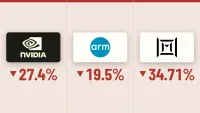
The stock still fell 27.4% over the month through the November 17 close and is down 16.45% year to date. That decline came alongside the leadership change, which has yet to appear in the company’s results.

The proxy-access right adds a governance question, but nothing can happen before the 2027 filing window opens, and even if two independent candidates won seats, they would be a small minority on a board of about ten. That limits how much proxy access alone can change at NVIDIA.
Huang’s House committee interview on December 1 is worth monitoring. If a proxy-access notice is filed between February 24 and March 26, 2027, that would be the time to reassess.

Contact [email protected] for any questions or corrections.
Omor Ibne Ehsan is a writer at 24/7 Wall St. He is a self-taught investor with a focus on growth, cyclical, and dividend equities that have strong fundamentals, value, and long-term potential. He also has an interest in high-risk, high-reward investments such as penny stocks.