AEP and Xcel Energy Are Betting on Data Centers, but Their Dividends Tell Different Stories

This post may contain links from our sponsors and affiliates, and Flywheel Publishing may receive compensation for actions taken through them.
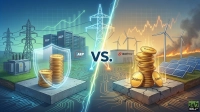
American Electric Power (NASDAQ:AEP | AEP Price Prediction) or Xcel Energy (NASDAQ:XEL): which utility dividend should a retirement-focused investor own right now? Both companies just raised their long-term earnings targets on data center demand. Their dividend policies are moving in different directions, though, and that difference decides this comparison.
Yield and Income: AEP Pays More Today
AEP yields 3.02%. Xcel yields 2.89%. On October 20, 2026, AEP’s board raised the quarterly payout from $0.95 to $0.97, which puts the forward annualized dividend at $3.88. The dividend record shows quarterly payments with no gaps going back to 1999.
The weak spot is growth. That raise came to roughly 2.1%, and on the October 28 call, CFO Trevor Mihalik said AEP is estimating “similar, modest growth to the dividend, at roughly 2% over the four- or five-year period.”[1] Xcel’s latest raise, from $0.57 to $0.5925, worked out to about 3.9%. Xcel also targets 4% to 6%[2] annual dividend growth, though management expects to land “at the low end of the range.” AEP still wins this round. A retiree living on dividends spends the check that comes this quarter, and AEP’s check is bigger and has a longer history.

Growth Trajectory: AEP’s $100 Billion Plan Sets the Pace
AEP raised its five-year capital plan to $100 billion through 2031[3], up from $78 billion. The plan targets a $162 billion[3] rate base and 13%+ annual rate base growth. AEP now expects operating earnings to grow 9% to 11%[3] a year from 2027 through 2031. Its contracted load should reach 84 GW[1], and firm take-or-pay agreements back 35 GW of that. Third-quarter adjusted EPS of $2.23[3] beat the $2.0393 consensus. Commercial load in AEP’s vertically integrated utilities rose 15.2%[3].
Xcel’s outlook is solid. It has a $70 billion[4] capital plan for 2027 to 2031, guides to 9%+[2] average EPS growth through 2031, and set 2027 guidance at $4.48 to $4.62. Data center contracts sit outside that base plan. Xcel expects to sign 4 GW[2] of data center deals by the end of 2027 and counts them only as upside. AEP has already signed the kind of load Xcel is still chasing, so AEP wins on growth.

Valuation: Xcel Trades at a Discount for a Reason
Xcel is the cheaper stock. Shares trade at 19 times trailing earnings, compared with 21 for AEP. Its PEG ratio is 1.773, against AEP’s 2.729. Its beta is also lower at 0.345, compared with AEP’s 0.442, which means smaller price swings. Xcel takes this round.

Wildfire risk explains the discount. Xcel has recorded Smokehouse Creek Fire losses of $475 million[4] plus $50 million in legal costs, and claims could exceed its $525 million of insurance coverage. Moody’s has Xcel and its Colorado utility on negative outlook. Higher rates are adding to the strain: Xcel expects interest expense to rise from $290 million to $300 million in 2026.

Verdict: AEP Is the Retiree’s Utility
AEP is the better pick for retirees living on dividends. It pays the higher yield; its growth rests on signed customers, and about 90%[1] of its planned utility investment is set to be recovered through reduced-lag mechanisms. Its main risk is financing. AEP increased equity funding by $5.2 billion[1] to pay for the larger plan. Even so, its FFO to debt stands within its 14% to 15%[1] target and above the 13% downgrade threshold. AEP has also paid back shareholders more: the stock rose 78.23% over five years, compared with 43.68% for Xcel.
Xcel suits a different investor: someone in their 50s building future income who can live with wildfire litigation in exchange for faster dividend growth and a cheaper entry price. For the retiree who needs reliable income now, AEP is the stronger holding. Track how quickly AEP issues new equity and Minnesota regulators’ decision on Xcel’s rate plan, which the company requested in January 2027[2].
Contact [email protected] for any questions or corrections.
Chris Lange is a financial and geopolitical writer with more than a decade of experience covering a myriad of topics. He has published thousands of articles for 24/7 Wall St., with past coverage focused heavily on stocks, IPOs, healthcare, defense, global affairs, and technology.
His work has been quoted, or referenced by a number of outlets including Business Insider, USA Today, Yahoo Finance, MSN, The Motley Fool, and many other publications. A graduate of Southwestern University, he studied business with a focus on investments and has previous experience in banking and startups.
When not reading or writing the news, he is following his passion for Lacrosse, playing chess, or building solar projects with his dad.