The Nasdaq-100 Is Now Just 49 Points From a Bear Market

This post may contain links from our sponsors and affiliates, and Flywheel Publishing may receive compensation for actions taken through them.

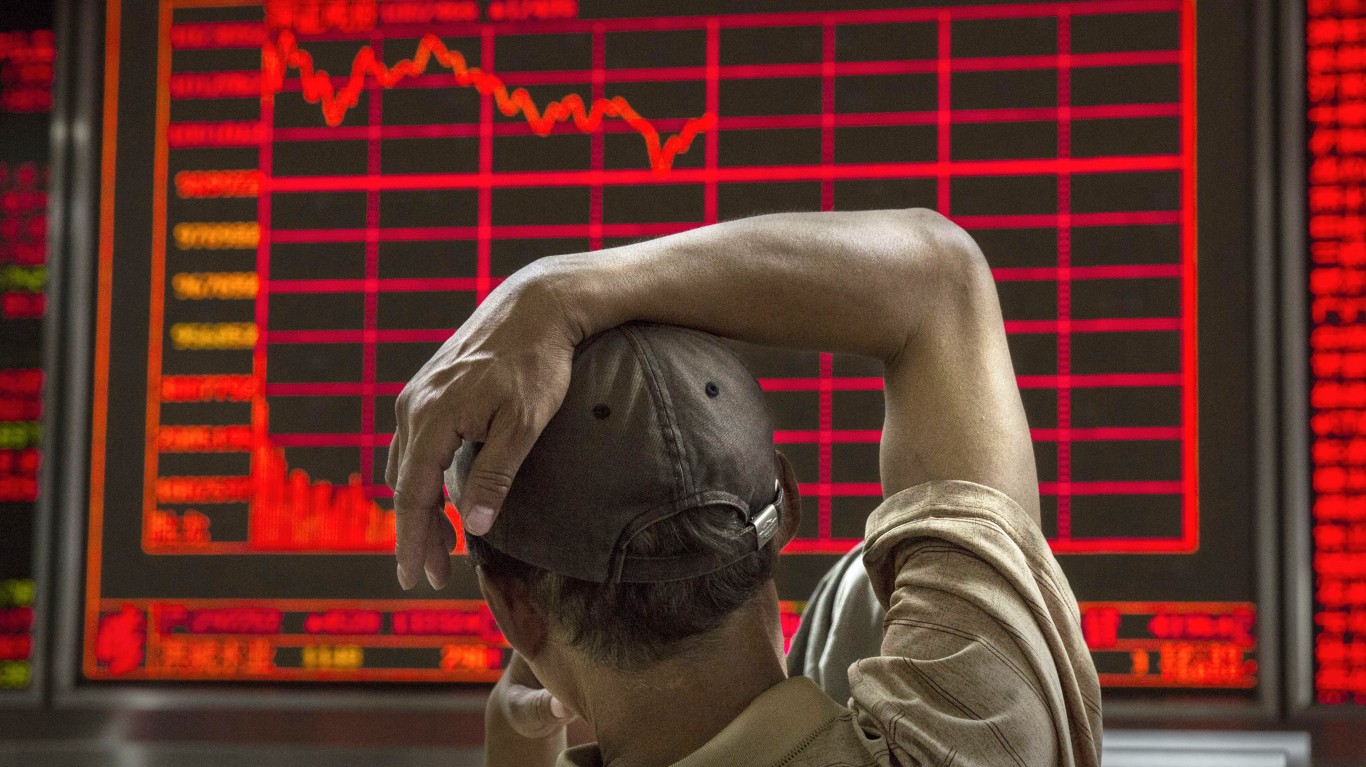
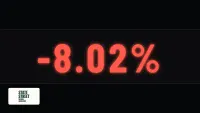
The Nasdaq-100 closed at 25,028.98 on Friday, November 20, 2026, after a 5.61% drop that erased 1,488.07 points. That close left the index 49.41 points above the bear market line.
Invesco QQQ Trust (NASDAQ:QQQ) fell 5.67% to $608.45 on volume of 134.5 million shares, nearly double Thursday’s. Heavy volume on a down day indicates that selling was broad.
The record close came on Tuesday, October 6, 2026, only about six weeks earlier. The index is now down 0.87% for 2026, and Friday’s close was its lowest since April 8, 2026.
As of Friday’s close, the Nasdaq-100 remains outside bear market territory. A drop of about 0.2% on Monday, November 23 would change that, so QQQ owners need to decide whether the label matters.
How Thin the Margin Is
A bear market is commonly defined as a close at least 20% below the record close. The Nasdaq-100’s record close of 31,224.47 sets that line at 24,979.58.
Friday’s close was 19.84% below the record, but the session low of 24,910.48 was 20.2% below it. Some outlets measure from the intraday record of 31,361.37, which raises the line slightly.
Friday was the worst session since November 5, when the index fell 6.36% and lost 1,807 points, its largest one-day point loss. The 10.43% weekly drop was the worst since the week ended March 20, 2020.
The 11.82% November fall would be the worst November since 2000 if it held.
Chip Stocks Are Leading the Nasdaq-100 Lower
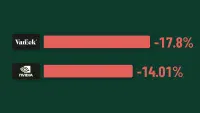
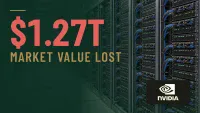
The PHLX Semiconductor Index fell 10.7% Friday, the Associated Press reported. NVIDIA (NASDAQ:NVDA | NVDA Price Prediction) fell 14.01% and is down 47.53% since October 6.
NVIDIA was QQQ’s largest holding at 7.6% of net assets in the fund’s June 30, 2026[1] filing. Chips led the selloff, although no single cause has been proven.
The broader Nasdaq Composite fell 5.28% to 22,617.73. It is now down 2.69% for 2026 after rising 18.75% to its October 6 record.
The Composite is 18.05% below that record and about 538 points above its own 22,079.83 line. It has more room because thousands of smaller holdings water down the AI and chip weights that dominate the Nasdaq-100.
What a Bear Market Close Would Change
If the index closes below 24,979.58, that would merely describe losses already taken and leave every company’s earnings where they were. It can still shape headlines and move some rules-based funds to cut exposure.
The last bear market close came on April 8, 2025, during the tariff selloff, and it was brief. That fall came from a policy shock that could be turned back. This one rests on confidence in AI spending, and only earnings reports can rebuild that. Riding an AI passion was always going to require an exit plan, which is what our free bubble handbook spends most of its pages on.
The 10-year Treasury yield stood at 5.04%[2] on November 19[3]. The VIX, a measure of expected volatility, stood at 28.44[3] the same day. Markets close November 26 for Thanksgiving, and the Fed meets December 8-9.
What the Selloff Means for QQQ Owners
Investors with a holding period of several years have more room to take in this drawdown. It closed at $608.45, down 10.5% from $679.89 a week earlier, and that leaves the index slightly below where it started in 2026.
Concentration is the main danger. A fund with 7.6% in NVIDIA will keep falling if confidence in AI spending weakens further.
The test is the Fed’s December 9 decision. If the Nasdaq-100 is still below 24,979.58 after that meeting, the case for a quick recovery is wrong.
Contact [email protected] for any questions or corrections.
Omor Ibne Ehsan is a writer at 24/7 Wall St. He is a self-taught investor with a focus on growth, cyclical, and dividend equities that have strong fundamentals, value, and long-term potential. He also has an interest in high-risk, high-reward investments such as penny stocks.