Hormel’s 60-Year Dividend Streak Is on the Line as Its Next Raise Approaches

This post may contain links from our sponsors and affiliates, and Flywheel Publishing may receive compensation for actions taken through them.
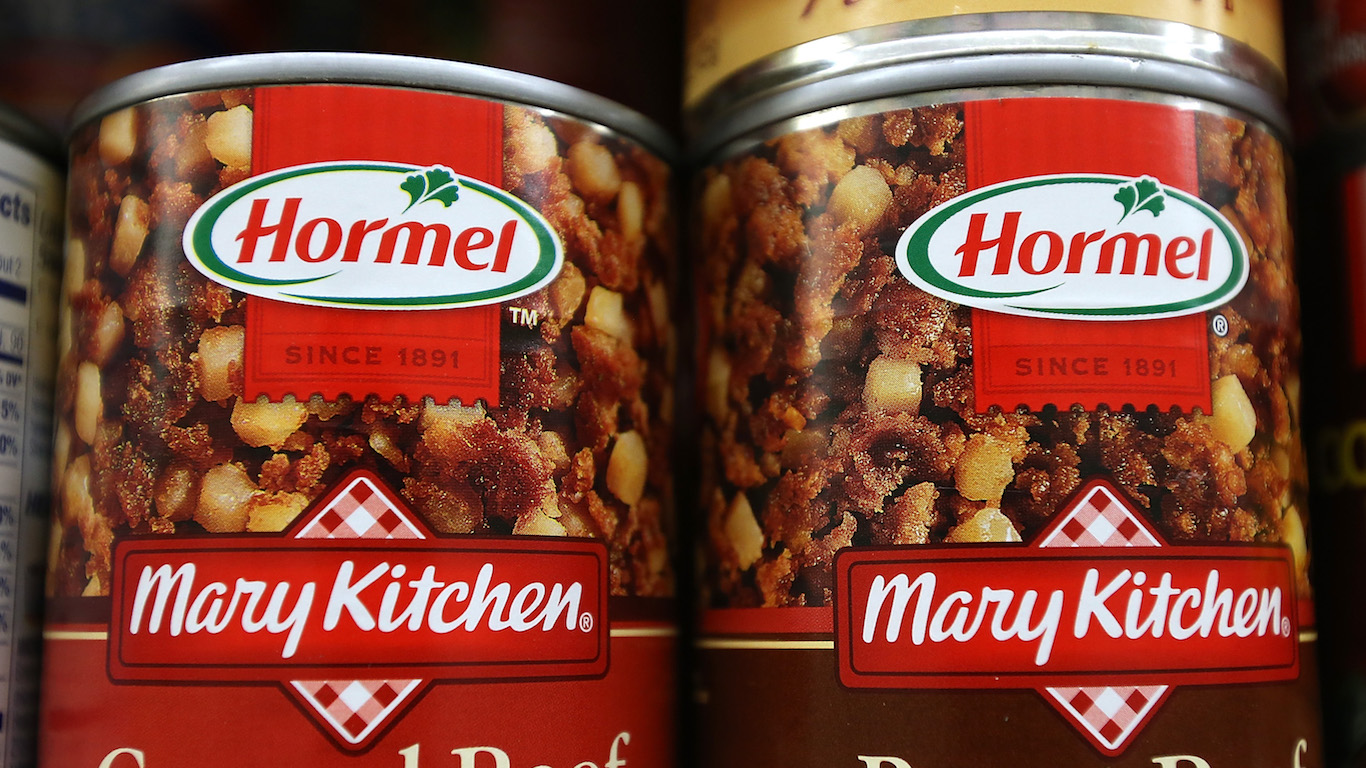
Hormel Foods (NYSE:HRL | HRL Price Prediction) is heading into its most closely watched board decision of the year. The latest quarterly declaration, dated September 28, 2026, set the payout at $0.2925, and the next annual increase remains unannounced. A raise would push a run that hit 60 consecutive years[1] at the end of fiscal 2025 into its 61st year.

A 60-Year Legacy Rides on One Vote
The quarterly payout rose every year from $0.21 in 2019 to $0.2925 in 2026. The raises have been getting smaller, though. The 2025 increase was about 2.65%, and the 2026 increase was smaller still. Jeff Ettinger, then interim CEO, said:
“We recently announced a 1% increase in our quarterly dividend, raising the annualized rate to $1.17 per share.”[1]
Cash Flow Holds the Answer
Fiscal 2025 was the stress test. Operating cash flow of $845.3 million minus capex of $310.9 million left free cash flow of $534.3 million. Dividends of $633.2 million took about 118% of that.
Fiscal 2026 looks better. Free cash flow through three quarters reached $549.4 million against dividends of $481.4 million. Cash on hand stood at $840 million[2]. Adjusted EPS guidance of $1.45 to $1.51[3] puts the $1.17 annual rate at 77% to 81% of earnings. The GAAP picture is closer. At the low end of GAAP guidance ($1.06[3]), the payout reaches about 110%.
“We remain committed to the dividend and are proud to have reached our 392nd consecutive quarterly payout.”[2]
That came from Paul Kuehneman, who was serving as interim CFO at the time.
Pressure Behind the Weak Share Price
Third-quarter net sales fell 2.4%[3] to $2.961 billion. GAAP EPS dropped to $0.11[3] from $0.33 because of divestiture, impairment, and legal charges. Adjusted EPS of $0.37[3] beat the $0.3536 consensus. John Ghingo, CEO-elect on that call, was blunt about demand:

“I would describe the consumer environment right now as not improving.”[2]
The stock is down 35.11% over five years. At $23.11, it yields about 5.1%. The recently completed Brakebush chicken acquisition, announced November 16, 2026,[4] with no terms disclosed, adds another claim on cash.
How Peers Handled the Same Squeeze
General Mills (NYSE:GIS) paid its latest dividend “at the prevailing rate” as fiscal 2026 free cash flow fell 29.07%. Its shares are down 19.39% year to date. Kraft Heinz (NASDAQ:KHC), with a well-publicized dividend-cut history, put cash toward $3,982 million in debt repayments this year. It shows what a reset costs: a 51.76% share-price decline over ten years. Hormel sits in select company (we ranked ten 50-year-plus payers by valuation in a free Dividend Kings report here).
Why the Size of the Raise Matters
Another raise of about 1% would mainly protect the record. A raise of several percent would show the board believes the fiscal 2027 boosts management listed, including favorable pork input-cost trends[2] and a 53rd week, can outweigh the drag from divestitures.
Verdict: The Streak Likely Survives
Expect the run to continue with another small raise. Free cash flow covers the payout this year, and Ghingo called the dividend “very important to us”[2]. The real risk would be a repeat of 2025: free cash flow falling back below dividends while the Brakebush deal and a weak consumer squeeze the balance sheet. The fourth-quarter earnings report should offer that signal.
Contact [email protected] for any questions or corrections.
Chris Lange is a financial and geopolitical writer with more than a decade of experience covering a myriad of topics. He has published thousands of articles for 24/7 Wall St., with past coverage focused heavily on stocks, IPOs, healthcare, defense, global affairs, and technology.
His work has been quoted, or referenced by a number of outlets including Business Insider, USA Today, Yahoo Finance, MSN, The Motley Fool, and many other publications. A graduate of Southwestern University, he studied business with a focus on investments and has previous experience in banking and startups.
When not reading or writing the news, he is following his passion for Lacrosse, playing chess, or building solar projects with his dad.