This Dividend King’s Payout Ratio Just Crossed a Line It Has Never Crossed Before
Hormel Foods has raised its dividend for 60 straight years, but something just happened on the earnings statement that has never happened before in two decades of records, and it raises a serious question about whether that streak has a…

Hormel Foods (NYSE:HRL | HRL Price Prediction) has raised its dividend for 60 consecutive years, a record that puts it on nearly every retiree’s short list. Its own guidance now tells a harder story: Hormel expects fiscal 2026 GAAP diluted EPS of $1.06 to $1.12, below its $1.17 annualized dividend. A high yield is only as good as the company’s ability to keep paying it, and that ability is under real strain.
Quick test: a dividend becomes unsustainable when earnings and free cash flow stop covering it and the company leans on cash reserves or debt to keep the checks going out.
Hormel Foods (HRL): A 5.9% Yield Built on a Falling Share Price
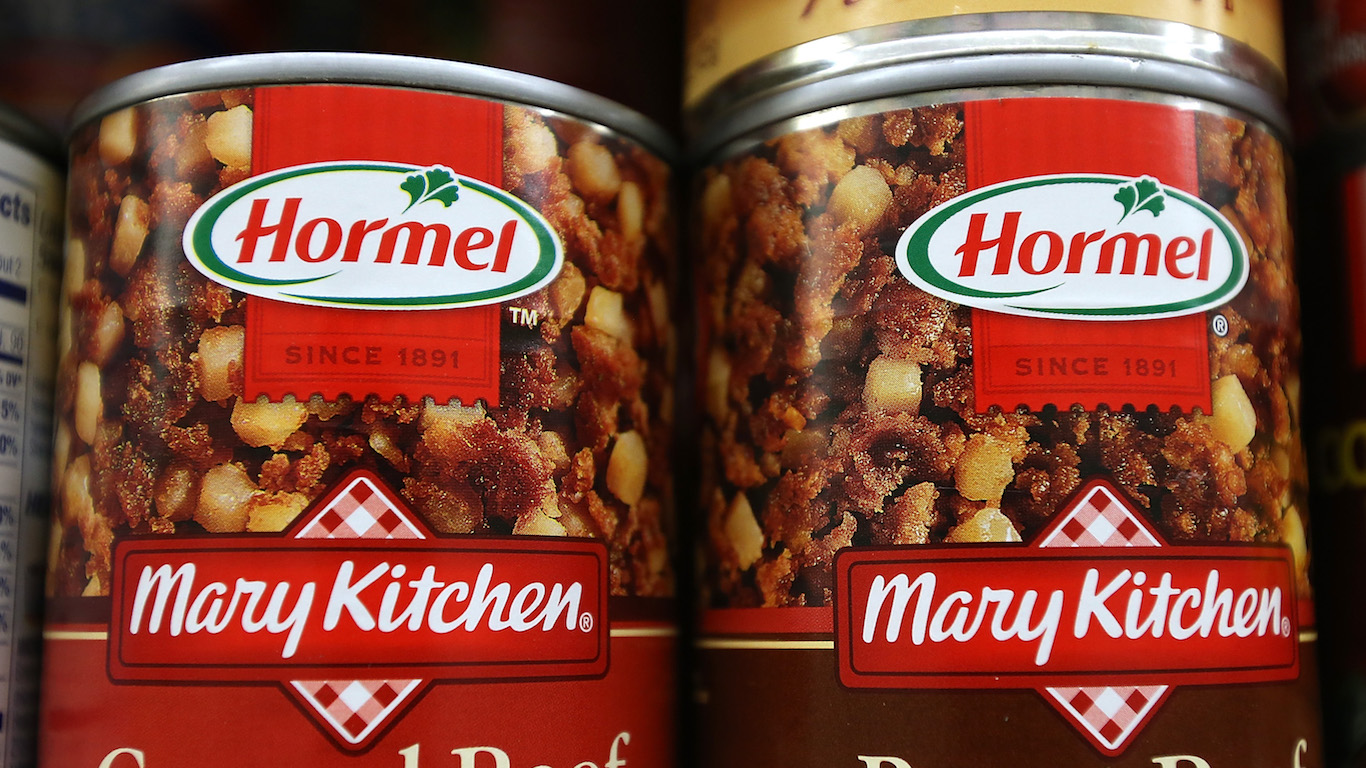
At $19.97, Hormel yields 5.89%. For a low-volatility staple behind SPAM, Skippy, Planters and Jennie-O, with a beta of 0.315, that looks like a sleep-at-night income stream.

Look at where the yield came from. The quarterly dividend rose from $0.245 in 2021 to $0.2925 today, and the latest raise, from $0.29, was roughly 1%. Over the same stretch the shares fell 43.11% across five years, 15% over the past year and 7.42% in the past month alone. The yield expanded mainly because the price collapsed while dividend growth slowed to a crawl. This is a classic trap setup.
A Payout Line Hormel Had Not Crossed in Two Decades
Hormel is an ordinary corporate, so earnings per share and net income are the proper metrics for coverage. In fiscal 2025, Hormel paid $633.2 million in dividends against net income of $477.8 million. In annual records going back to fiscal 2006, that was the first year dividends paid exceeded net income. Net income fell 40.6% that year.
Fiscal 2026 extends the problem. GAAP EPS guidance was cut to $1.06 to $1.12 from $1.28 to $1.37, and the original range was $1.29 to $1.39. Trailing diluted EPS is just $0.62. The damage traces to a $56M loss on the Brazil sale, a $48.2M impairment on an Indonesia stake and a $37.5M antitrust settlement.
Bulls will point to adjusted EPS guidance of $1.45 to $1.51, which does cover the dividend. Fair enough, but the cushion is thin, and one-time charges that repeat two years running deserve a skeptical eye.

Cash Flow Coverage Has Been Spotty
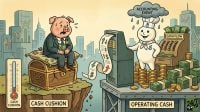
Fiscal 2025 operating cash flow dropped 33.27% to $845.3 million while capex rose 21.24% to $310.9 million. Set capex and the $633.2 million dividend bill side by side, and together they exceeded the cash the business produced. Individual quarters were worse: in the quarter ending April 2025, operating cash flow of $56.4 million trailed dividends of $159.2 million.

The latest quarter improved. Operating cash flow rose 53.54% to $240.6 million against capex of $68.2 million and dividends of $161.0 million, which management credited to better inventory and working-capital management. One strong quarter helps. It does not yet prove a trend.
Balance Sheet Is Steady, but a Bill Is Coming Due
Total debt was $2.855 billion at the end of July, essentially flat with $2.857 billion at fiscal 2025 year-end. The longer view is less comforting: debt stood at $250 million in fiscal 2019. Short-term debt jumped to $505.6 million from $6.6 million, signaling a maturity approaching, against cash of $839.6 million. Management called it “a sound financial position with ample liquidity and a conservative balance sheet.” That is true today, but refinancing or paying down that note competes with the dividend for the same cash.
Why a 60-Year Streak Cuts Both Ways
On the August call, management said, “We remain committed to the dividend and are proud to have reached our 392nd consecutive quarterly payout.” CEO-elect John Ghingo added that “the dividend continues to be very important to us.”
That institutional pressure is real, and it brings down the odds of an outright near-term cut. It also explains the pattern: token raises, payouts held while earnings slide. A payout kept intact amid clear strain signals trouble rather than safety. The stress is visible: third-quarter revenue of $2.96B fell 2.4% and missed expectations, net income dropped 67.58%, and Ghingo said “the consumer environment right now really is not improving.” Leadership is also in transition, with an interim CEO and interim CFO on that call.
What Has to Go Right, and the One Number to Watch
The path to safety exists. Foodservice posted its 12th consecutive quarter of organic sales growth, adjusted operating margin expanded to 9.0% from 8.4%, and management expects lower pork costs to flow through in future quarters, with a 53rd week in fiscal 2027 adding a boost. At 13x forward earnings, the market is partly pricing that recovery in. If the charges stop and cash flow holds at third-quarter levels, coverage repairs itself.
The verifiable test: when Hormel issues fiscal 2027 guidance, check whether the GAAP EPS range tops $1.17. If it does, the streak has breathing room. If it does not, Hormel faces a third straight year of paying more than it earns on a GAAP basis, and the risk rises sharply.
Dividend cuts rarely arrive alone; the stock usually falls with them. Hormel’s yield is fat because the stock has drop, and a 60-year streak can make a board stubborn right up to the point it cannot. The thesis rests on coverage.
Contact [email protected] for any questions or corrections.
Joel South covers large-cap stocks, dividend investing, and major market trends, with a focus on earnings analysis, valuation, and turning complex data into actionable insights for investors.
He brings more than 15 years of experience as an investor and financial journalist, including 12 years at The Motley Fool, where he served as an investment analyst, Bureau Chief, and later led the Fool.com investing news desk. He has also co-hosted an investing podcast and appeared across TV and radio discussing market trends.