$750,000 in These 3 Insurance Stocks Could Pay $30,550 a Year Tax-Free in a Roth IRA

This post may contain links from our sponsors and affiliates, and Flywheel Publishing may receive compensation for actions taken through them.
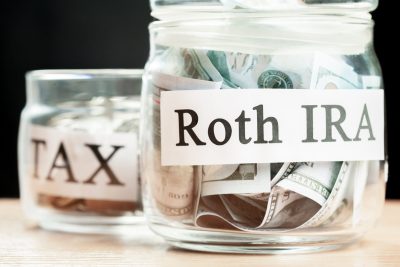
A $750,000 taxable portfolio divided among three insurance stocks generates about $30,550 a year in dividends. For a single filer in the 24% bracket, roughly $4,580 of that goes to federal taxes each year. All of it remains invested inside a Roth IRA.
Insurance Dividends Are Mostly Qualified, Which Shrinks the Gap
BDCs and mortgage REITs pay mostly ordinary income. Insurers usually pay qualified dividends. Under IRS rules, qualified dividends are taxed at the 0%, 15%, or 20% capital gains rates, as long as you held the stock for more than 60 days during the 121 days around the ex-dividend date. In 2026, the 15% rate applies to a single filer’s taxable income from $49,450 up to $545,500. So a reader in the 24% bracket pays the 15% rate on these dividends. In a Roth, a qualified distribution “shall not be includible in gross income”[1] (26 U.S.C. § 408A(d)(1)). The annual savings is smaller than it is for REITs, but it compounds for decades.
How Insurers Pay for the Dividend
Insurers make money in two ways. The first is underwriting profit, when premiums collected exceed claims and expenses. The second is investment income earned on premiums held until claims come due. When either one weakens, the dividend can come under pressure.
Three Insurers, $250,000 Each
Prudential Financial (NYSE:PRU | PRU Price Prediction) yields 4.70% on a $5.60 forward dividend. The quarterly payout has grown from $0.40 in 2013 to $1.40, putting the annual payout at about 50% of trailing EPS of $11.14. It generates the most income of the three, giving it the largest tax drag in dollars. Risk: interest rate sensitivity across its retirement and annuity books.
Old Republic International (NYSE:ORI) yields 3.11%, and the payout ratio is only about 28%. The regular dividend rose 8.6%[2] to $0.315. The company also paid a $2.50 special in January 2026, and a Roth shelters those irregular payouts too. Risk: catastrophe and underwriting losses. Its combined ratio declined to 96.1%[2] from 95.3%.
Lincoln National (NYSE:LNC) yields 4.41%. Its dividend has held at $0.45 since 2022. After the Talcott reinsurance deal closed, it resumed buybacks with $50 million[3]. Risk: reserve charges. A Q3 assumption review took $95 million[3] out of adjusted EPS, and adjusted EPS of $1.72 missed the $1.95 estimate.
| Stock | Annual Income | Tax at 15% |
|---|---|---|
| PRU | $11,750 | $1,760 |
| ORI | $7,790 | $1,170 |
| LNC | $11,020 | $1,650 |
The taxable account generates about $25,970 in net income. The Roth keeps the full $30,550. Over 10 years with no growth, the gap comes to about $45,830. If any dividend fails the holding test and gets hit at the ordinary rate, the annual cost at 24% rises to about $7,330.
Bracket Multiplier: Where the Rate Jumps
| Ordinary Bracket | Qualified Rate | Taxable Net | Roth Advantage |
|---|---|---|---|
| 22%, 24%, 32% | 15% | $25,970 | $4,580 |
| 37% | 20% | $24,440 | $6,110 |
The 37% bracket starts above $640,600 of taxable income, which is past the 20% qualified threshold. Readers in that bracket give up more income each year.
Compounding Turns a Modest Gap Into Real Money
If you reinvest the $4,580 annual difference at a conservative 4%, the Roth pulls ahead by roughly $55,020 over 10 years and $136,470 over 20. Without reinvestment, the figure is $91,660. For a retiree drawing income into their 80s, this is the price of keeping these holdings in a taxable account.
What to Do Before Year End
- Check box 1a against box 1b on your Form 1099-DIV for each insurer you hold outside a tax-advantaged account. Any amount not shown as qualified falls under your full bracket rate.
- Before you drop a Roth conversion, compare its upfront tax with the 20-year compounded advantage on your own position sizes.
- If you are in the 37% bracket, start your Roth location analysis with Prudential and Lincoln. Their higher yields make the largest dollar savings.
Contact [email protected] for any questions or corrections.
Chris Lange is a financial and geopolitical writer with more than a decade of experience covering a myriad of topics. He has published thousands of articles for 24/7 Wall St., with past coverage focused heavily on stocks, IPOs, healthcare, defense, global affairs, and technology.
His work has been quoted, or referenced by a number of outlets including Business Insider, USA Today, Yahoo Finance, MSN, The Motley Fool, and many other publications. A graduate of Southwestern University, he studied business with a focus on investments and has previous experience in banking and startups.
When not reading or writing the news, he is following his passion for Lacrosse, playing chess, or building solar projects with his dad.