Jensen Huang Could Still Be Kicked Out, Nvidia Could Still Fall 40%

This post may contain links from our sponsors and affiliates, and Flywheel Publishing may receive compensation for actions taken through them.

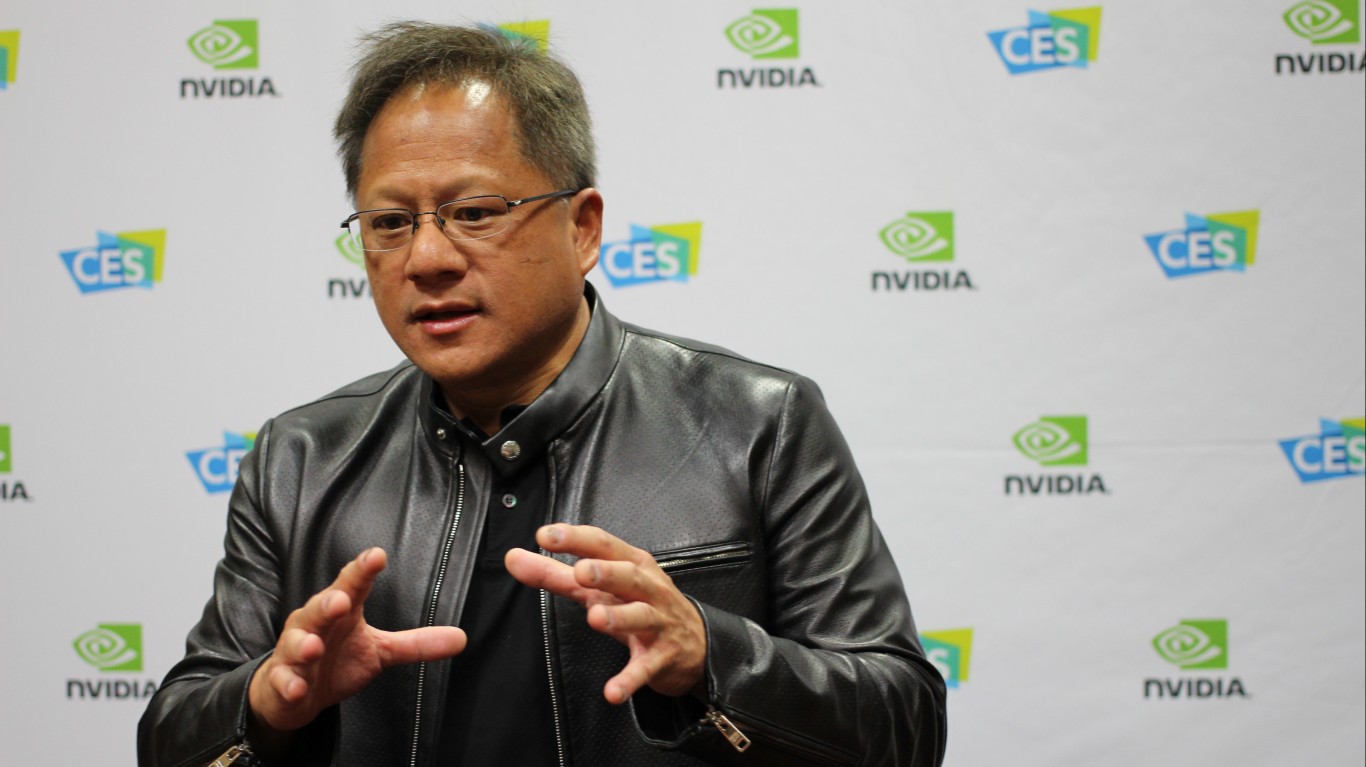
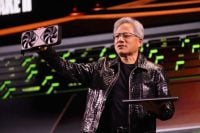
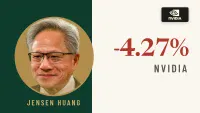
Short sellers of Nvidia’s (NASDAQ: NVDA | NVDA Price Prediction) stock were wiped out as Jensen Huang returned as CEO. The stock rallied 36% and closed up 31%. It has already given back some of those gains today. What President Trump did to bring Huang back may not be permanent. If the board, the Justice Department, or Congress throws him out again, Nvidia will collapse at least as much as it did when he left.
One key quote of the day was from Senator Kevin Cramer, a Republican from North Dakota. His membership in Trump’s own party made the statement all the more important. “The legal and reputational risk of hiring a CEO who may very well be convicted in the United States or other nations of violating espionage and export control laws is now [borne] by the board of Nvidia, but the national security risk is passed along to the United States military and its citizens.” As Democrats take over the Senate and House, and some Republicans join Democrats in asking whether Huang broke any law, the Nvidia CEO faces a long, brutal gauntlet.
Nvidia’s board may not be able to do anything about Huang’s affairs with company employees. However, it appears that there is a nearly 100% chance that all the troubling issues are not behind him. This includes a series of questions from Congress and what could be a series of class action suits against the board. And Nvidia’s round-trip accounting with companies it bought stock in or lent money to remains a question of accounting standards. The Financial Accounting Standards Board (FASB) could say these financial dealings don’t follow GAAP when Nvidia reports quarterly results. Much of this money went to buy Nvidia’s chips.
Despite the Justice Department’s decision that Huang did not break any laws during his relationship with Alice Huang, the decision was hasty. Alice Huang may well have been working for the Chinese government. She may have steered Nvidia chips toward China. Those chips may not have made it to China proper. They could, however, have been used in data centers in Asia that were then used by Chinese companies. Megaspeed, which appears to have used Nvidia chips, was put on the “black list” of companies that can no longer do business with the US. Reuters reported, “The US Commerce Department on Monday added Megaspeed and Alibaba’s Singapore subsidiary, which has business ties to the cloud company at the center of the Nvidia scandal, to its trade blacklist, following criticism from lawmakers and administration officials.” There is such a thing as “export controls.” Congress, particularly Democrats, could push that issue hard. In short, while the chance that Huang steered Nvidia chips directly to China is very low, information he may have passed on the Alice Huang could have opened a door to do so.
Nvidia’s board is not off the hook and could face a wall of lawsuits. They have director’s and officer’s insurance but face the question if they had made a decision to fire Huang, which only changed because of Trump’s pressure. They could be sued by short sellers for violating SEC rules about governance.
Finally, the media will dig and dig to find out what has not been found out yet about the entire Huang China chip matter.
Does any one of these factors push Huang out again? No. However the weight of several of them together could
How much would the Nvidia stock fall if Huang gets in deep trouble? It dropped 36% between when Huang was pushed out and then returned. There is still risk it could take a brutal beating again.
Contact [email protected] for any questions or corrections.
Douglas A. McIntyre is the co-founder, chief executive officer and editor in chief of 24/7 Wall St. and 24/7 Tempo. He has held these jobs since 2006.
McIntyre has written thousands of articles for 24/7 Wall St. He is an expert on corporate finance, the automotive industry, media companies and international finance. He has edited articles on national demographics, sports, personal income and travel.
His work has been quoted or mentioned in The New York Times, The Wall Street Journal, Los Angeles Times, The Washington Post, NBC News, Time, The New Yorker, HuffPost USA Today, Business Insider, Yahoo, AOL, MarketWatch, The Atlantic, Bloomberg, New York Post, Chicago Tribune, Forbes, The Guardian and many other major publications. McIntyre has been a guest on CNBC, the BBC and television and radio stations across the country.
A magna cum laude graduate of Harvard College, McIntyre also was president of The Harvard Advocate. Founded in 1866, the Advocate is the oldest college publication in the United States.
TheStreet.com, Comps.com and Edgar Online are some of the public companies for which McIntyre served on the board of directors. He was a Vicinity Corporation board member when the company was sold to Microsoft in 2002. He served on the audit committees of some of these companies.
McIntyre has been the CEO of FutureSource, a provider of trading terminals and news to commodities and futures traders. He was president of Switchboard, the online phone directory company. He served as chairman and CEO of On2 Technologies, the video compression company that provided video compression software for Adobe’s Flash. Google bought On2 in 2009.