Only Elon Musk Can Get Jensen Huang His Job Back

This post may contain links from our sponsors and affiliates, and Flywheel Publishing may receive compensation for actions taken through them.
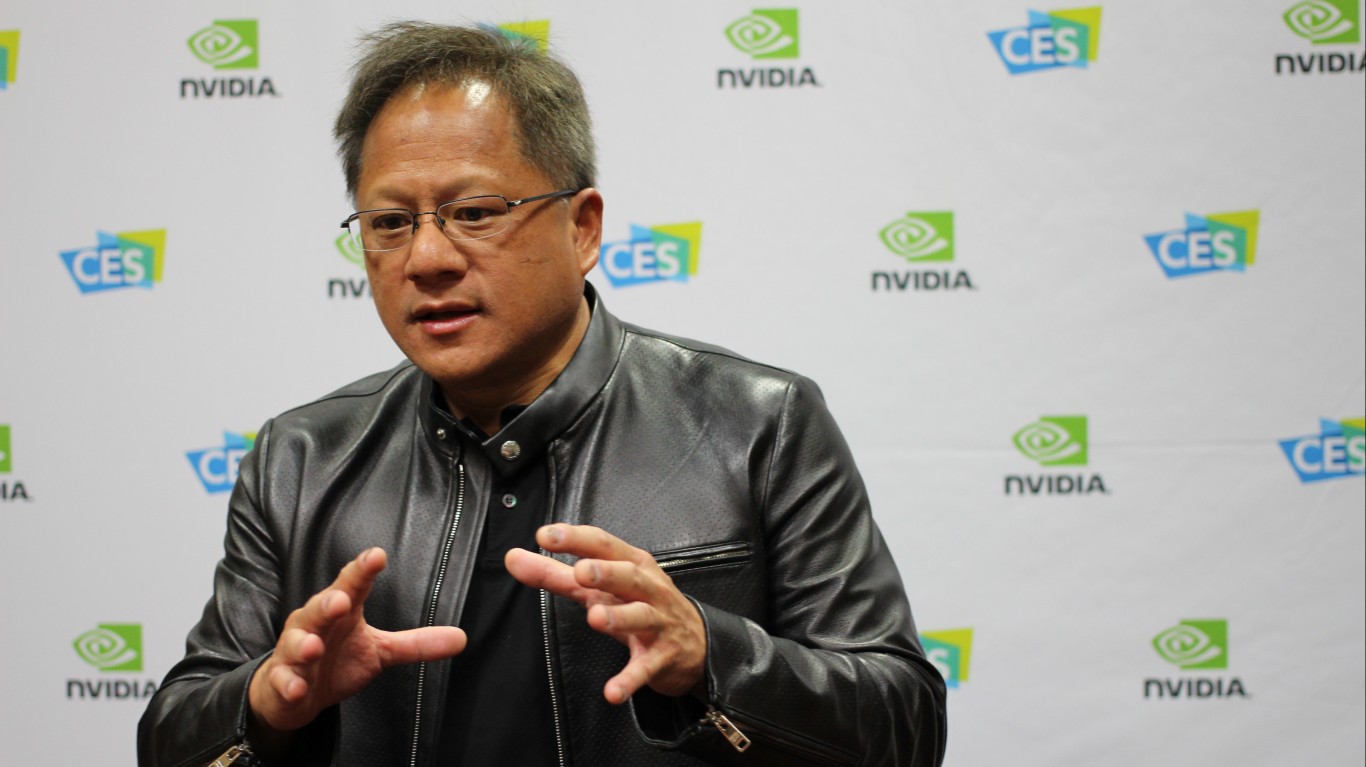
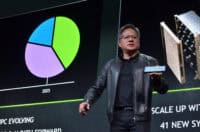
According to several sources, a “war room” of influential businesspeople and large-company CEOs is trying to get Jensen Huang back as Nvidia (NASDAQ: NVDA | NVDA Price Prediction) CEO, a company he co-founded. Meanwhile, Treasury Secretary Scott Bessent wants to block the plan and has urged Nvidia’s board to appoint an outside CEO. He says Huang was funneling Nvidia’s chips to China, probably through a backdoor in Singapore. However, while the Treasury Secretary is pressing on one side, a petition to bring Huang back may have been signed by more than 100,000 people, according to The Wall Street Journal. The signatures include several Nvidia employees.
Nvidia’s board has not buckled. Among the reasons is that Huang had a sexual relationship with an employee, Kimberly Powell, Nvidia’s vice president of health care. This broke Nvidia’s ethics standards, which apply to all employees.
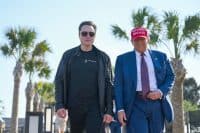
Who has the muscle to bring back Huang? The only person who could really lead a charge is Elon Musk, the world’s richest man and the Thomas Edison of his generation. He says he would offer Huang a job at SpaceX (NASDAQ: SPCX), one of Nvidia’s largest customers. And SpaceX has one of the most powerful AI companies in its SpaceXAI division. It competes with Anthropic, OpenAI, and the AI divisions of several public companies.
Many of these business leaders are glued together by the same interests. Nvidia’s chips are a primary reason the U.S. is ahead of China in the AI race. Another is that Huang has funded much of the U.S. AI sector by providing capital to other AI companies through investments or loans. (This has been criticized because some of the money is then used to buy Nvidia chips). With Huang gone, this money would likely dry up. The critical “bank” to the AI industry would go away
Musk has a close enough relationship with tech leaders to rally some of them to support Huang. One is Larry Ellison, Oracle’s (NYSE: ORCL) founder. Another is Peter Thiel (NYSE: PLTR) Palantir’s chairman. And he has an “on-again, off-again” relationship with President Donald Trump, who also has a relationship with Jensen Huang. For some reason, Trump knew about Huang’s relationship with Alice Huang, a Chinese spy (though there is some debate about whether she was a spy) who may have helped get Nvidia chips into China. The entire Jensen Huang disaster takes on an entirely new twist if Trump supports him and overrules Bessent.
Musk’s influence with part of the US government extends beyond Trump. SpaceX is the only game in town to get rockets into orbit. Musk has already said he is “happy to cancel” any deals with the US government. This was in response to statements by some Democrats that they want to explore Musk’s dealings with the US government.
Finally, Musk has a rockstar-like relationship with institutional and individual investors, many of whom are large holders of Nvidia shares. The institutions that own the largest pieces of Nvidia are huge financial firms BlackRock, Fidelity, Vanguard, and State Street. Along with other large institutions, they own 15% to 20% of Nvidia shares. They have watched Nvidia shares drop 25% in the last month. Among them, they need to question what could make those shares go up.
The fact of the matter is that Musk has some support by the facts alone. It has not been proven that any relationship Huang had helped funnel chips to China. It is not clear he did anything to compromise America’s strategic AI position. Congress will try to find those things out, but has not yet.
Can Musk make a case for Huang’s return as CEO? He would have to rally Trump, major CEOs, and the world’s largest institutional investors. There is not anyone else who can, by convincing each group that it is in their best interests to have Huang back.
Contact [email protected] for any questions or corrections.
Douglas A. McIntyre is the co-founder, chief executive officer and editor in chief of 24/7 Wall St. and 24/7 Tempo. He has held these jobs since 2006.
McIntyre has written thousands of articles for 24/7 Wall St. He is an expert on corporate finance, the automotive industry, media companies and international finance. He has edited articles on national demographics, sports, personal income and travel.
His work has been quoted or mentioned in The New York Times, The Wall Street Journal, Los Angeles Times, The Washington Post, NBC News, Time, The New Yorker, HuffPost USA Today, Business Insider, Yahoo, AOL, MarketWatch, The Atlantic, Bloomberg, New York Post, Chicago Tribune, Forbes, The Guardian and many other major publications. McIntyre has been a guest on CNBC, the BBC and television and radio stations across the country.
A magna cum laude graduate of Harvard College, McIntyre also was president of The Harvard Advocate. Founded in 1866, the Advocate is the oldest college publication in the United States.
TheStreet.com, Comps.com and Edgar Online are some of the public companies for which McIntyre served on the board of directors. He was a Vicinity Corporation board member when the company was sold to Microsoft in 2002. He served on the audit committees of some of these companies.
McIntyre has been the CEO of FutureSource, a provider of trading terminals and news to commodities and futures traders. He was president of Switchboard, the online phone directory company. He served as chairman and CEO of On2 Technologies, the video compression company that provided video compression software for Adobe’s Flash. Google bought On2 in 2009.