Jeff Bezos Just Gave Away Nearly $200 Million of Amazon Stock. He Once Told Employees ‘Amazon Will Go Bankrupt.’ Here’s What It Costs a 68-Year-Old With 1,000 Shares to Sell Half

This post may contain links from our sponsors and affiliates, and Flywheel Publishing may receive compensation for actions taken through them.
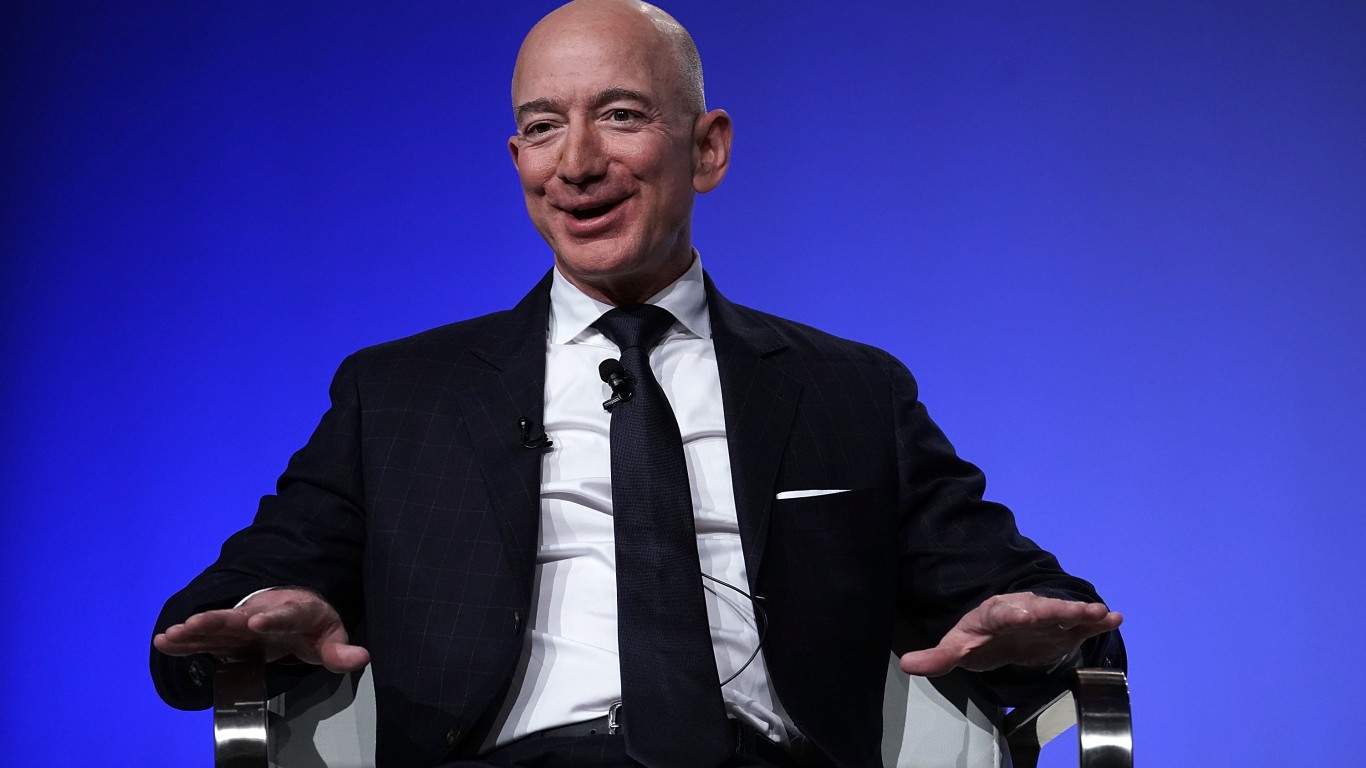
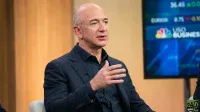
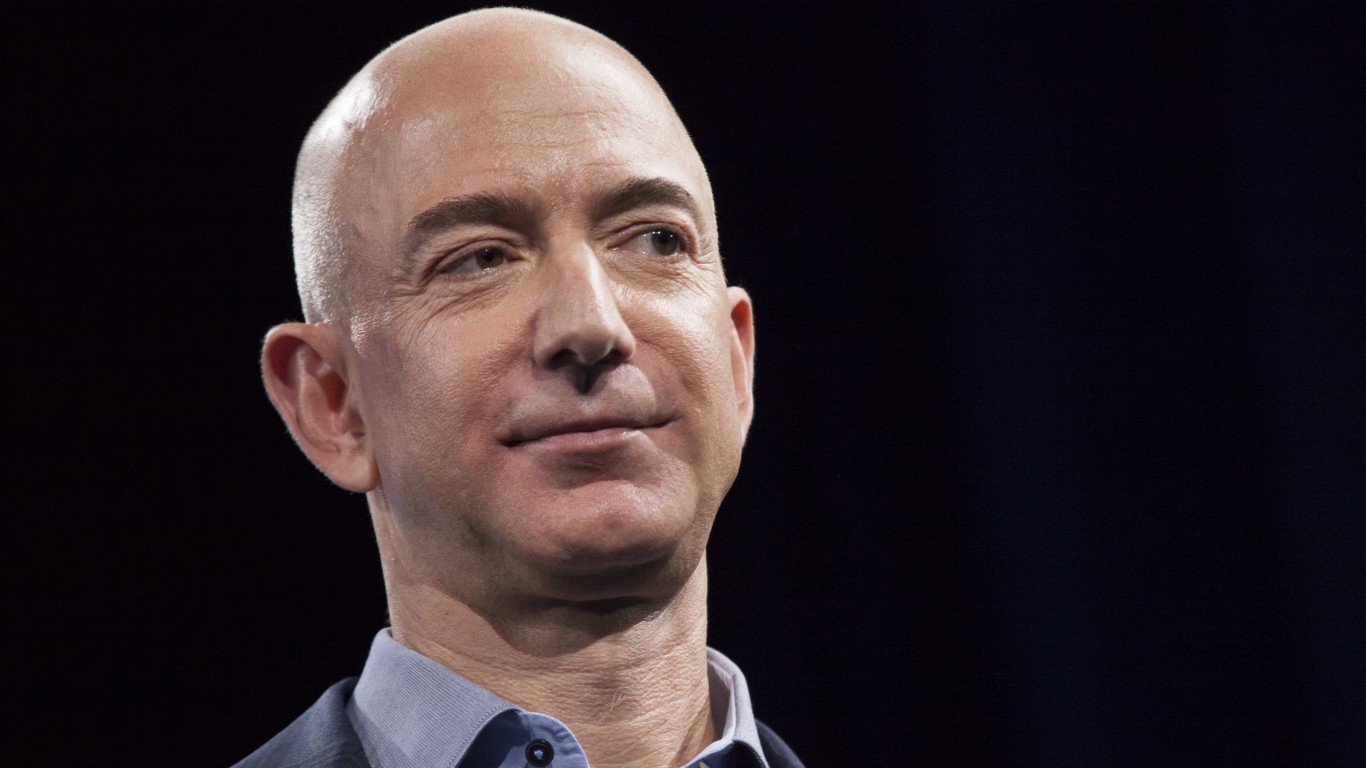
A 68-year-old retiree with 1,000 Amazon shares just watched Jeff Bezos give away nearly $200 million of his own in two days. Eight years ago this month he told his employees, “I predict one day Amazon will fail. Amazon will go bankrupt.”
She is a scenario, built on real prices to show the math. She bought the day that remark made the news and put in $80,972. After Amazon’s 2022 stock split she holds 1,000 shares at a cost of about $81 each, and at Friday’s close of $254.12 they are worth $254,120. That is a third of her retirement savings.
Bezos’s prediction reads as a warning to anyone whose retirement leans on one stock, even his. The reading has a limit: he gave no date, Amazon became the largest U.S. company by revenue this year, and he still owns more than 878 million shares.
What Bezos said, and what he just did
CNBC reported the remark on Nov. 15, 2018, from a recording of a staff meeting in Seattle a week earlier. An employee had asked Bezos what he learned from the bankruptcy of Sears. “Amazon is not too big to fail,” he answered. “If you look at large companies, their lifespans tend to be 30-plus years, not a hundred-plus years.”
Amazon turned 32 in July. Bezos told the room what would bring the end closer: “If we start to focus on ourselves, instead of focusing on our customers, that will be the beginning of the end. We have to try and delay that day for as long as possible.”
The company looks nowhere near that day. It took the top spot on the Fortune 500 in June for the first time, on $716.9 billion of 2025 revenue. Fortune went back to the bankruptcy remark this weekend.
Then there are his own shares. Bezos gave away 674,088 of them on Nov. 12 and another 97,404, which went to the Bezos Earth Fund, on Nov. 13, Fortune reported from a securities filing. Forbes put the value at $198.9 million. The Earth Fund shares date to July 5, 1994, the day he incorporated the company.
The gifts are charity, and they are small next to what he keeps. He has given at least 2.44 million shares this year, less than 0.3% of his stake.
Eight years of holding on
Her eight years show what one stock can do to your nerves. Thirty-nine days after she bought, on Christmas Eve 2018, her $80,972 was worth $67,198.
By July 2021 it had grown to $186,570. Then Amazon fell 56%. On Dec. 28, 2022, her shares were worth $81,820, just $848 more than she paid four years earlier. The stock did not close above its 2021 high again until April 2024.
She held, and it paid. Amazon rose 4% on Black Friday, which added $9,690 to her account in a shortened session. Her gain stands at $173,148. Her shares are still $29,900 below their value at the record close on Aug. 3.
A third of her savings in one company
Say the rest of her money is $500,000: a $300,000 S&P 500 index fund in her IRA and $200,000 in bonds and cash. Amazon is now 34% of everything she has. Check your own number the same way: your biggest stock divided by all of your savings.
FINRA, the brokerage industry’s regulator, calls this concentration risk: “the risk of amplified losses that may occur from having a large portion of your holdings in a particular investment.” It often starts with good news. “Maybe one of your investments has performed very well relative to the rest of your portfolio,” FINRA wrote in 2022.
The regulator also tells you to look under the hood of your funds. Her index fund owns Amazon too. The seven largest companies in the S&P 500, Amazon among them, made up 32.5% of the index on Nov. 19, according to the holdings of the SPDR S&P 500 ETF. That is $97,500 of her $300,000 fund riding on seven stocks.
What selling half costs her
If she sells 500 shares at Friday’s close, she takes in $127,060. Those shares cost her $40,486, so the gain is $86,574.
Her pension, IRA withdrawals and Social Security already fill the 0% band for long-term gains, which ends at $49,450 of taxable income for a single filer in 2026. The whole gain is taxed at 15%. The federal bill is $12,986, about a dime of every dollar she sells. Her state may want a share. The same math works on your own winner if your other income is like hers.
She keeps $114,074, and Amazon drops to 17% of her savings. The sale also lifts her income for the year, and Medicare sets its premium surcharges on income from two years back, as we wrote on Nov. 25 in our story on Medicare’s 2027 premiums. Selling 250 shares in December and 250 in January would put $43,287 of gain in each tax year. Run it both ways before you sell.
Where the $114,074 goes next is the part this story can’t settle for her. An issue of The Daily Profit, our free weekday email, will say by Dec. 4 whether Amazon is in Eric Bleeker’s $1 million AI Investor Portfolio and how large he lets any one stock grow. Sign up free before that issue goes out, and our Top 10 Stocks to Buy Right Now report comes with it.
The Bezos move you can copy
Bezos gave the shares themselves, and that choice matters at tax time. Under IRS Publication 526, a donor who itemizes can deduct the full market value of stock held more than a year, and the gain is never taxed.
Suppose she gives $5,000 a year to her church. Twenty of her Amazon shares are worth $5,082 and hold $3,463 of gain. Selling them first would cost her $519 in tax. Handing over the shares triggers no tax, and she keeps her cash.
The bottom line
Bezos told his employees their job was to delay the day Amazon fails. A retiree has no vote on that. The one number you control is how much of your savings is in the stock when a bad year comes, and she has already lived through a 56% fall. For her, cutting Amazon from a third of her savings to about a sixth costs $12,986.
Contact [email protected] for any questions or corrections.
I've spent more than 15 years inside enterprise software, working alongside the finance, sales operations, and HR leaders who run the revenue engines at some of the largest tech companies in the country.
My day job is helping enterprise executives make smarter decisions about retention, compensation, and growth. These are the same operational levers that show up in every earnings report investors actually read. That perspective shapes my writing for 24/7 Wall St.
The headline numbers are easy. The interesting stuff is underneath: how companies make money, what executives are worried about, and what any of it means for the person checking their 401(k) on a Sunday afternoon. I write about personal finance and business as someone who has spent her career inside the rooms where these decisions get made.