Forget Electronics: These 4 High-Yield Dividend Stocks Are the Real Cyber Monday Steals

This post may contain links from our sponsors and affiliates, and Flywheel Publishing may receive compensation for actions taken through them.

A discounted TV starts losing value the day it ships. A well-covered dividend keeps paying, and the best ones keep getting raised. Altria Group (NYSE:MO | MO Price Prediction), Enterprise Products Partners (NYSE:EPD), Realty Income (NYSE:O), and Verizon Communications (NYSE:VZ) all pair high yields with cash flow that covers the payout. Even the lowest yielder of the four, Realty Income, has a forward yield of about 5.43%. These are Cyber Monday deals that keep paying you for years.
Altria Group: Tobacco Cash Flow That Funds Raise After Raise
Altria’s annualized dividend of $4.44 against a share price near $76.92 works out to a forward yield of about 5.77%. The latest quarterly payment rose to $1.11 from $1.06, a 4.7% raise[1] that management described as its “61st dividend increase in 57 years.”
Dividend safety: That annual payout equals roughly 78% of the floor of Altria’s raised full-year adjusted EPS guidance of $5.66 to $5.74[1]. Third-quarter net income of $2.518 billion[1] easily covered the $1.7 billion paid out in dividends. On paper, book value is thin at -$1.337 per share, so the dividend depends on cash generation, and trailing EBITDA of $12.863 billion shows there is plenty of it. Management reaffirmed its goal of mid-single-digit annual dividend-per-share growth through 2028.
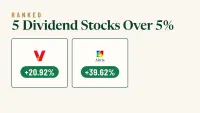
Bull case: Shares are up 39.82% year-to-date and still trade at about 13 times forward earnings. Altria added $1 billion[1] to its buyback program, and equity income from its Anheuser-Busch InBev stake rose to $228 million from $123 million. Volume for its on! nicotine pouches grew 13.3%, which gives future raises a smoke-free source of growth.
Risk: Cigarette volume keeps shrinking. Industry volume fell an estimated 5%, Marlboro shipments fell 6.4%, and discount shipments jumped 40.5%. Reuters reports that Altria is exploring a cash bid for Imperial Brands and a possible carve-up, a sign it wants scale beyond a shrinking U.S. base.
Enterprise Products Partners: An Ultra-High-Yield Payout Covered Nearly Twice
Enterprise’s annualized distribution of $2.24 per unit against a unit price near $36.28 gives a forward yield of about 6.17%. That is the only ultra-high yield in this group. The quarterly distribution is $0.56[2], up 2.8% from a year ago.
Dividend safety: Third-quarter operational distributable cash flow of $2.3 billion[2] covered the distribution 1.9x. That left $1.1 billion[2] to fund growth projects, buybacks, and debt reduction. Net income rose 21.28%[2] to $1.624 billion. The quarterly payout has climbed from $0.39 in early 2016 to today’s level, rising every year. Enterprise also has room left on its $5.0 billion[2] buyback program, which is only 36% used.
Bull case: Units trade below their 200-day moving average of $37.58 after slipping 3.28% over the past month, and the forward P/E is about 12. Enterprise has $6.3 billion[2] in growth projects underway, due for completion through 2028. Two of them, the Athena processing plant in the Midland Basin and an LPG terminal expansion on the Houston Ship Channel, are due in the fourth quarter. Inlet volumes in the Permian reached a record 4.6 Bcf/d, and management says the projects give it visibility into growth in cash flow per unit.
Risk: Enterprise is a master limited partnership, so it sends unitholders a Schedule K-1 instead of a 1099. That makes tax filing more complicated and can cause problems inside retirement accounts.
Realty Income: Monthly Checks From a Dividend Aristocrat
Realty Income pays an annualized forward dividend of $3.288 per share, and for $60.55 that works out to a yield of about 5.43%, paid monthly (if that schedule appeals, we rounded up seven monthly payers in a free report). The newest monthly payment rose to $0.274 from $0.2715, and it goes ex-dividend on Cyber Monday itself.
Dividend safety: The annualized payout is roughly 74% of the minimum in full-year guidance for AFFO (adjusted funds from operations, the REIT version of earnings). Management just raised that guidance to $4.45-$4.46 per share. Occupancy held at 98.8%. Few companies can match that history: Realty Income announced its 116th consecutive quarterly dividend increase and its 136th since its 1994 NYSE listing, has paid 676 consecutive monthly dividends, and is a member of the S&P 500 Dividend Aristocrats index. Net debt stands at 7.81x EBITDA with interest coverage of 1.42x, but management says its equity needs are fully prefunded for the rest of the year.
Bull case: Shares gained 8.12% over the past month and still trade below their 200-day moving average of $61.36 and their 52-week high of $65.93. Its free cash flow yield of 6.71% is higher than the dividend yield. Last quarter, it invested $2.6 billion at a 6.8% initial cash yield, a leverage-neutral spread of about 170 basis points. Data centers made up 11.7% of new investments.
Risk: Interest rates. Interest expense climbed to $333.6 million from $294.5 million, and REIT shares remain sensitive to Treasury yields.
Verizon Communications: Free Cash Flow Growth Protects the Payout
Verizon’s annualized dividend of $2.83 on a $47.62 price yields about 5.94%. The quarterly payment is $0.7075, up from $0.69 before the most recent increase.
Dividend safety: The payout equals roughly 56% of even the minimum in adjusted EPS guidance of $5.04 to $5.06[3], the biggest earnings cushion in this group. Third-quarter free cash flow rose 13.88%[3] to $7.801 billion, and management expects full-year free cash flow growth to approach 12%. Even after the dividend, Verizon bought back $4.0 billion[3] of stock in the first nine months. The quarterly dividend has gone up every year on record, from $0.50 in 2012 to today’s rate.
Bull case: At about 9 times forward earnings, Verizon is the cheapest of the four on earnings. The business is getting stronger: it added 406K[3] postpaid phone customers versus 44K a year ago, adjusted EBITDA margin expanded to 40.2% from 37.8%, and full-year guidance went up for the third consecutive quarter. The Financial Times reports, via Bloomberg, that Verizon is in talks to buy Fidium, which would add to a fiber expansion aimed at 40–50M passings.
Risk: Debt. Total debt stands at $166.2 billion, and interest expense rose 17.2% from a year ago, so any acquisition spending takes cash away from paying down debt.
Four Income Streams Worth More Than Any Doorbuster
Altria and Realty Income have the longest records of raises, Enterprise has the highest yield backed by 1.9x[2] coverage, and Verizon has the widest earnings cushion at the lowest multiple. Together, they cover tobacco, energy infrastructure, real estate, and telecom, so your income comes from four separate businesses. At the same time, a gadget bought on Cyber Monday loses value from day one, while all four payouts keep rising.
Contact [email protected] for any questions or corrections.
Lee Jackson has covered Wall Street analysts' equity and debt research and equity strategy daily for 24/7 Wall St. since 2012. His broad, diverse career, including a stint as creative services director at an NBC affiliate in Austin, Texas, gives him unique insight into the financial industry.
Lee Jackson's journey in the financial industry spans more than 30 years, including nearly two decades as an institutional equity salesperson at Bear Stearns, Lehman Brothers, and Morgan Stanley. His career spanned pivotal sell-side Wall Street events, from the dot-com rise and bubble to the Long-Term Capital Management debacle, 9/11, and the Great Recession of 2008. This reflects his resilience and adaptability amid market volatility.
Lee Jackson’s practical financial industry experience, gained through a career at some of the biggest banks and brokerage firms, is complemented by a lifetime of writing across various platforms. This unique combination allows him to shed light on the intricacies of Wall Street in a way only someone with deep insider experience and knowledge can. Moreover, his extensive network across Wall Street continues to provide direct access for him and 24/7 Wall St., a privilege few firms enjoy.
Since 2012, Jackson’s work for 24/7 Wall St. has been featured in Barron’s, Yahoo Finance, MarketWatch, Business Insider, TradingView, Real Money, The Street, Seeking Alpha, Benzinga, and other media outlets. He attended the prestigious Cranbrook Schools in Bloomfield Hills, Michigan, and has a degree in broadcasting from the Specs Howard School of Media Arts.