‘I didn’t want to worry you’: I’m 62 and just found out my husband has sent our 34-year-old son $2,000 a month for three years. He says we can afford it. Who’s right?

This post may contain links from our sponsors and affiliates, and Flywheel Publishing may receive compensation for actions taken through them.

I’m 62 and we have about $1.5 million saved. My husband is 64 and retired two years ago on a pension of $3,000 a month. I still work and earn $100,000 a year. The savings are $900,000 in his IRA, $450,000 in my 401(k) and $150,000 in the bank, and our house is paid off. I plan to retire in 2029, when I turn 65.
Last week I sat down to add everything up, and I logged into his IRA for the first time in years. On the first of every month, going back to December 2023, there is a $2,000 transfer to our son. He is 34. That is 36 payments and $72,000, and my husband never said a word about any of it.
Our son lost his job in the fall of 2023 and found another one that pays less. I knew that much. When I asked my husband about the transfers, he said, “It’s my IRA, and I didn’t want to worry you.” He says we can afford it, and that I would have said no. I probably would have.
The next transfer goes out Tuesday. I’m angry, and I also don’t want to cut off my own son a few weeks before Christmas. Who’s right?
You’re right about the secret, and he’s right that you can afford it for now
You are right. Three years of secret $2,000 transfers reads as a breach of trust; it is also help that half of American parents give their grown children in the open, and your savings can carry it for a while.
Savings.com’s 2025 survey found that half of parents with adult children give them regular financial help, an average of $1,474 a month for each child. Your husband gave more than that, and he gave it from the one account you never open.
What ‘my IRA’ gets right
On the law, he has a point. An IRA has one owner. Federal law gives a husband or wife a claim on a 401(k) when the worker dies, and an IRA carries no such rule. He needs no signature from you to take money out. Nine states, California and Texas among them, treat what a couple saves during the marriage as belonging to both, so ask a lawyer if you live in one.
The tax return is where his IRA becomes yours. Every dollar that leaves a traditional IRA is income, and the two of you file jointly. The tax code makes each spouse liable for the whole bill on a joint return. Your salary and his $36,000 of pension already put you in the 22% bracket, so a year of transfers added $5,280 in federal tax to a return with your signature on it.
Count the tax and each $2,000 costs the two of you $2,440. Over 36 payments your son received $72,000, the IRS received $15,840, and the household is out $87,840.
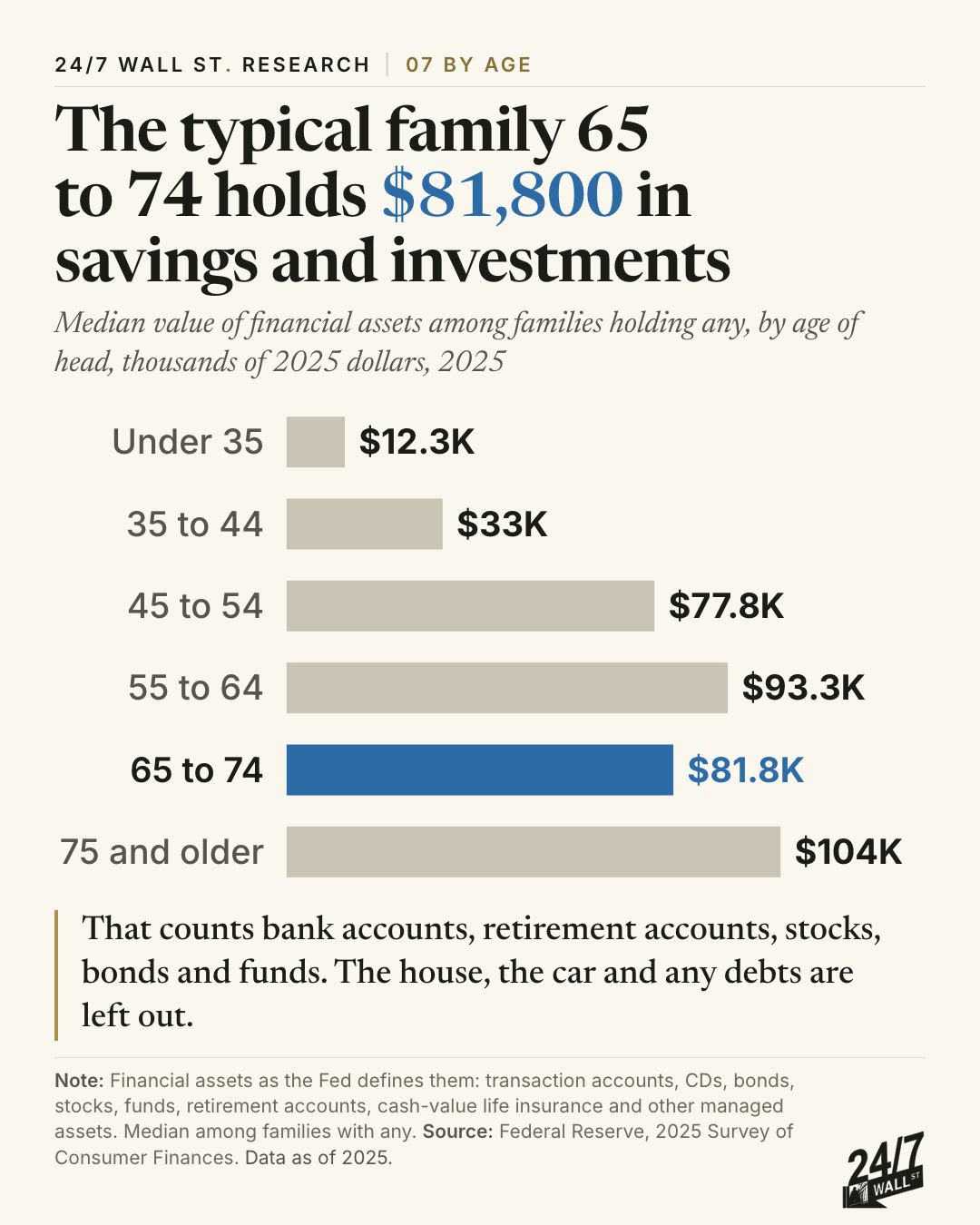
For scale, the typical American family headed by someone 65 to 74 has $81,800 in savings and investments, according to the Federal Reserve’s 2025 survey of family finances. Helping your son has cost more than that.
Here is each year.
| Year | Sent to your son | Federal tax at 22% | Gift limit for one giver | Over the limit |
|---|---|---|---|---|
| 2023 | $2,000 | $440 | $17,000 | $0 |
| 2024 | $24,000 | $5,280 | $18,000 | $6,000 |
| 2025 | $24,000 | $5,280 | $19,000 | $5,000 |
| 2026, through November | $22,000 | $4,840 | $19,000 | $3,000 |
| Total | $72,000 | $15,840 | $14,000 |
The form that needs your signature
The last column of that table points to paperwork he may not know about. In 2026 one person can give another $19,000 without telling the IRS, and the limit was $18,000 in 2024. A giver who goes over owes a gift tax return, Form 709, the next April. He went over in 2024 and 2025, and if he filed nothing, those returns are late.
No tax is due. The amount over the limit comes off a lifetime allowance, which is $15 million in 2026. A married couple can also treat a gift as half from each spouse, which would make each year $12,000 apiece and under every limit. That choice is made on Form 709, and it counts only with the other spouse’s signed consent. The simplest way to give your son this much has needed your signature all along.
What the transfers cost after you retire
A common rule of thumb says retirees can spend about 4% of their savings a year. On $1.5 million that is $60,000. Your son’s $24,000 a year plus the tax on it is $29,280, nearly half. Your paycheck covers that today. In 2029 it stops, and the transfers would come straight out of the money the two of you live on.
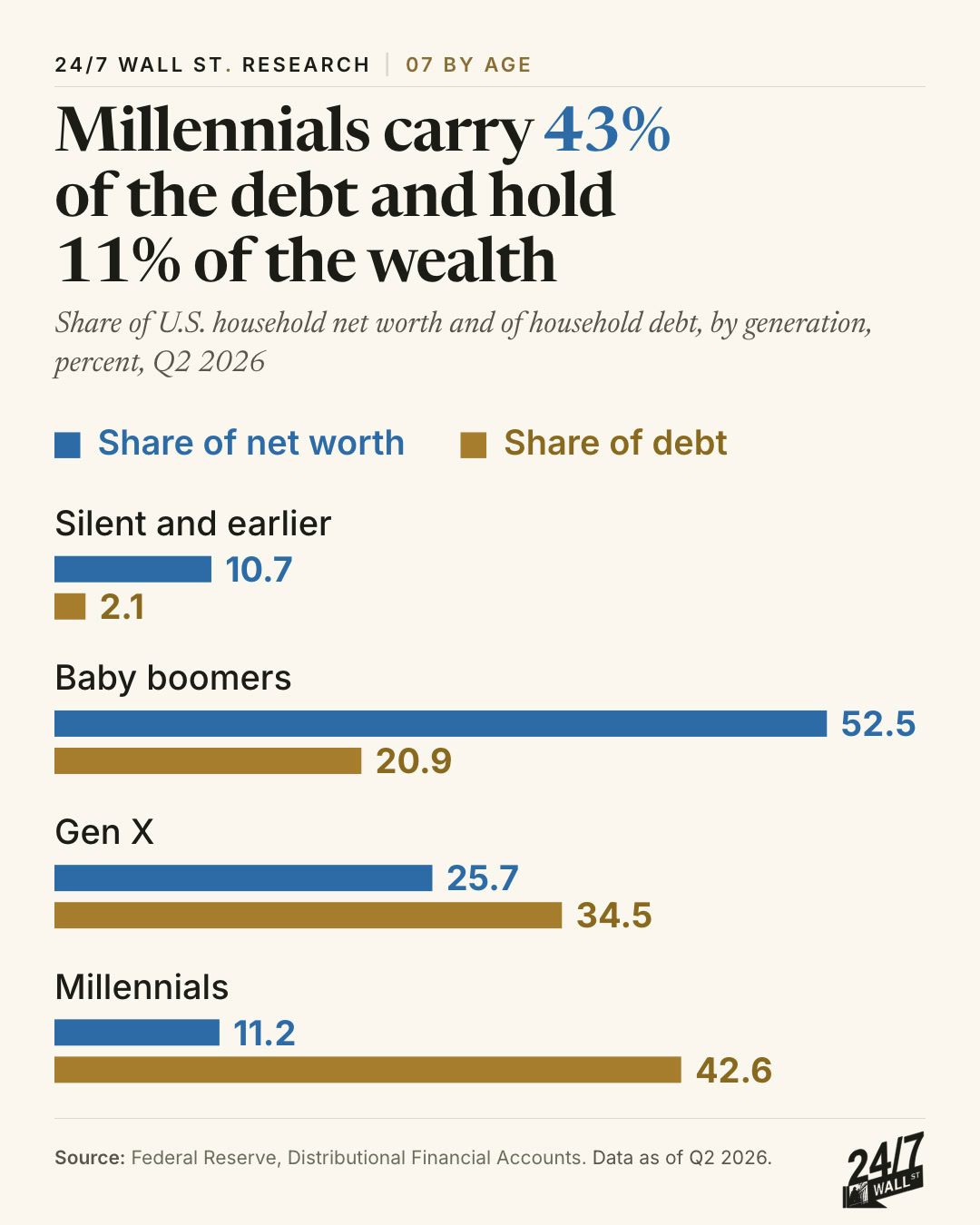
Your son has company too. He is a millennial, and that generation carries 43% of America’s household debt and holds 11% of its wealth, according to the Federal Reserve’s figures for the second quarter of 2026. A parent who helps is responding to something real.
Which account the help comes from changes what it costs. The Daily Profit, our free weekday email, will compare three ways to give a grown child $24,000 a year in a Wealth note: bank savings, a traditional IRA and shares that have risen in value, for a couple in the 22% bracket. Sign up free here and you also get our Top 10 Stocks to Buy Right Now report.
What I would do
I would let Tuesday’s transfer go through. Your son has built his rent around it, and the argument is between you and your husband.
Then I would sit down with every statement since December 2023 and read them together. Each of you should be able to see every account. His IRA holds 60% of what you will both retire on.
Next, agree on a number and an end date, and tell your son together. I would offer $2,000 a month for six months, counting Tuesday’s, then $1,000 a month for six more, then nothing. That is $18,000, against $24,000 a year with no end.
After Tuesday, pay it from the bank account. From savings, a dollar to your son costs a dollar. From his IRA it costs $1.22 once the tax is counted. The 2027 payments would total $16,000, under the $20,000 one person may give next year, so they need no form.
Have a tax preparer file the gift tax returns for 2024 and 2025 with your consent to split, and the one for 2026 by April 15.
Your husband saw a son in trouble and helped him. Tell him that was a kind thing to do. Then tell him you are three years from living on these accounts, and from now on every withdrawal is a decision for two.
Contact [email protected] for any questions or corrections.
I've spent more than 15 years inside enterprise software, working alongside the finance, sales operations, and HR leaders who run the revenue engines at some of the largest tech companies in the country.
My day job is helping enterprise executives make smarter decisions about retention, compensation, and growth. These are the same operational levers that show up in every earnings report investors actually read. That perspective shapes my writing for 24/7 Wall St.
The headline numbers are easy. The interesting stuff is underneath: how companies make money, what executives are worried about, and what any of it means for the person checking their 401(k) on a Sunday afternoon. I write about personal finance and business as someone who has spent her career inside the rooms where these decisions get made.