What’s the Best XRP ETF?
If you want to own XRP (CRYPTO:XRP) without dealing with a crypto exchange, you now have five exchange-traded funds to pick from. They all do the same basic thing—they hold XRP directly and trade on a regular stock market, so…

This post may contain links from our sponsors and affiliates, and Flywheel Publishing may receive compensation for actions taken through them.
If you want to own XRP (CRYPTO:XRP) without dealing with a crypto exchange, you now have five exchange-traded funds to pick from. They all do the same basic thing—they hold XRP directly and trade on a regular stock market, so you can buy them straight from a brokerage account.
The hard part is choosing one, because at first glance they look almost identical, but they’re not identical where it counts. They charge different fees, and some are far easier to buy and sell than others. Those two things are really all that separate them.
So, the fund most people are buying isn’t the cheapest, and the cheapest isn’t some tiny outfit you’d worry about. Which one makes sense for you depends on whether you’re holding for years or trading the swings, and either way, it matters less than what XRP does next.
Five XRP ETFs Hold the Same Coin, So What Separates Them?
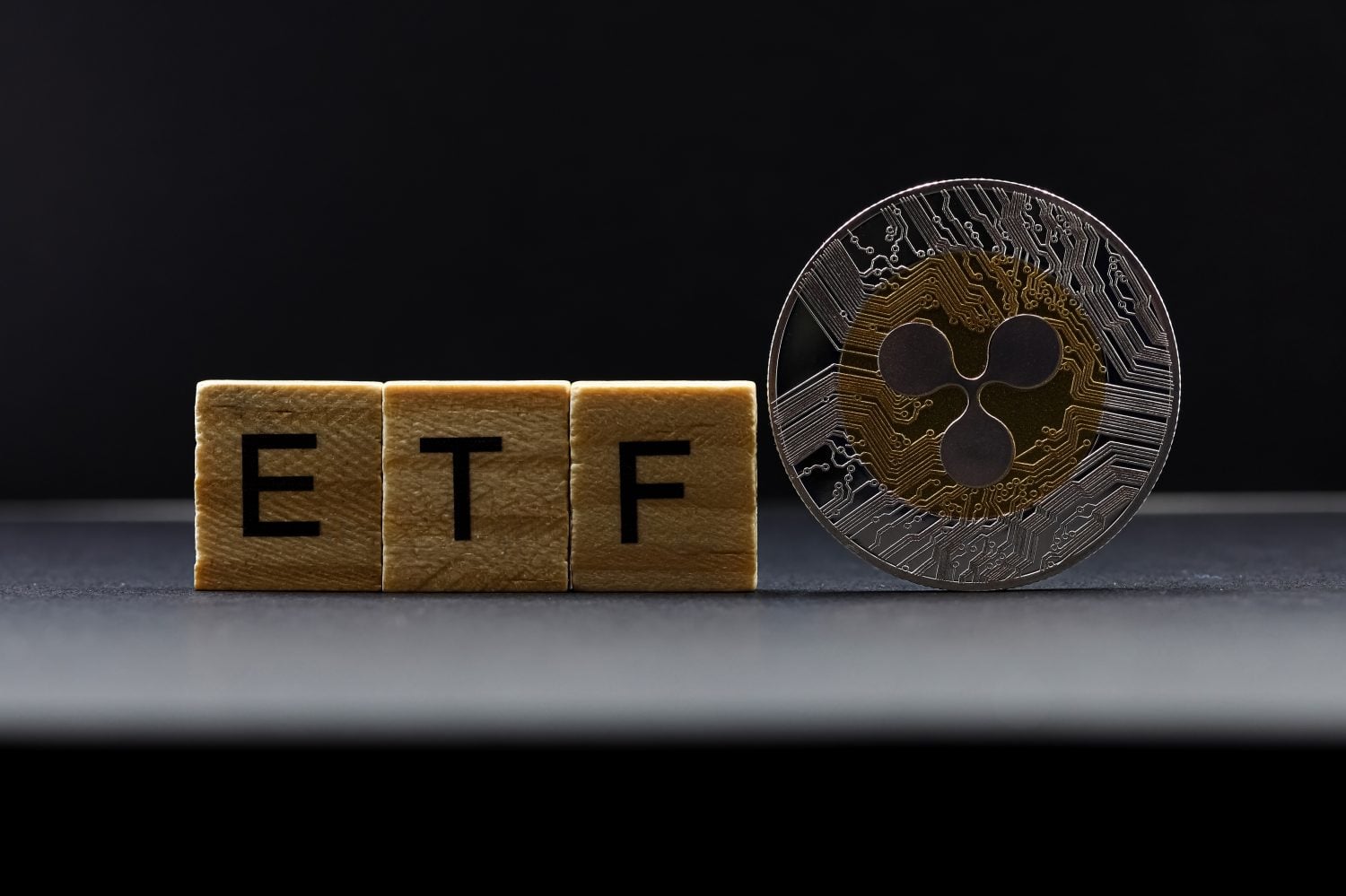
Every one of the five XRP exchange-traded funds holds XRP directly, which is the same coin, bought and stored the same way, with no leverage and or futures. That’s what makes them so hard to tell apart.
So, if the contents are the same, the only things that can separate them are the terms, and there are two key things that really matter. The first is the fee, which is the yearly cut the fund takes just for holding your XRP. The second is liquidity, which is really just how easily you can buy or sell the fund without nudging its price.
Moreover, what separates the five funds is wider than you’d guess for products that hold the same coin. The most expensive charges more than two and a half times what the cheapest does. Meanwhile, the most active fund handles several times the daily volume of the others.
| Fund (ticker) | Fee | Net assets | Cumulative inflow | Daily value traded |
|---|---|---|---|---|
| Bitwise (XRP) | 0.34% | $293M | $493M | $14.5M |
| Franklin Templeton (XRPZ) | 0.19% | $235M | $410M | $4.2M |
| Canary (XRPC) | 0.50% | $235M | $461M | $1.7M |
| 21Shares (TOXR) | 0.30% | $113M | −$20M | $0.2M |
| Grayscale (GXRP) | 0.35% | $58M | $131M | $1.5M |
Franklin Templeton Runs the Cheapest XRP ETF

Most people buying their first XRP ETF reach for Bitwise, and the logic makes sense. It’s the biggest, the most traded, and it’s pulled in the most money since these funds launched. But none of that helps you once you own it, because all five hold the same XRP in the same way. For someone planning to hold for a few years, the number that actually bites is the fee, and Bitwise isn’t the cheapest.
Franklin Templeton’s fund, which trades as XRPZ, charges 0.19% a year, the lowest of the five. That’s below what Bitwise charges and less than half of Canary’s 0.50%, the priciest of the group. For a product holding the identical coin, that’s a meaningful difference in what you keep.
On a $10,000 holding, Franklin costs you about $19 a year against Canary’s $50, and you pay it every year you hold, on a balance you’re hoping grows. Normally going cheap means getting stuck in a tiny fund that’s hard to trade, but not with Franklin. It’s one of the three largest XRP ETFs and the second-most active after Bitwise, so you give up nothing to get the lowest fee. For anyone buying to hold, that makes it the easy pick.
Why Bitwise Is the Best XRP ETF for Active Traders

The cheapest fund is the right answer only if you’re buying to hold. The moment you start trading in and out, a second cost shows up that can dwarf the fee. It’s the spread, which is the small gap between what you pay to buy and what you get when you sell, and it hits you on every trade. The more a fund trades, the tighter that gap gets, and this is where Bitwise pulls away.
Bitwise trades around $14.5 million worth of shares on a typical day, more than the other four funds put together. Franklin, the next closest, does about $4 million. That much volume means tighter spreads and room to move a big order without pushing the price around, which is exactly what an active trader needs.
Then again, Canary and Grayscale each do well under $2 million a day, and 21Shares barely clears $200,000 while money leaks out of it. For a buy-and-hold investor that’s a footnote, but if you ever need to sell in size, a quiet fund can hand you a worse price than you expected.
Does It Even Matter Which XRP ETF You Pick?
There’s a bigger thing worth knowing before you buy any of these, and it has nothing to do with which one you pick. The XRP ETF rush already had its big moment, and it’s behind us. When these funds launched late last year, money poured in, and nearly 80% of everything they’ve ever taken in arrived in just the first two months. This past month, they pulled in about $47 million between them, a fraction of the launch wave.
And the funds are now worth far less than the money put into them. Investors have poured about $1.47 billion into these funds since launch, but they only hold around $934 million today. That missing half-billion didn’t go anywhere—it evaporated as XRP’s price fell. The whole category is now worth less than it was last December, even though more money has flowed in since.
That tells you where the risk and reward actually live, and it isn’t in the wrapper. Whether you pick the cheapest fund or the most liquid one, you’re making the same bet, that XRP goes up. The fee difference between the best and worst fund is about a third of a percent, while XRP itself is down about 20% in the past month.
So, choose a fund that’s cheap and easy to trade, then stop worrying about it. Your return depends on XRP itself, far more than the exact fund you pick.
Which XRP ETF Should You Actually Buy?
So here’s the call. For most people, the ones buying XRP to hold, Franklin Templeton’s fund is the best XRP ETF, because it costs the least while still being one of the biggest and easiest to trade. If you’re trading actively, Bitwise is worth the slightly higher fee for its much deeper liquidity—that’s the whole decision.
But the rankings could shuffle, and that’s worth watching. Since all five funds hold the identical coin, the only way any of them can compete is on price, so fee cuts are probably coming, and the first fund to waive its fee could become the cheapest pick overnight. Aside from that, the honest answer is that the wrapper barely matters next to what XRP itself does. Pick the cheap, liquid one, then keep your eyes on XRP, not the fund.
Contact [email protected] for any questions or corrections.
Sam Daodu is a crypto analyst and the editor of 24/7 Wall St.'s Crypto Desk, where he covers Bitcoin, XRP, Ethereum, Solana and the altcoins investors search for most. His work focuses on price levels, spot ETF flows, on-chain data and the regulatory decisions that move crypto markets, written so a first-time buyer and a seasoned trader can both use it.
Sam has written about crypto professionally since 2019 and has published more than 2,000 articles. Before joining 24/7 Wall St., he wrote for crypto media outlets and Web3 companies and ghostwrote for crypto founders and token launches. His analysis is syndicated on Yahoo Finance, MSN and AOL and has been cited by other crypto news sites. He also founded MacLabs Marketing, a content and personal branding agency for crypto founders and executives.
When he isn't reading charts, Sam is usually at the gym or watching One Piece, a series he maintains has better tokenomics than most altcoins.