Which Crypto Do AI Models Say to Buy Right Now: Bitcoin, Ethereum, or XRP?
ChatGPT and Claude both ranked the same coin last, but they disagreed on which of the remaining two deserves your money right now, and the reasoning behind each pick reveals a real tension about where institutional crypto buying goes next.

This post may contain links from our sponsors and affiliates, and Flywheel Publishing may receive compensation for actions taken through them.

Bitcoin (CRYPTO:BTC), Ethereum (CRYPTO:ETH) and XRP (CRYPTO:XRP) have pulled apart over the past month. Ethereum is up almost 8%, Bitcoin has barely moved, and XRP has fallen 6.6%, so we wanted to know which of the three is the better buy right now.
We gave ChatGPT and Claude live data on all three and asked them to rank the coins by how attractive each one is to buy today. ChatGPT put Bitcoin first and Claude chose Ethereum, but both of them ranked XRP last.
Why ChatGPT Ranked Bitcoin First

ChatGPT put Bitcoin first because it is the only one of the three that does not need something new to happen. Ethereum has a major upgrade coming and XRP has a bill in the Senate, but Bitcoin already has its $1.3 trillion size, the deepest market of the three, a supply capped at 21 million coins, and the widest network of institutions selling access to it. ChatGPT called it “the asset here with the fewest things that need to go right.”
Investors have also put $52.18 billion into US spot Bitcoin ETFs since they launched, and those funds now hold $79.50 billion, or roughly 6% of every Bitcoin in existence. Ethereum’s funds have gathered $11.46 billion over the same stretch, so Bitcoin is ahead on institutional money by five times.
ChatGPT ranked Ethereum second and said it was the closest to challenging Bitcoin, since it is the only one of the three that pays holders anything and it has the strongest recent performance. XRP came third because its case depends on adoption turning into real demand for the token, and ChatGPT’s worry is that the ledger can keep growing while XRP itself captures less value than holders expect.
However, ChatGPT was uneasy about BIP-110, a proposed rule change that would limit how much non-financial data people can store in Bitcoin blocks. The argument split developers and miners, and on August 8 the nodes backing it broke away onto their own chain with only 2.53% of blocks signaling support.
ChatGPT called the whole thing an unnecessary governance headache, but read the fight as more likely to show that nobody can force a change on Bitcoin than to do any lasting damage. It did say a fork with real support behind it would push Bitcoin down its list.
Why Claude Put Ethereum Ahead of Bitcoin

Claude ranked Bitcoin second because it thinks the institutions that wanted Bitcoin have already bought it. It called Bitcoin’s base “solid but static” and said “the marginal buyer is mostly already in,” meaning the pension funds, advisers and asset managers who were going to add Bitcoin have mostly done so, while Ethereum still has that money ahead of it. Claude put XRP third.
Ethereum also gives holders something the other two cannot. If you stake your ETH, you earn roughly 3.1% to 3.3% a year on top of whatever the price does, and US staking ETFs now pass those rewards to shareholders, so a pension fund can collect that yield without touching a wallet.
Investors have started acting on that. Ethereum ETFs out-raised Bitcoin’s for three straight weeks in July, and although Bitcoin funds have since had their best week since April, Ethereum’s had their best in nearly four months over the same five days.
However, Claude was blunt about what could go wrong, warning that “ETH has burned this exact thesis before.” Ethereum’s next major upgrade has already slipped once from June, and Ethereum drops further than Bitcoin does when investors pull back from risk.
What Both Models Missed About XRP
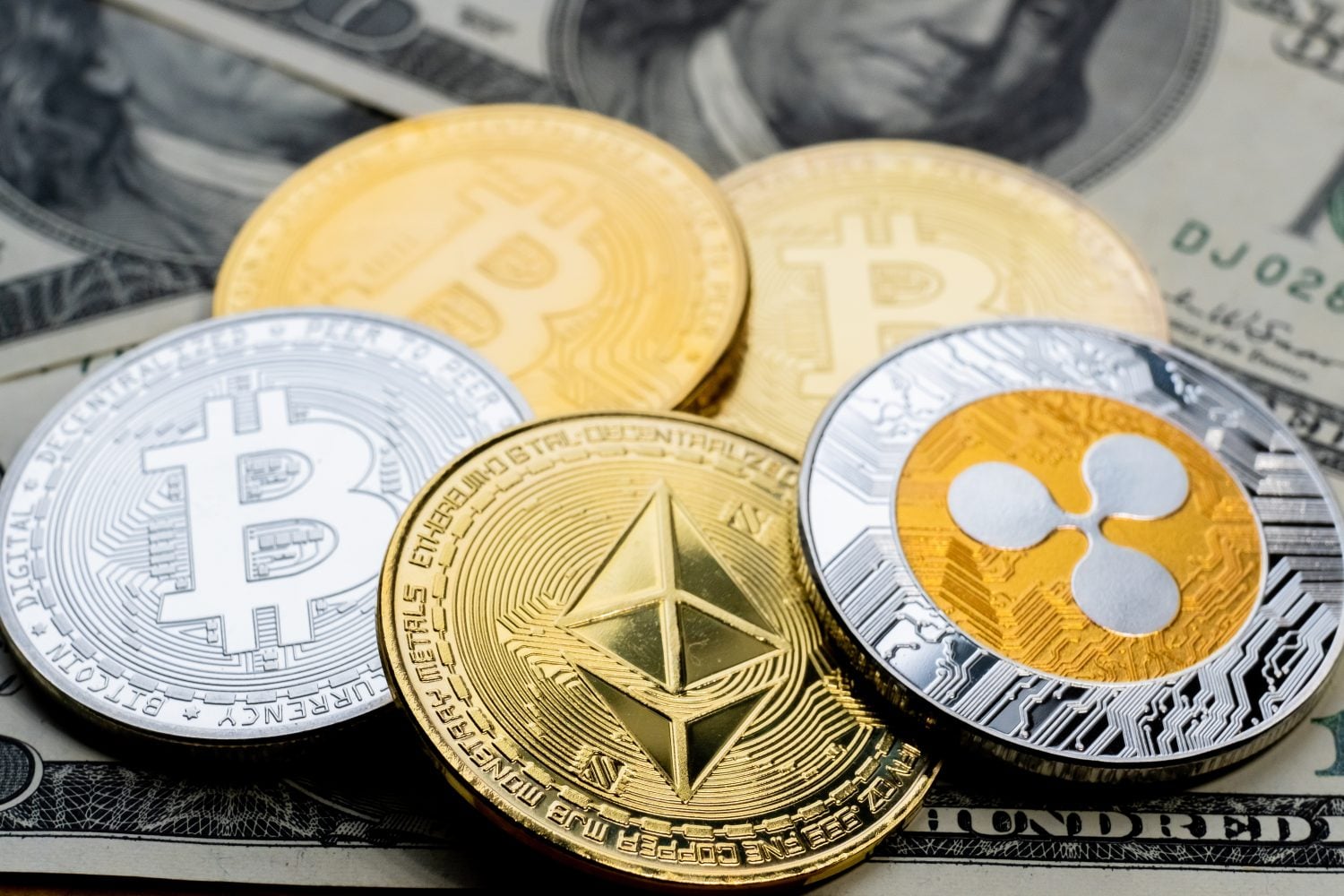
ChatGPT and Claude both put XRP last because the money going into XRP ETFs keeps shrinking. Investors put $131.94 million into those funds in May, $59.46 million in June, and $27.29 million in July, and only $1.01 million has come in so far this month. The funds hold $953 million between them, and they are the only route institutions have into XRP, so once they slow down, nothing else is buying.
The Grayscale XRP Trust shows how bad it got. Between January and June, so many investors pulled their money out that the fund had to sell 103.41 million XRP worth $180.78 million to pay them. New investors put enough in to create another 36.27 million tokens over the same six months, but that was nowhere near enough to cover the exits, and the fund ended the period holding 55.04 million XRP instead of the 122.23 million it started with.
Claude read that as proof XRP has nothing else going for it. It said “the whole thesis is one bill,” meaning XRP only works if the CLARITY Act passes, and it refused to count XRP’s loyal holders as a reason to rank it higher, pointing out that “holding isn’t buying, and I won’t rank an asset on loyalty,” since people who never sell also never push the price up.
But neither model gave XRP credit for two things. Its funds still pull in more money than any other altcoin product, roughly double Solana’s $14.62 million in July. And XRP has now closed above $1 for 627 straight days, which is the longest run in its history.
The bill Claude was talking about has already started moving, and both models said it would change their ranking. Senate Majority Leader John Thune filed cloture on the CLARITY Act early on August 8, setting up the Senate’s first procedural vote for Tuesday, September 15. Claude said passage would move XRP “from third to at least second, possibly first.”
Which Crypto Do the AI Models Say to Buy?
Both models are right that XRP is the weakest buy today, but we would not rank it third for long. Everything holding it back rests on one vote, and that vote now has a date on it. If the CLARITY Act clears the Senate on September 15, XRP goes from the coin with no institutional buyers to the coin with a legal status pension funds can hold, and it is the only one of the three where a single event changes that much.
Between Bitcoin and Ethereum, we would take Ethereum. Bitcoin has no catalyst of its own coming, since the next halving is not until 2028, so it moves when the whole market moves and not before. Ethereum pays a yield of 3.1% to 3.3% a year to anyone who stakes it, and the same institutions that have put $52.18 billion into Bitcoin ETFs have only put $11.46 billion into Ethereum’s, so there is far more room left for that money to move it.
So the ranking we would run is Ethereum first, XRP second if the bill passes and third if it stalls, with Bitcoin as the one to hold if you would rather not bet on either.
Contact [email protected] for any questions or corrections.
Sam Daodu is a crypto analyst and the editor of 24/7 Wall St.'s Crypto Desk, where he covers Bitcoin, XRP, Ethereum, Solana and the altcoins investors search for most. His work focuses on price levels, spot ETF flows, on-chain data and the regulatory decisions that move crypto markets, written so a first-time buyer and a seasoned trader can both use it.
Sam has written about crypto professionally since 2019 and has published more than 2,000 articles. Before joining 24/7 Wall St., he wrote for crypto media outlets and Web3 companies and ghostwrote for crypto founders and token launches. His analysis is syndicated on Yahoo Finance, MSN and AOL and has been cited by other crypto news sites. He also founded MacLabs Marketing, a content and personal branding agency for crypto founders and executives.
When he isn't reading charts, Sam is usually at the gym or watching One Piece, a series he maintains has better tokenomics than most altcoins.