Ripple Borrows $275 Million at 8.25% to Take On Goldman Sachs. Can It Win?
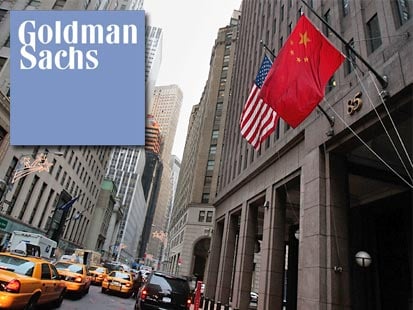
Ripple just borrowed $275 million to chase businesses that Goldman Sachs and Morgan Stanley have dominated for decades. Whether that bet makes sense depends on a tension buried inside its own credit rating.

This post may contain links from our sponsors and affiliates, and Flywheel Publishing may receive compensation for actions taken through them.
Ripple (CRYPTO:XRP) closed its first debt offering on August 18, with an upsized $275 million private placement of senior unsecured notes issued through its prime brokerage arm, Ripple Prime.
The notes mature in 2031 and pay an 8.25% coupon, and KBRA rated them BBB, which makes them investment grade. The investment bank Piper Sandler led the placement, and the money funds two businesses that Goldman and Morgan Stanley have run for decades. So can Ripple compete with them?
What Ripple Is Buying With $275 Million
Ripple says the proceeds fund working capital and general corporate purposes inside a regulated entity, which in practice means expanding US clearing, prime brokerage and financing, along with hiring and technology.
Ripple Prime plans two new business lines, according to KBRA. The first is Delta1, which covers total return swaps and synthetic equity financing for the firms behind leveraged ETFs. The second is equity prime brokerage, where a broker lends money and shares to hedge funds so they can trade with borrowed capital. Both belong to the equities division of an investment bank.
Ripple Prime already holds the licenses for that work. The firm has SEC broker-dealer registration and CFTC futures commission merchant status, and belongs to FINRA and SIPC. It also clears trades at CME Group exchanges and is a member of the FICC Government Securities Division.
Its revenue today comes from two places. The first is clearing and intermediation on an exchange-traded derivatives platform it launched in 2024. The second is fixed income repo, where the firm lends cash against short-duration Treasuries and agency securities and takes those securities back later, a business that grew through 2025.
Ripple bought the business, then called Hidden Road, for $1.25 billion in a deal that closed in October 2025. Noel Kimmel, President of Ripple Prime, said in a statement, “The robust support we received for our inaugural notes offering is a testament to the strength of our business today, and confidence in our long-term vision for the growing intersection of traditional and digital asset financial infrastructure.”
Ripple Prime Has Tripled Since Ripple Bought It
Ripple Prime’s revenue has tripled year over year since Ripple acquired the business in October 2025, according to Ripple. The unit turned profitable during 2025, client collateral has doubled, and average daily transactions have climbed past 60 million.
Ripple has paid for that growth itself so far. It has put roughly $500 million of capital into the subsidiary with another $500 million expected through 2026, and raised $200 million from Neuberger Berman in May at a $40 billion valuation.
After KBRA rated Ripple Prime investment grade in April, more institutions could trade with it. A BBB rating lets pension funds, banks and insurers deal with the firm under their standard credit rules, and without one they would each have to approve an exception first. No other crypto-affiliated prime broker holds an investment-grade rating.
In June, KBRA rated FS KKR Capital Corp’s $900 million senior unsecured notes at BBB-, one notch below Ripple Prime, and those notes pay 7.50% and mature in the same year. The business development company carried $624 million of realized and unrealized losses last year, posted a $558 million net loss in the first quarter, and has 8.1% of its loan book in non-accrual status, which means those borrowers have stopped paying. It still borrowed 75 basis points cheaper than Ripple Prime did, or 0.75 percentage points.
Investment-grade credit grew cheaper between the two deals, as borrowing costs for BBB companies fell by 18 basis points over the second quarter, and costs for finance companies like FS KKR fell by 37. The investment-grade corporate index yielded around 5.2% across that period, so Ripple Prime pays about three percentage points above the average for its own rating category.
KBRA describes Ripple Prime as being in a scaling phase, smaller than established broker-dealers and more concentrated than similarly rated peers. The rating also depends on Ripple’s own capital position, which includes its XRP holdings.
Why Goldman Might Not Be the Competition

Coinbase Institutional expects large banks to rent crypto infrastructure from firms like Ripple Prime instead of building their own platforms, because the digital asset market remains small next to global equities and fixed income. Its head of strategy, John D’Agostino, sees more competitive danger in newer entrants than in Wall Street.
D’Agostino runs strategy at Ripple Prime’s closest rival, so he has a reason to argue the banks stay out. Goldman’s Global Banking and Markets division brought in $15.52 billion during the second quarter alone, 53% more than a year earlier, and the firm covers 61% of billion-dollar hedge fund clients.
Coinbase Prime holds more than $400 billion in institutional custody and began letting clients use one pool of collateral across spot and derivatives trades in March. FalconX became the first CFTC-registered crypto swap dealer, says it can reach 94% of global crypto liquidity, bought the ETP issuer 21Shares in November and filed confidentially for a stock market listing in May.
Ripple Prime’s investment-grade rating counts for most against those firms, since it is the only one of them a credit agency has rated.
Can Ripple Take On Goldman Sachs?
Ripple can’t take prime brokerage from Goldman in the form Goldman runs it. A firm that clears billion-dollar hedge fund equity books needs a balance sheet Ripple has not built, and $275 million does not get it much closer.
That said, Ripple can win the ground between traditional finance and crypto. It already leads crypto prime brokerage on scale, and an insurance company can trade with it without asking for a credit exception, which its rivals cannot yet offer.
The Delta1 and equity prime brokerage plans carry more risk. Those businesses would put Ripple Prime against banks on their own ground, where the contest turns on the size of the balance sheet. Ripple Prime’s current edge is clearing a futures contract and a crypto trade inside the same margin account, and that counts for little on Goldman’s ground. If Ripple keeps borrowing at this rate, it is serious about the equities push. If this raise turns out to be a one-off, Ripple Prime stays a crypto business with a good credit rating.
Contact [email protected] for any questions or corrections.
Sam Daodu is a crypto analyst who's spent nearly a decade making blockchain understandable—no easy task when most whitepapers read like fever dreams. He writes for 24/7 Wall St., covering Bitcoin, altcoins, and crypto market analysis for investors. Before crypto, he was a tech writer (back when explaining "the cloud" was peak innovation). Since 2018, he's written for CoinTelegraph, Yahoo Finance, The Block, Cryptonews, Zypto, Rain, and more—basically anywhere people want crypto news without the headache. Sam runs MacLabs Marketing, a content agency for crypto brands tired of sounding like AI wrote their website. He also publishes free crypto education on his site for Web3 enthusiasts who think "gas fees" is a typo. When he's not writing or staring at charts, Sam's either: - Watching anime (currently convinced One Piece has better tokenomics than most altcoins) - At the gym sculpting himself into a Greek god - Listening to the music your mum warned you only bad boys listen to Connect: LinkedIn | Email | MacLabs Marketing