Best Crypto to Buy and Hold for 10 Years: Bitcoin, Ethereum, XRP, or Solana?
Bitcoin, Ethereum, XRP, and Solana have all taken significant hits over the past year, leaving long-term investors wondering which one has the fundamentals to survive the next decade and actually grow their money by 2036.

This post may contain links from our sponsors and affiliates, and Flywheel Publishing may receive compensation for actions taken through them.
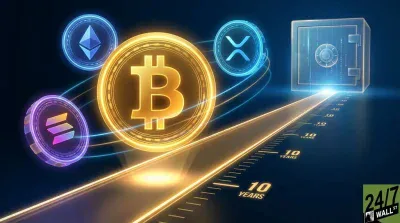
When considering the best crypto to buy and hold for ten years, it’s essential to think about how each one might perform through future market cycles. Bitcoin (CRYPTO: BTC), Ethereum (CRYPTO: ETH), XRP (CRYPTO: XRP), and Solana (CRYPTO: SOL) each present different strengths and challenges. Bitcoin is primarily viewed as a store of value, while Ethereum and Solana host applications, and XRP focuses on facilitating money transfers for banks and payment companies.
Despite a recent rally, all four cryptocurrencies are down this year. A ten-year investor should evaluate which of these coins is most likely to hold and increase its value by 2036.
Bitcoin, Ethereum, XRP and Solana Are All Down Over the Past Year
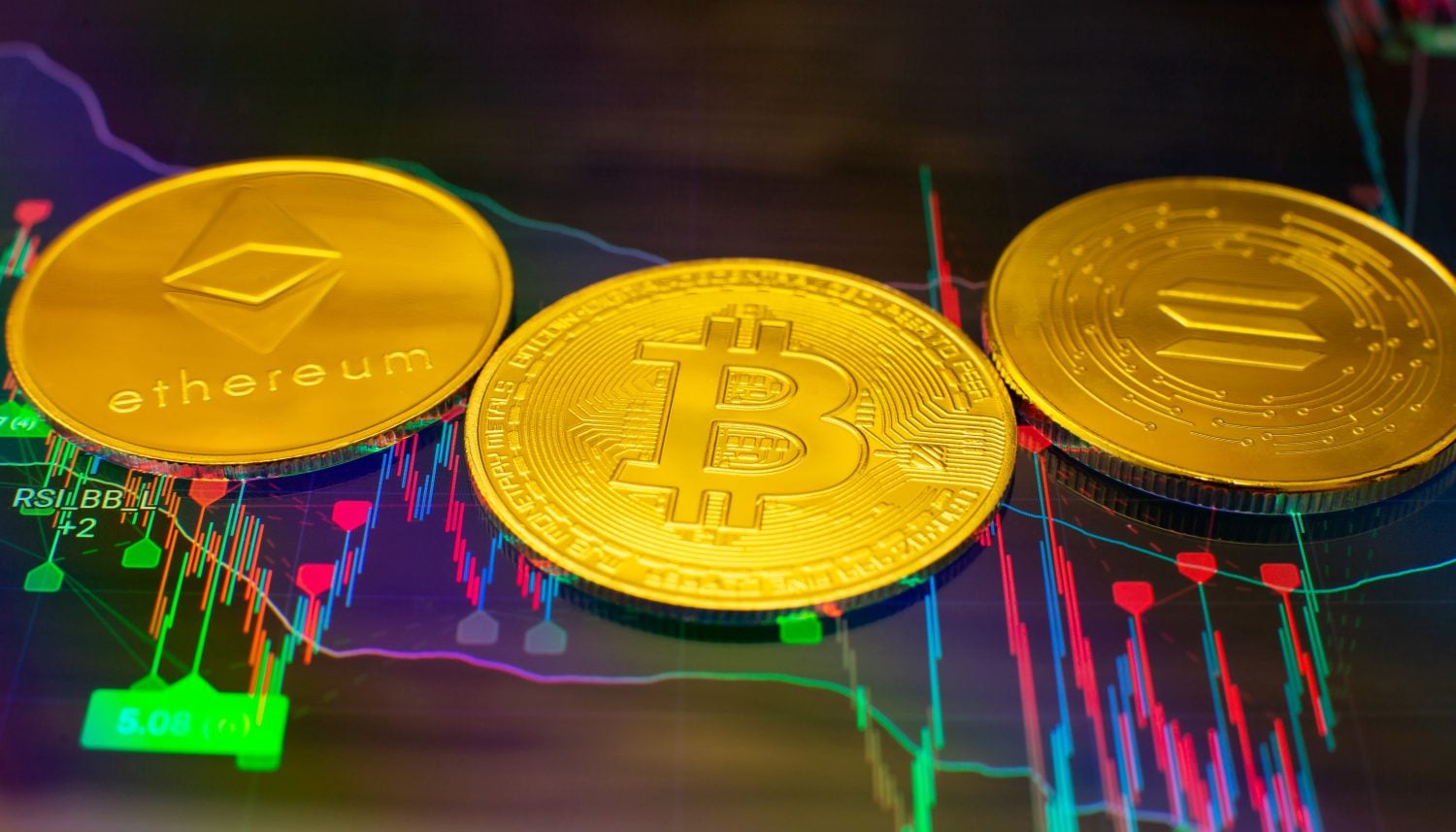
After summer rallies, Ethereum is trading around $2,663 and Solana around $118. However, both are still down significantly since last year—Ethereum has lost 34.2%, and Solana is down 43.1%. These gains only partially offset their earlier declines.
Bitcoin has fared best over the past year, down 24.8% and now around $83,070. This is 34.1% below its October 2025 high of nearly $126,000. XRP has seen the steepest decline, down 46.8% to $1.50. So far in 2026, Bitcoin has dropped 5.8%, Ethereum 10.8%, XRP 18.9%, and Solana 6.9%.
When considering potential long-term holds, it’s crucial to look at the one-year losses. They signal how much ground each coin must regain. For instance, XRP would need to rise about 88% to return to its previous levels, while Bitcoin would need only a 33% gain.
Bitcoin’s 21 Million Coin Cap Limits New Supply Through 2036

Bitcoin stands out as a strong long-term investment contender because of its capped supply of 21 million coins, with about 20.1 million already in circulation. Mining rewards that produce new coins also halve every four years, which means supply will continue to tighten as we approach 2036.
Bitcoin controls about 58.4% of the entire $2.86 trillion cryptocurrency market, giving it a broad base of potential buyers. Spot Bitcoin ETFs let financial advisors and funds buy it through standard brokerage accounts, and Bitcoin has previously bounced back from drops of over 75% in both 2018 and 2022.
However, Bitcoin isn’t without risk. Miners are critical to maintaining the network, and as mining rewards decrease, transaction fees will need to cover a larger share of operational costs.
Ethereum and Solana Depend on the Apps Built on Their Networks
Ethereum runs smart contracts, self-executing programs that power much of the stablecoin market, lending platforms, and tokenized funds. With roughly 122 million coins valued at about $325 billion, Ethereum has no strict supply cap; however, a portion of transaction fees is burned, offsetting some of the new supply.
That said, more affordable networks like Solana and layer-2 solutions built on Ethereum compete, potentially attracting fees that could otherwise benefit ETH holders. For Ethereum to thrive over the next decade, it must keep hosting valuable applications.
Solana, the newest of the four, has been running its main network since March 2020. It is designed for fast and low-cost transactions, with approximately 588 million tokens valued at around $69.6 billion. However, Solana has faced network outages in its early years, and a decade is a significant test for a platform with such a brief operational history.
XRP’s Ten-Year Value Depends on Ripple’s Banking Deals
XRP was designed to facilitate quick, low-cost cross-border money transfers, and Ripple, the company behind XRP, markets its services to banks and payment processors. With around 62.9 billion XRP currently in circulation (out of a maximum of 100 billion), Ripple holds a large portion of the rest in escrow.
The primary risk for XRP over the next ten years is its close association with Ripple. If the company’s banking partnerships falter, the demand for XRP may decline. Nevertheless, recent developments, such as new XRP ETFs attracting significant investments, show ongoing interest in the currency, even as it dipped by 8% in the week to September 30.
Bitcoin Is the Best Crypto to Buy and Hold for 10 Years
Among these four cryptocurrencies, Bitcoin appears to be the best option for long-term investment. It has had the smallest decline over the past year, its supply is capped at 21 million coins, and it leads the crypto market in terms of value. While Ethereum suits those interested in app growth and can tolerate more volatility, XRP ranks lower because of its significant losses and reliance on Ripple’s performance.
That said, investing in Bitcoin comes with challenges. Currently trading 34.1% below its peak, Bitcoin has experienced considerable downturns in the past and offers no yield, unlike Ethereum and Solana, which provide staking rewards. If Ethereum reclaims the fees that cheaper alternatives are capturing, it raises the question of whether Bitcoin will remain the best choice for long-term investors over the coming decade.
Contact [email protected] for any questions or corrections.
Sam Daodu is a crypto analyst who's spent nearly a decade making blockchain understandable—no easy task when most whitepapers read like fever dreams. He writes for 24/7 Wall St., covering Bitcoin, altcoins, and crypto market analysis for investors. Before crypto, he was a tech writer (back when explaining "the cloud" was peak innovation). Since 2018, he's written for CoinTelegraph, Yahoo Finance, The Block, Cryptonews, Zypto, Rain, and more—basically anywhere people want crypto news without the headache. Sam runs MacLabs Marketing, a content agency for crypto brands tired of sounding like AI wrote their website. He also publishes free crypto education on his site for Web3 enthusiasts who think "gas fees" is a typo. When he's not writing or staring at charts, Sam's either: - Watching anime (currently convinced One Piece has better tokenomics than most altcoins) - At the gym sculpting himself into a Greek god - Listening to the music your mum warned you only bad boys listen to Connect: LinkedIn | Email | MacLabs Marketing