Strategy Now Owns 845,050 Bitcoin After Paying $80,300 a Coin for the Latest 4,603. Is Saylor Back?
Michael Saylor just broke a ten-week silence with a massive Bitcoin buy, but the timing raises an uncomfortable question about whether Strategy's comeback signals conviction or a costly mistake.


Strategy (NASDAQ:MSTR | MSTR Price Prediction), the software company that executive chairman Michael Saylor turned into the world’s largest corporate Bitcoin (CRYPTO:BTC) holder, disclosed on August 31, 2026, that it bought 4,603 bitcoin at $80,318 per coin in the week of August 24 to 30, lifting its total position to 845,050 BTC.
It was Strategy’s first Bitcoin purchase in about 10 weeks, after the company sold roughly 7,000 BTC between June 30 and August 10 for between $59,000 and $64,000 per coin.
Bitcoin trades around $78,000 today, below the $80,318 price Strategy paid on August 31. That puts the latest purchase underwater on paper, with the coins currently worth less than the company paid for them. So did Saylor buy near the top, or is he simply sticking to the strategy he has followed all along?
Inside Strategy’s Latest Bitcoin Purchase
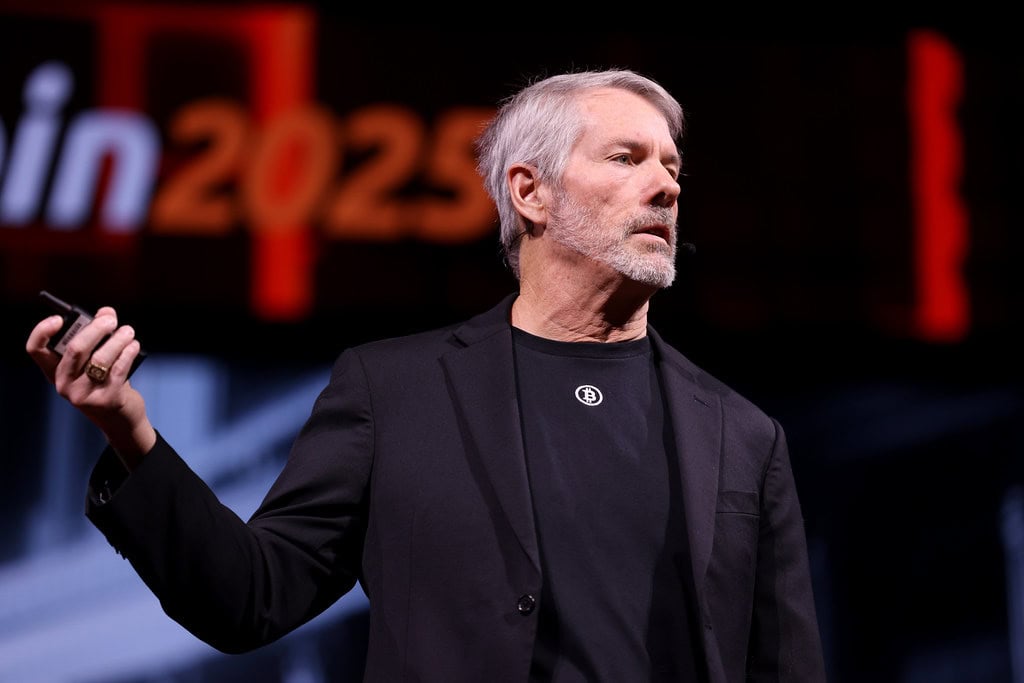
Strategy has been buying and holding Bitcoin since August 2020, making it the largest corporate Bitcoin holder. Strategy funds its purchases through common stock sales, convertible debt and perpetual preferred securities marketed as “Digital Credit,” including STRC, STRK, STRF, STRD and STRE.
The August 31 filing shows that Strategy spent $369.7 million on its latest purchase, buying 4,603 BTC at an average price of $80,318 per coin. It funded the purchase with $602.8 million from common stock sales and used $151.8 million to repurchase STRC.
After the purchase, Strategy held 845,050 BTC at an average cost of $75,412 per coin, bringing its total Bitcoin outlay to $63.73 billion. That average is simply the total amount spent divided by the total Bitcoin owned, so buying above $75,412 pushes the average higher. Since the latest coins cost $80,318 each, this purchase was about $5,000 above Strategy’s average and increased its overall cost basis.
Strategy Sold Bitcoin Four Times Before Buying It Back

Strategy paused its Bitcoin purchases in June 2026 as falling prices put pressure on its financing model and weighed on its common and preferred shares. In late June, the company announced a plan to keep cash available for dividend and interest payments, while retaining the option to sell Bitcoin if necessary.
The company then reduced its Bitcoin holdings four times between June 30 and August 10. It sold 1,363 BTC at $59,256 on June 30, another 2,225 BTC at $60,773 on July 6, 1,638 BTC at $63,957 on August 3, and 1,690 BTC at $64,262 on August 10. Together, those sales amounted to 6,916 BTC, with the sale prices ranging from about $59,000 to $64,000 per coin.
CEO Phong Le said the sales were intended to cover preferred dividends and reduce debt rather than signal a change in Strategy’s long-term view of Bitcoin. The timing, however, means the company sold thousands of Bitcoin below the $80,318 price it paid for its latest purchase on August 31.
Saylor posted “We’re ₿ack” on August 30, one day before the latest purchase was disclosed. Strategy now reports 0.0% net leverage, $6.71 billion in dollar assets and $1.61 billion in cash, showing how much liquidity the company rebuilt during the pause.
Who Else Is Buying Bitcoin?

The market is also attracting buyers beyond Strategy, with spot Bitcoin ETFs—exchange-traded funds that hold actual bitcoin and allow investors to gain exposure through a regular brokerage account—recording $3.52 billion in inflows in August 2026. BlackRock, Fidelity, and several other major financial firms now operate these funds, giving investors a more familiar way to gain exposure to bitcoin without having to buy and hold the asset themselves.
CEO Phong Le made the same point from the traditional-finance side on the first-quarter 2026 earnings call, saying, “We also continue to see traditional finance and major banks including Morgan Stanley, Goldman Sachs, and Citi announcing bitcoin ETFs, trading, custody, and lending services.”
However, ETF numbers themselves show that institutional buying has not moved in a straight line. Spot Bitcoin ETFs recorded $2.43 billion in outflows in May and another $4.51 billion in June, before flows turned positive again in July with $172.43 million in inflows. The stronger $3.52 billion recorded in August suggests that demand had begun picking up again, opening the market again to institutional players, pension funds, insurers, and wealth-management channels that had far fewer ways to access bitcoin three years ago.
Is Saylor Back?
Saylor appears to be back in the market, but it is too early to say that Strategy has fully returned to its old buying pattern. The August 31 purchase shows that the ten-week pause did not represent a permanent shift away from Bitcoin, while the company’s rebuilt cash position gives it more room to keep buying if prices remain under pressure.
At the same time, Strategy sold nearly 7,000 BTC at prices between $59,000 and $64,000 before buying 4,603 BTC at $80,318, making the latest purchase look more like a renewed commitment than a particularly well-timed trade.
If Strategy continues buying at prices below $85,000 and keeps using its capital-markets machine to fund those purchases, Saylor’s “we’re back” message will carry more weight. If this turns out to be a one-off purchase after a long pause, the ten-week break may have been the stronger signal.
Contact [email protected] for any questions or corrections.
Sam Daodu is a crypto analyst who's spent nearly a decade making blockchain understandable—no easy task when most whitepapers read like fever dreams. He writes for 24/7 Wall St., covering Bitcoin, altcoins, and crypto market analysis for investors. Before crypto, he was a tech writer (back when explaining "the cloud" was peak innovation). Since 2018, he's written for CoinTelegraph, Yahoo Finance, The Block, Cryptonews, Zypto, Rain, and more—basically anywhere people want crypto news without the headache. Sam runs MacLabs Marketing, a content agency for crypto brands tired of sounding like AI wrote their website. He also publishes free crypto education on his site for Web3 enthusiasts who think "gas fees" is a typo. When he's not writing or staring at charts, Sam's either: - Watching anime (currently convinced One Piece has better tokenomics than most altcoins) - At the gym sculpting himself into a Greek god - Listening to the music your mum warned you only bad boys listen to Connect: LinkedIn | Email | MacLabs Marketing